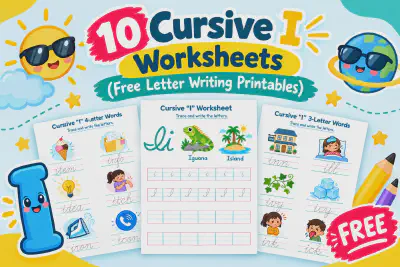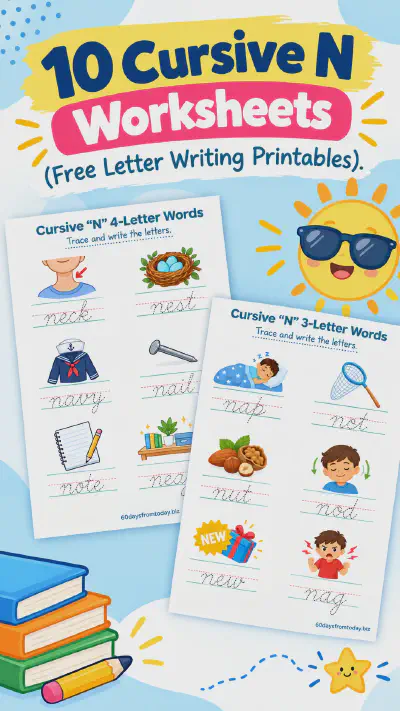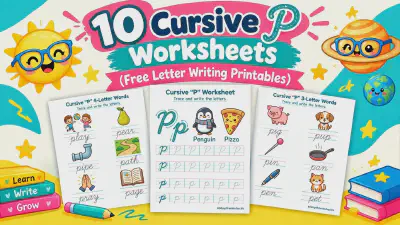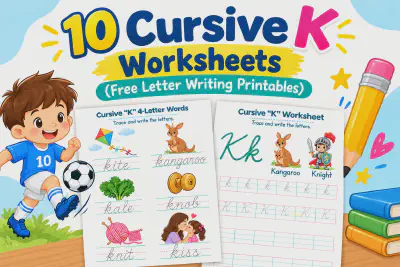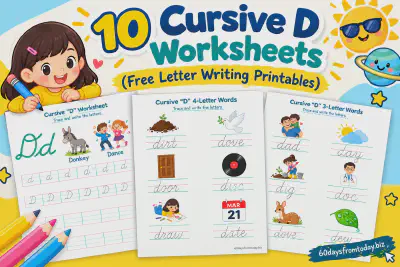
On this page, you’ll discover 10 original cursive D worksheets, all completely free to download or print! When I was an elementary school teacher, I found our selection of cursive letter sheets to be very lackluster and, honestly, quite bland.
That experience stayed at the forefront of my mind while creating these worksheets. I wanted to bring some fresh energy to these templates while keeping them simple, informative, and easy to use. I also included a variety of worksheets, from cursive D with instructional arrows and uppercase and lowercase cursive D, to cursive D words paired with matching graphics, and more!
All of these PDF worksheets are designed for US letter-sized paper, while also fitting perfectly onto A4-sized paper! If you’d like the complete collection of all these worksheets, you’ll find a single file further down the page. Enjoy!
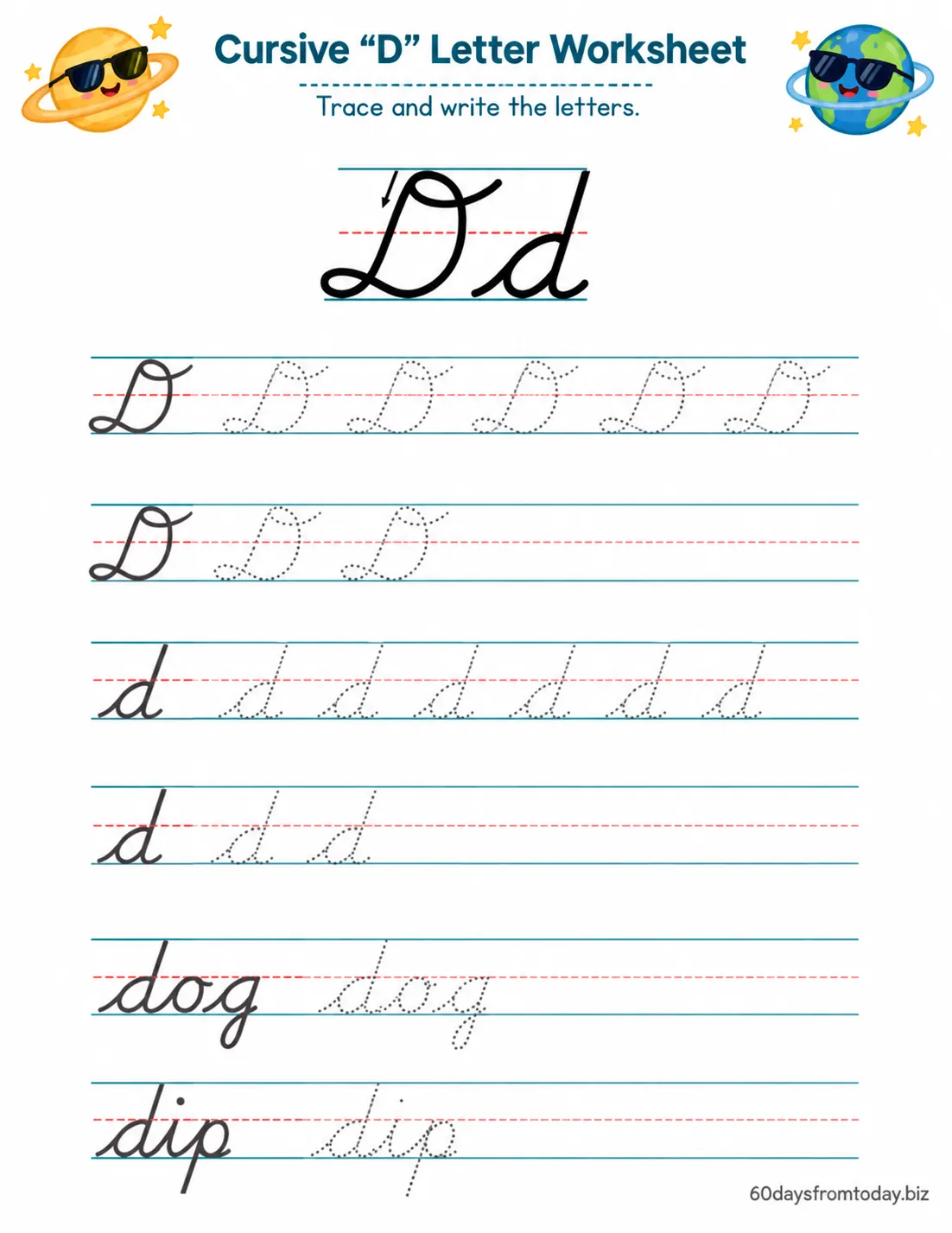
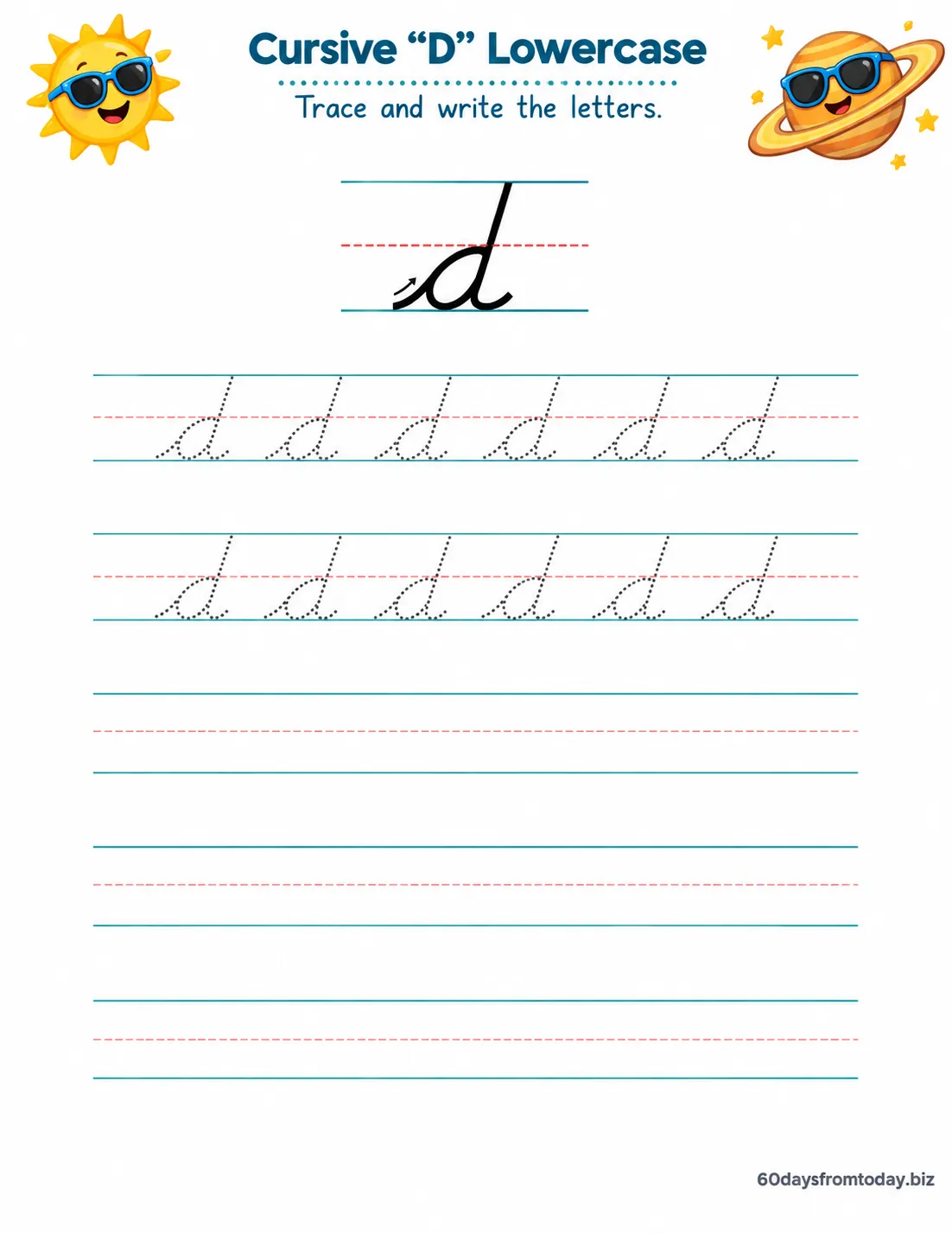
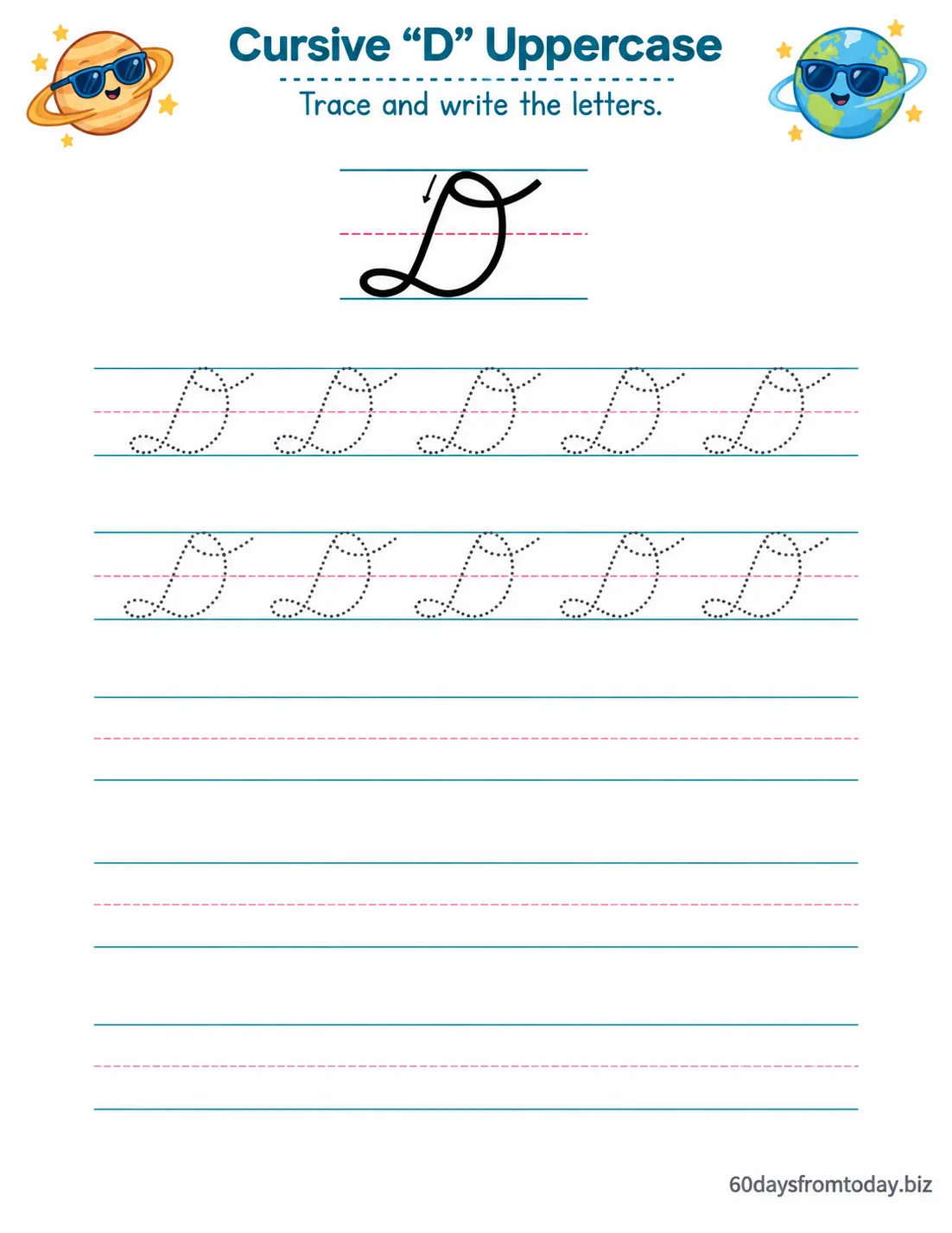
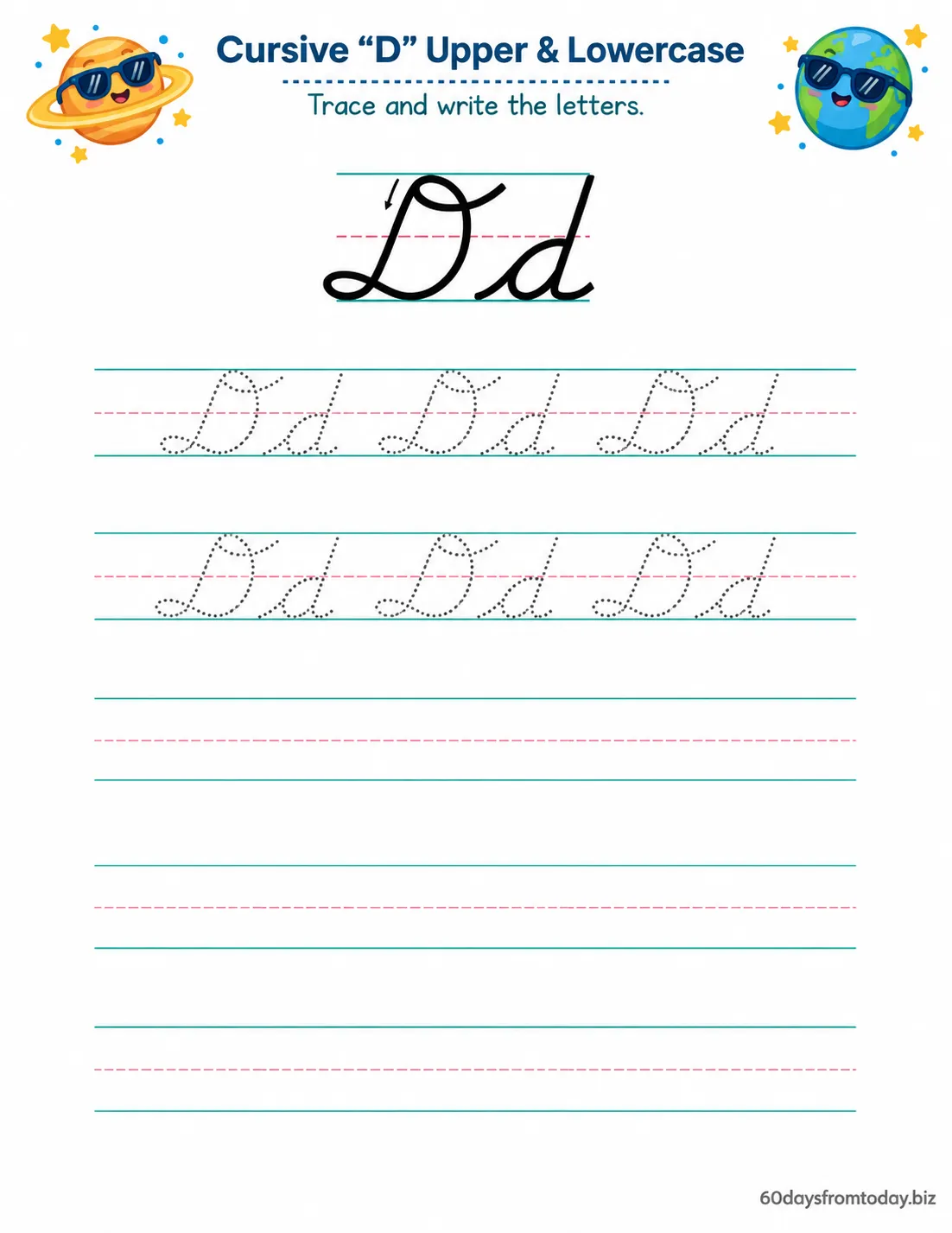
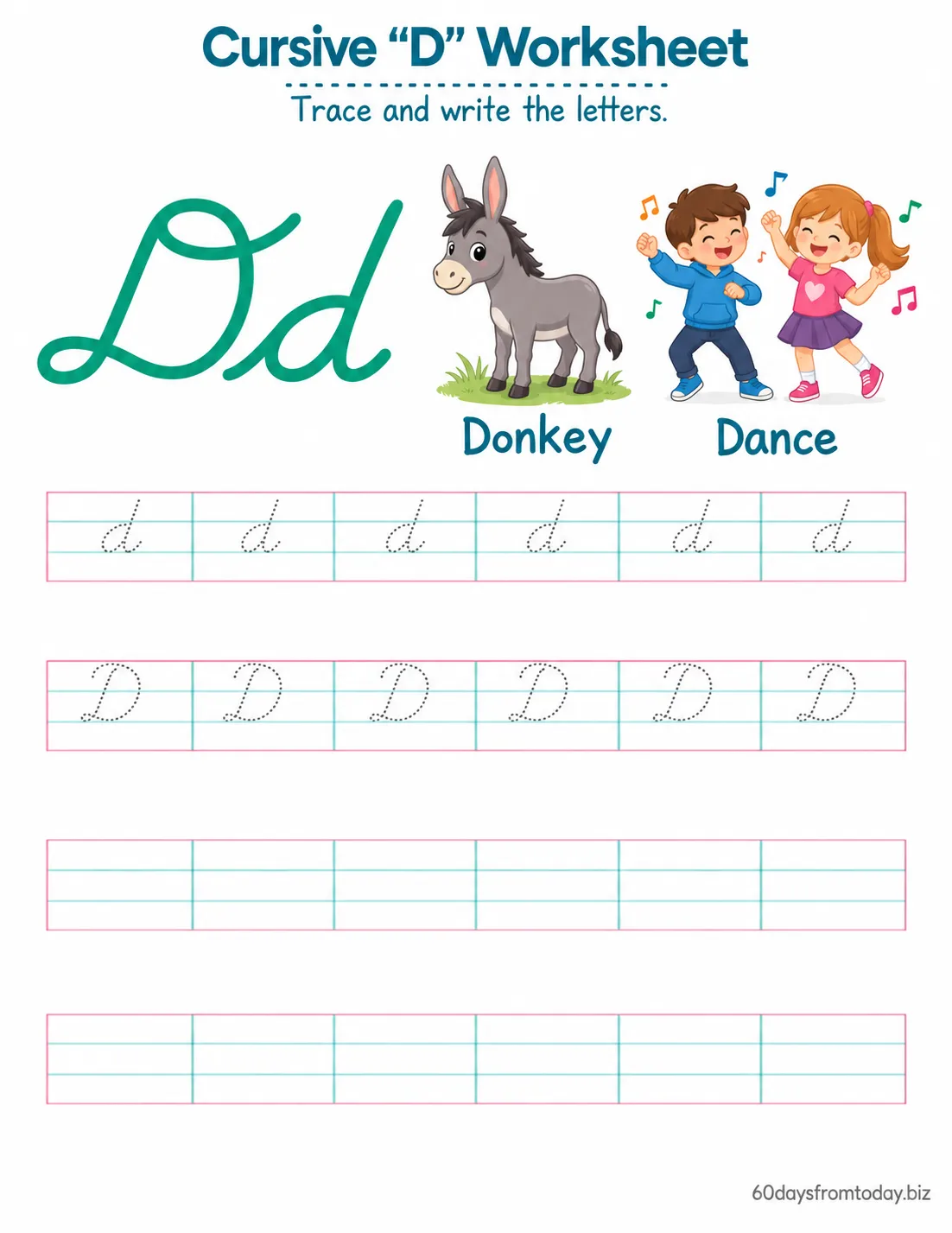
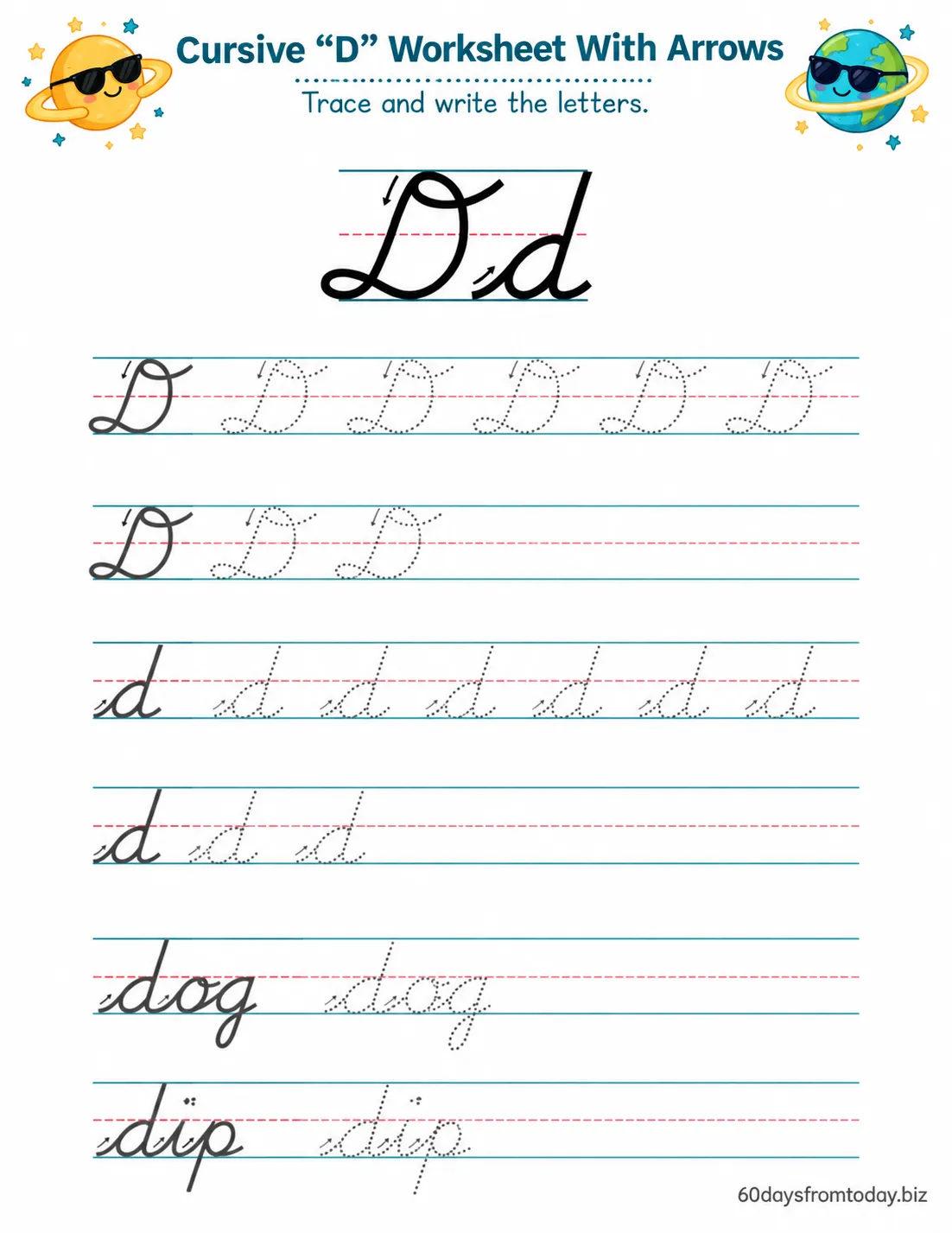
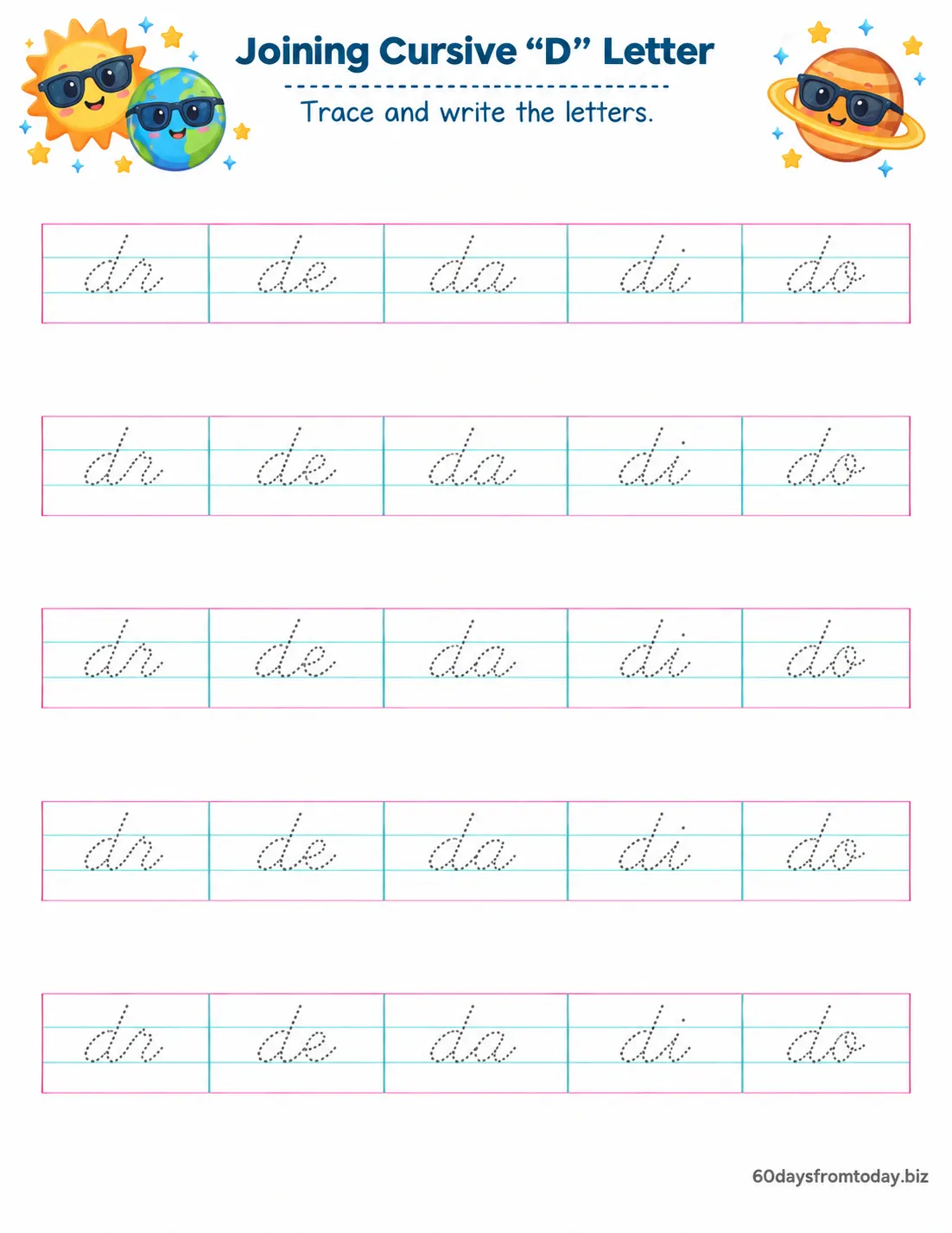
After receiving multiple requests, I combined all of the worksheets above into one convenient PDF worksheet, which should make life a little easier for parents and teachers when downloading and printing!
If you have any requests or ideas for other cursive D worksheets you’d like to use in the classroom or for homeschooling, please share them in the comments section. I’d love to keep updating this page with new ideas over time!
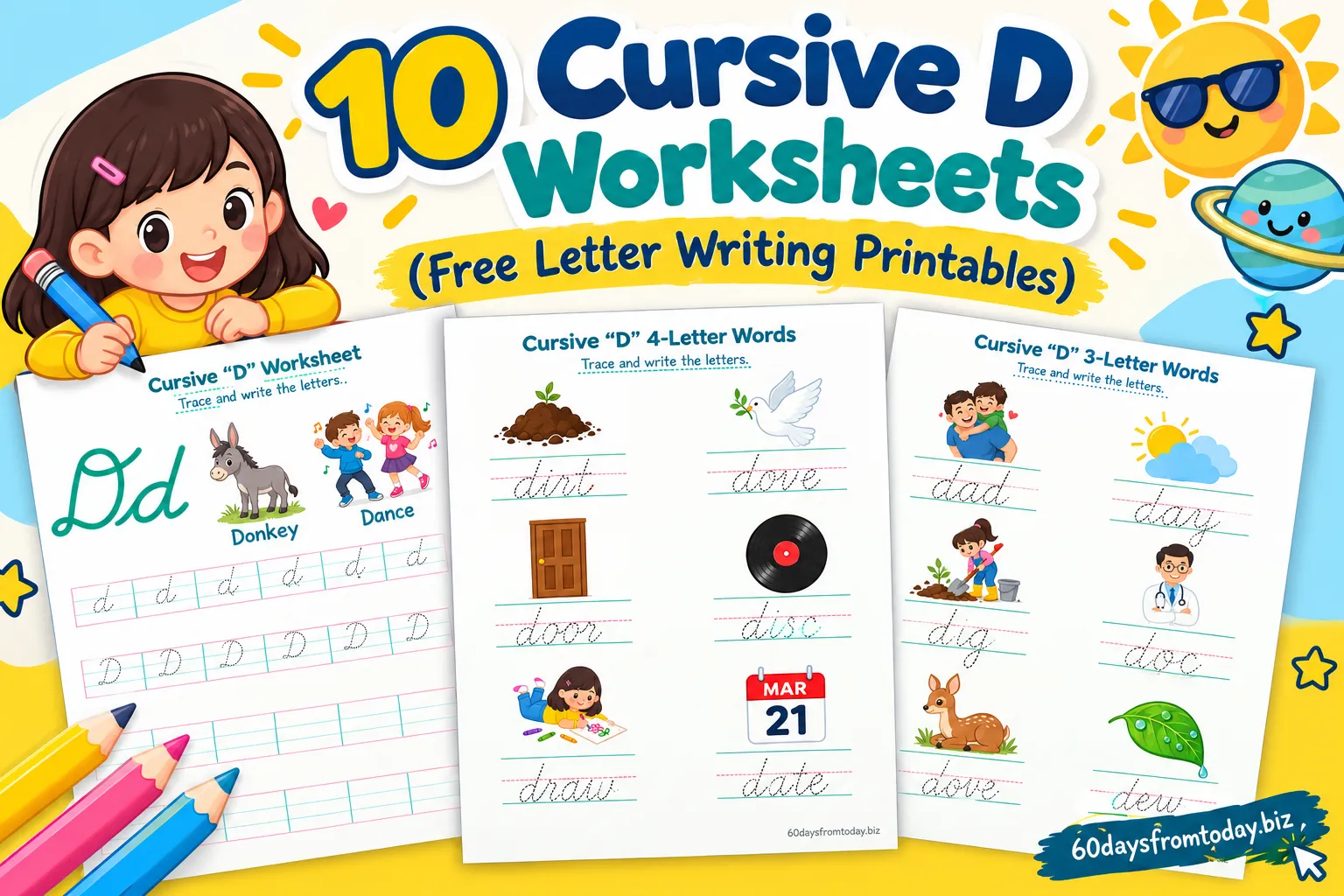
Cursive D Worksheets (10 Free Printables)
7 Ways To Use Cursive D Worksheets
D is one of the easier letters for youngsters to learn in cursive, but it still takes practice to get the formation just right. Here are some ways to use my Cursive D worksheets to help kids master the letter.
7. Practicing The Motions Of Uppercase And Lowercase D
Because uppercase and lowercase D closely resemble their printed forms, D is one of the cursive letters that should feel relatively natural to students.
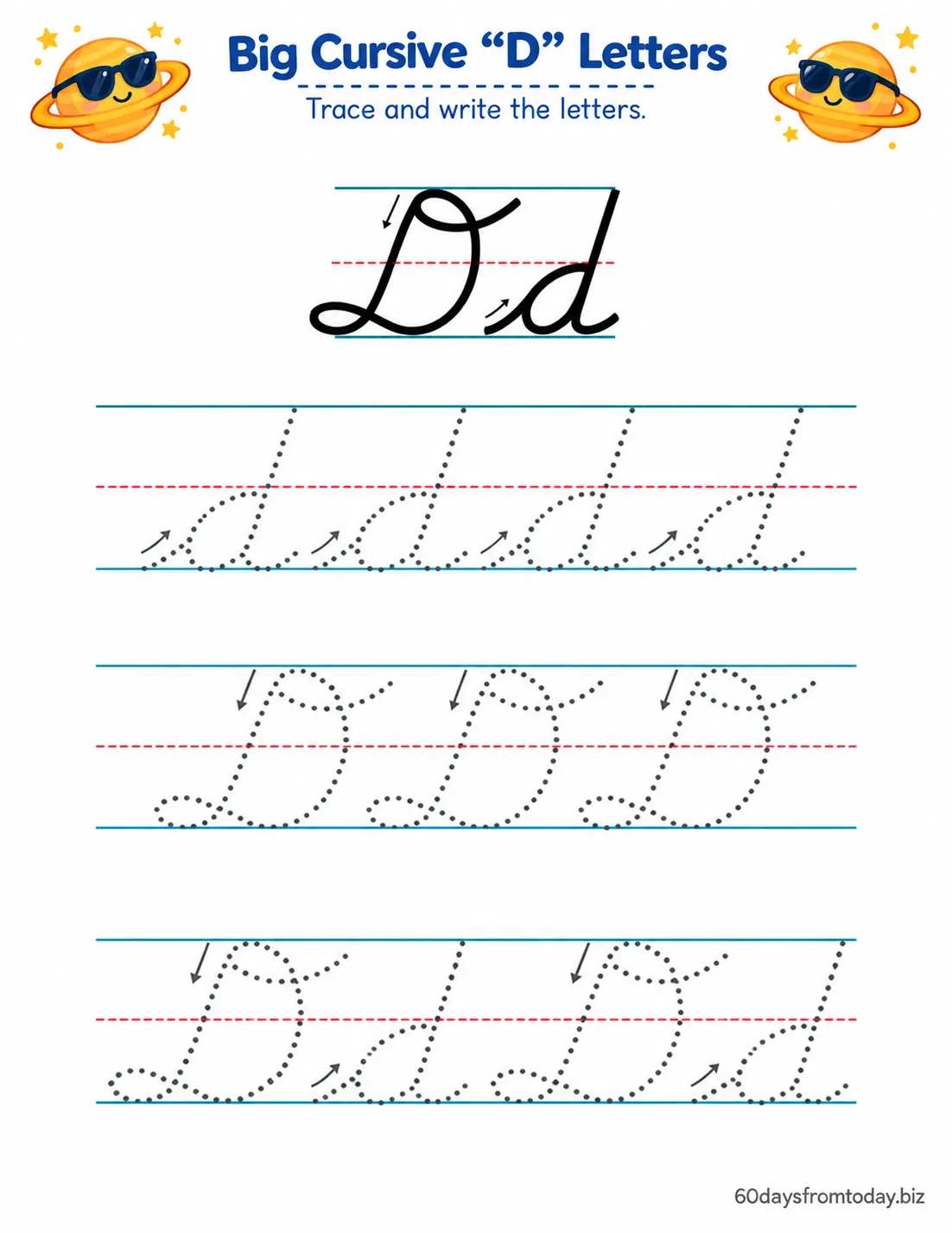
However, before having them trace and then write independently, consider letting them practice the movements of uppercase and lowercase D using my worksheets.
They don’t need to complete the entire letter right away. For uppercase D, have them become familiar with moving the pencil downward, creating a loop, and then curving back upward.
For lowercase cursive D, encourage them to practice forming the curve of the letter’s “body.”
The goal isn’t necessarily to complete the letter yet, but to help them become comfortable with the required pencil movements.
Let them practice those motions for a line or two, then have them move on to tracing.
6. Tracing Uppercase And Lowercase D
Once they understand the basic movements, have the children move on to tracing uppercase and lowercase cursive D’s.
My worksheets provide plenty of space along with dotted-line D’s, giving them room to practice following the correct form while staying within the guidelines.
You may want to print several pages, or even more than a few, for each student so they have plenty of opportunities to master tracing D before moving on to independent writing.
5. Independently Writing Uppercase And Lowercase D
When students are ready to start writing uppercase and lowercase cursive D’s independently, without tracing support, my worksheets offer plenty of lines for them to practice.
Watch their confidence build with every repetition of the letter. If they have trouble along the way, they can always return to the tracing exercises whenever they need extra practice.
4. Linking Lowercase D Independently
A great way to practice lowercase cursive D is to have students write it repeatedly, connecting one D to the next.
Once they become confident with forming lowercase D, you can add linked, dotted-line lowercase D’s for them to trace on the unused guidelines and then make enough copies for the class.
Alternatively, simply have them connect lowercase D’s across some of the blank guidelines without relying on tracing.
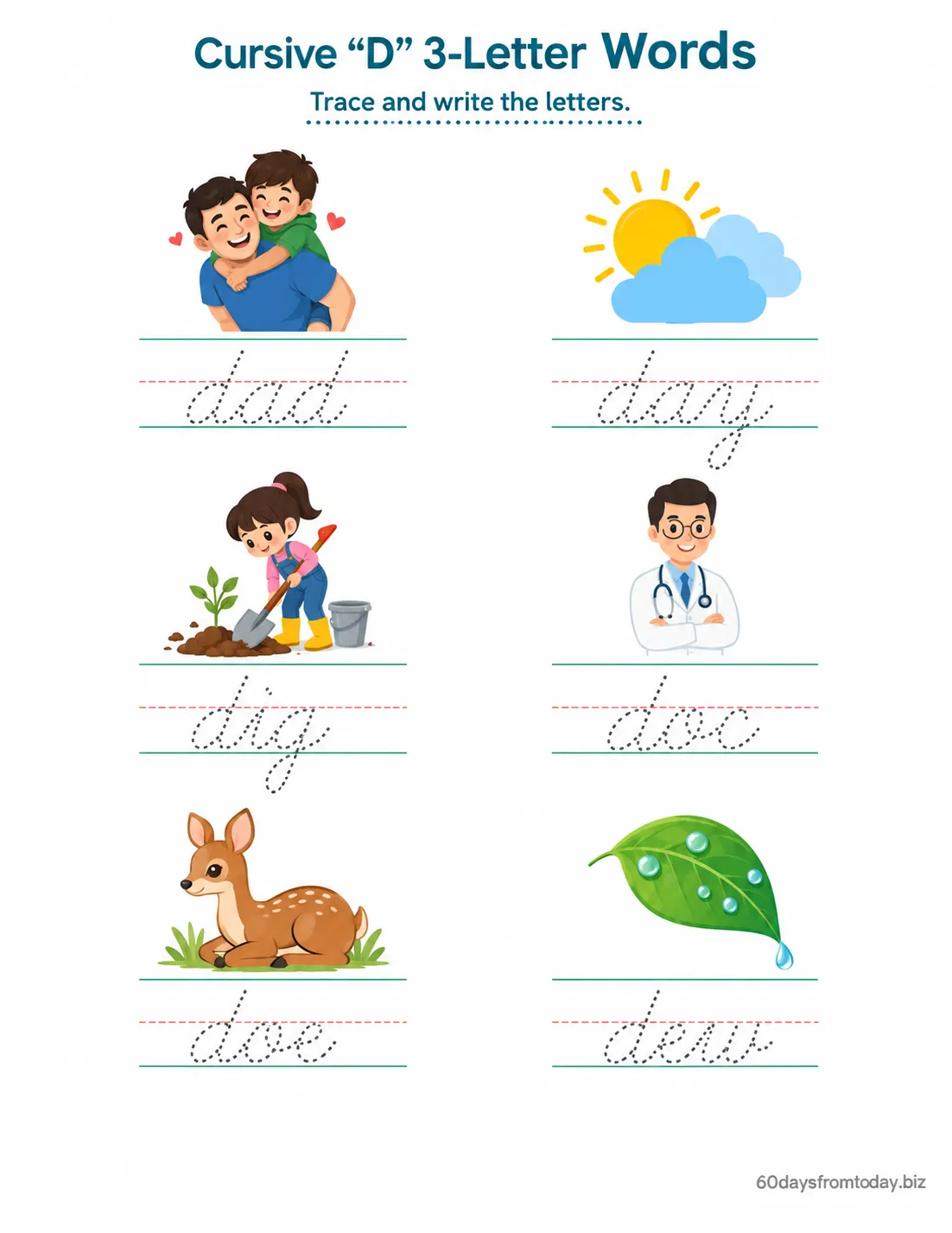
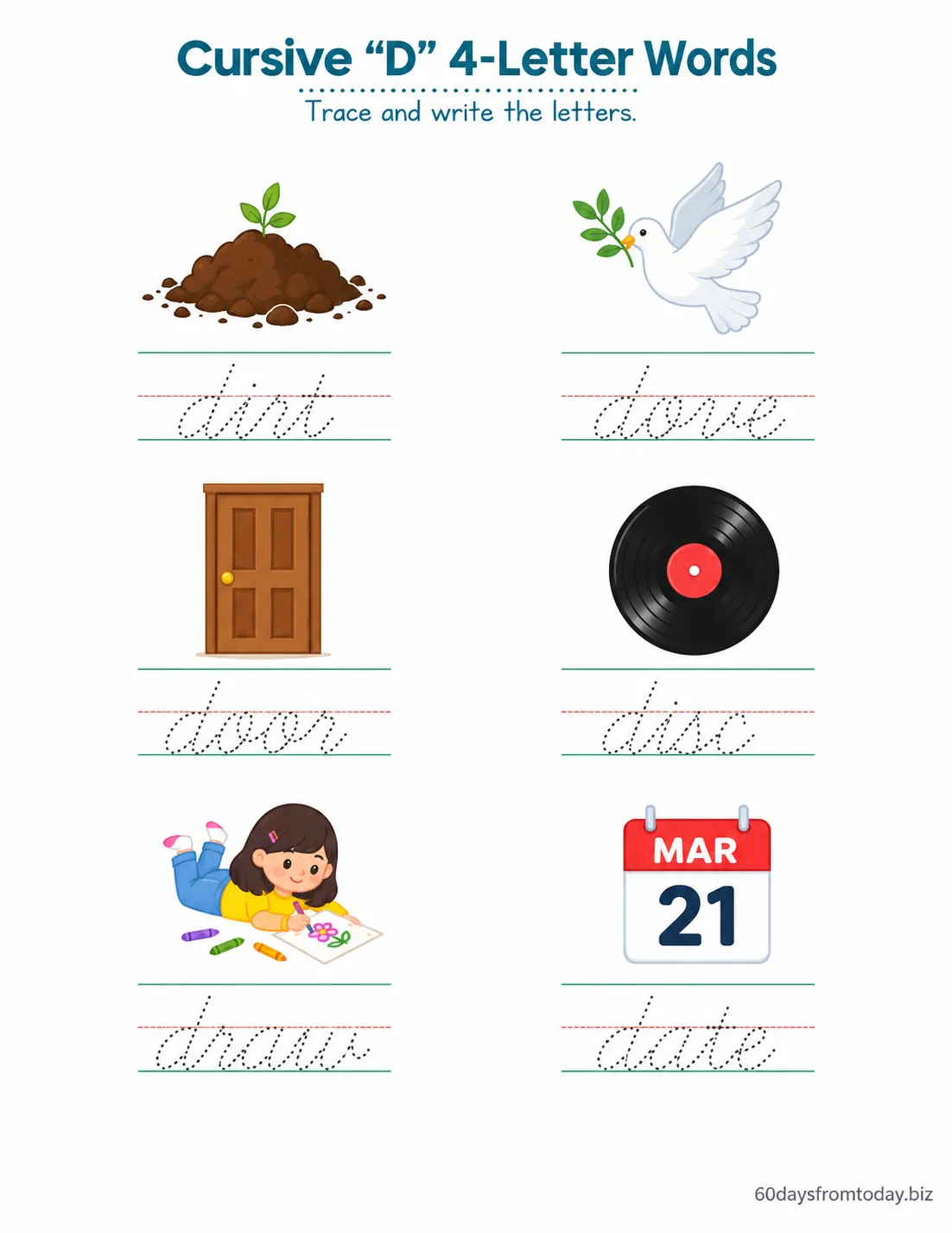
3. Tracing Three- And Four-Letter Cursive Words That Start With D
What better way to build writing skills, while also supporting reading and memorization, than by tracing three- and four-letter cursive words that begin with D?
I’ve included some popular D words for students to trace on my worksheets, but you can also use some of the blank guidelines to create your own examples.
You can even expand the collection of words for students to trace by adding five- and six-letter words that begin with D.
Some examples include “Daddy,” which also contains two D’s, or “Damage.”
2. Writing Words That Contain Cursive D
You can also use some of the free guideline space to create traceable words that contain the letter D. This helps students practice connecting words to D, rather than only practicing words that begin with D.
Create your own dotted-line examples, such as “Did,” “Body,” and “Edge,” then use a copy machine to make multiple copies for the entire class.
For students who are ready for an extra challenge, encourage them to write the words independently without tracing.
1. Tracing Alliterative Sentences With Cursive D
You can also create dotted-line sentences featuring alliterative cursive D’s, such as “David drops off Denise at the doctor” or “Does your doll dance?”
Once again, when students become confident with tracing, they can challenge themselves by attempting to write the words independently.