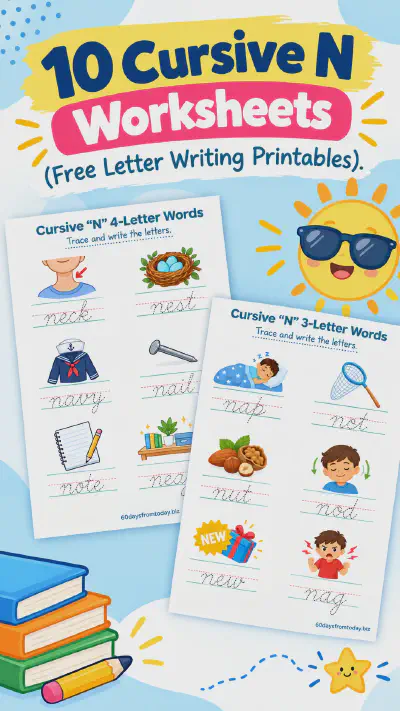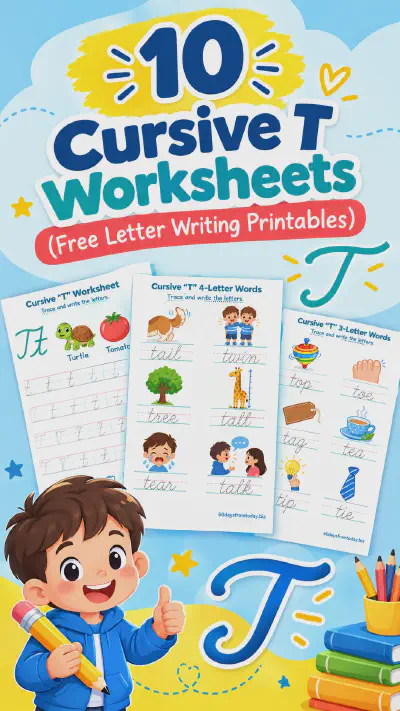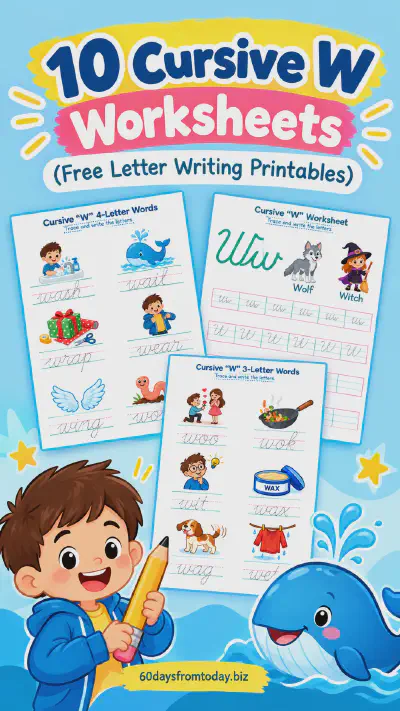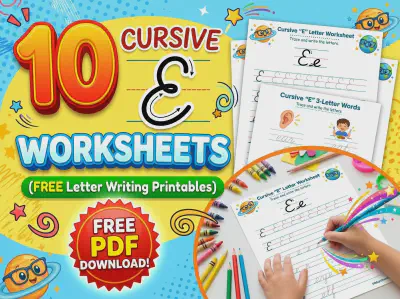
On this page, you’ll discover 10 free cursive E worksheets for teachers and parents, all ready to download or print! These cursive sheets give students a fun way to practice writing the letter E while building confidence and improving their cursive skills along the way!
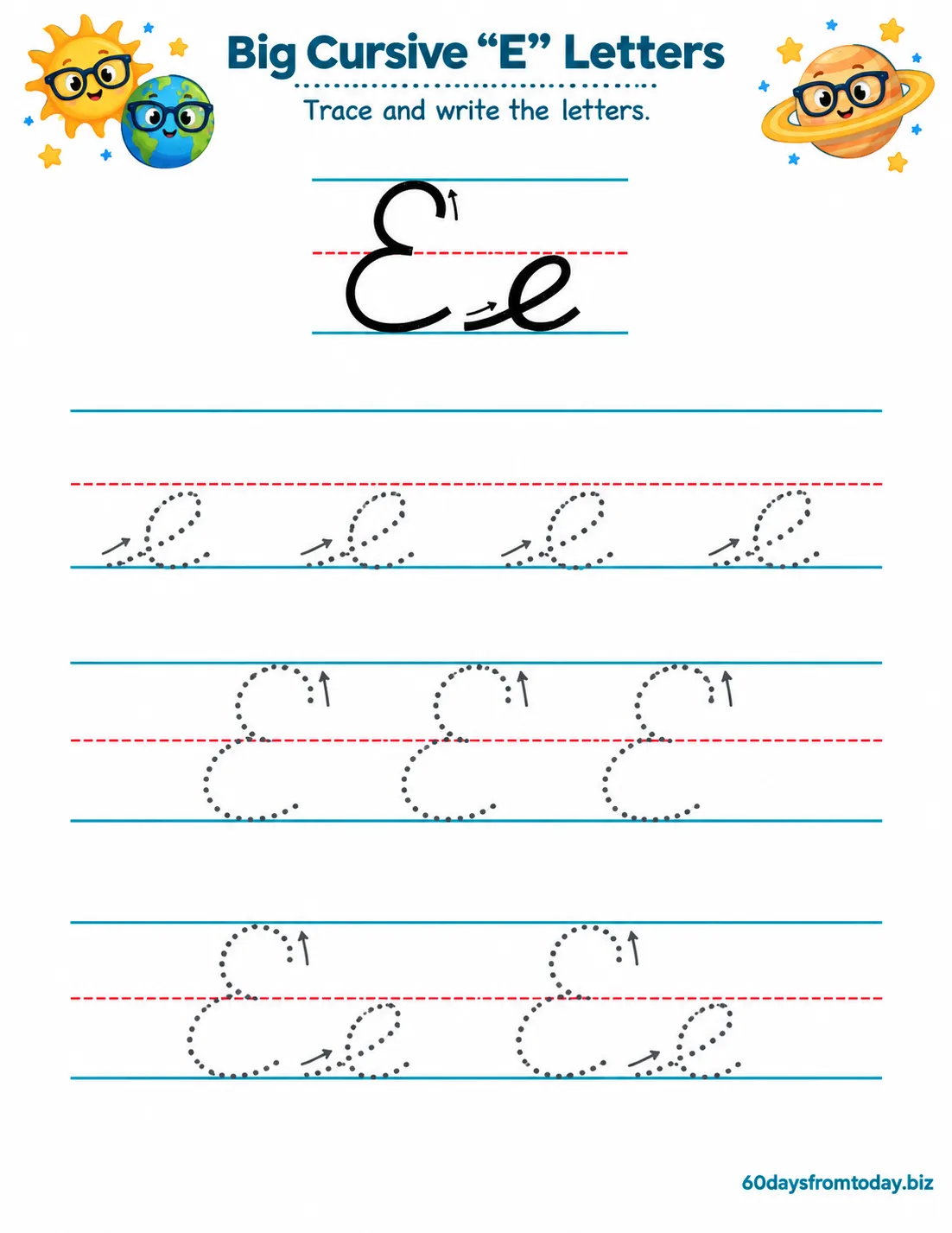
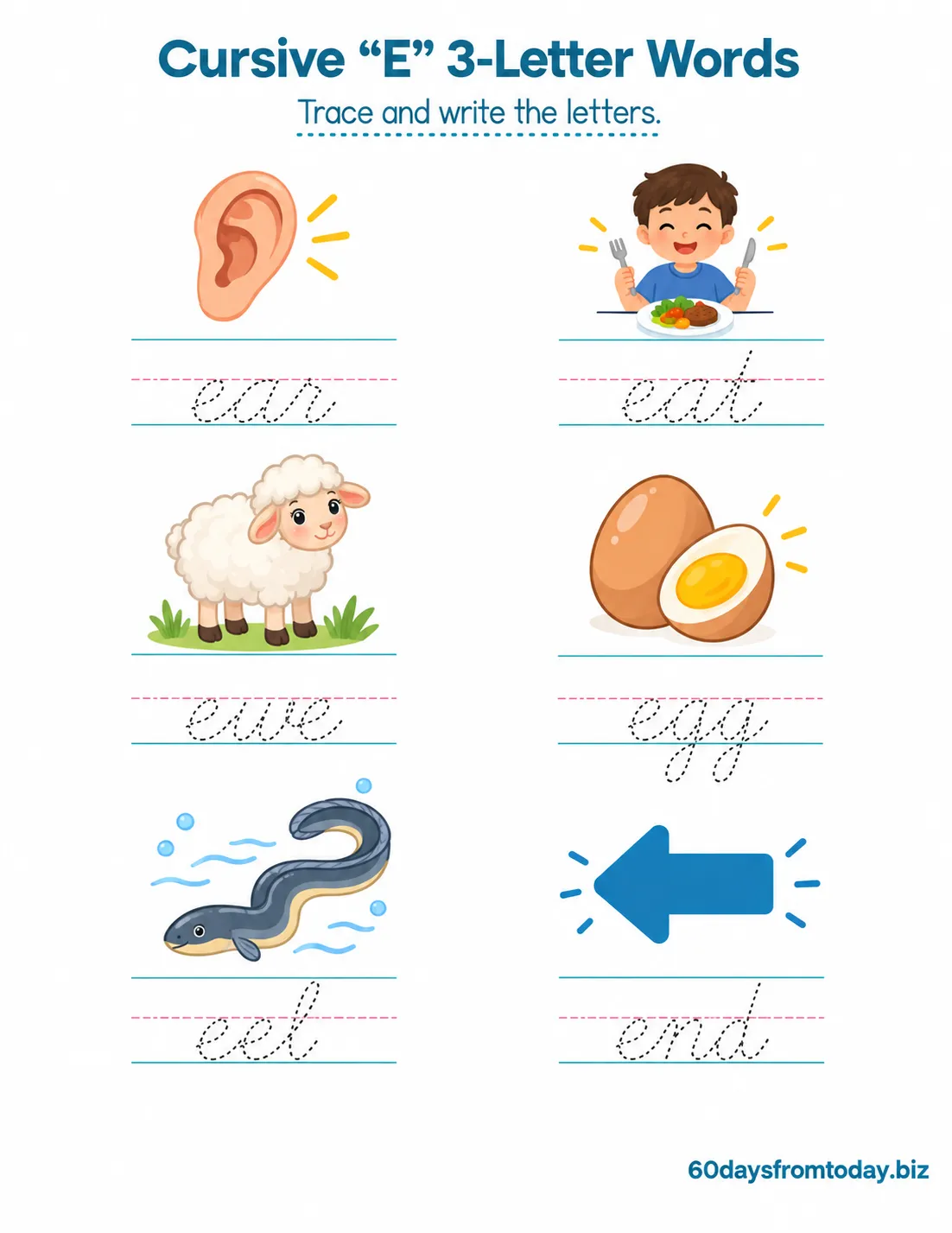
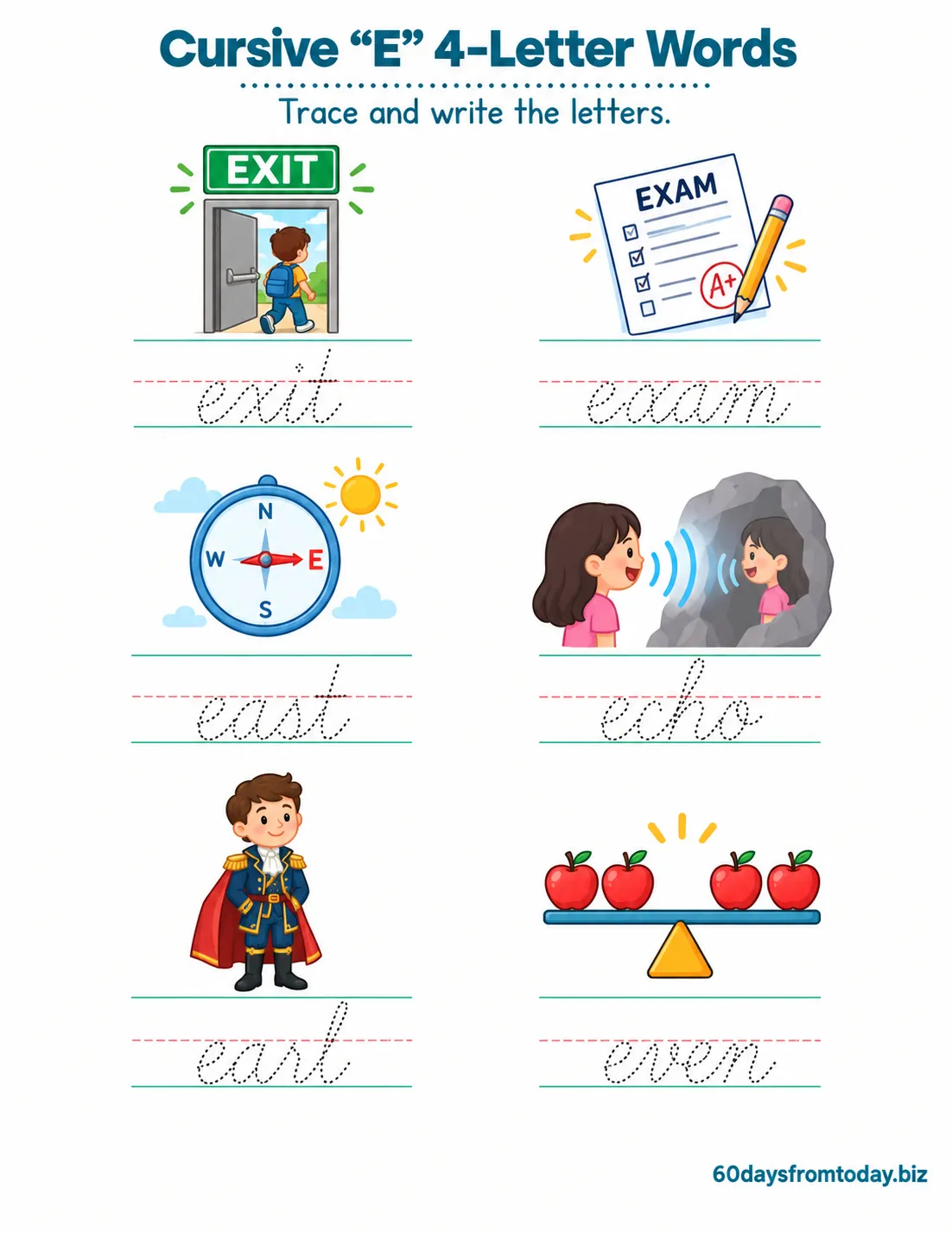
Some of the printables I’ve created feature large cursive E letters, cursive E with helpful instruction arrows, cursive uppercase and lowercase E, three- and four-letter cursive E words with graphics, and many more!
All of these PDF worksheets are designed on US letter-sized paper, while also fitting perfectly onto A4-sized paper! For the complete collection of these worksheets, you’ll find one convenient file further below. Enjoy!
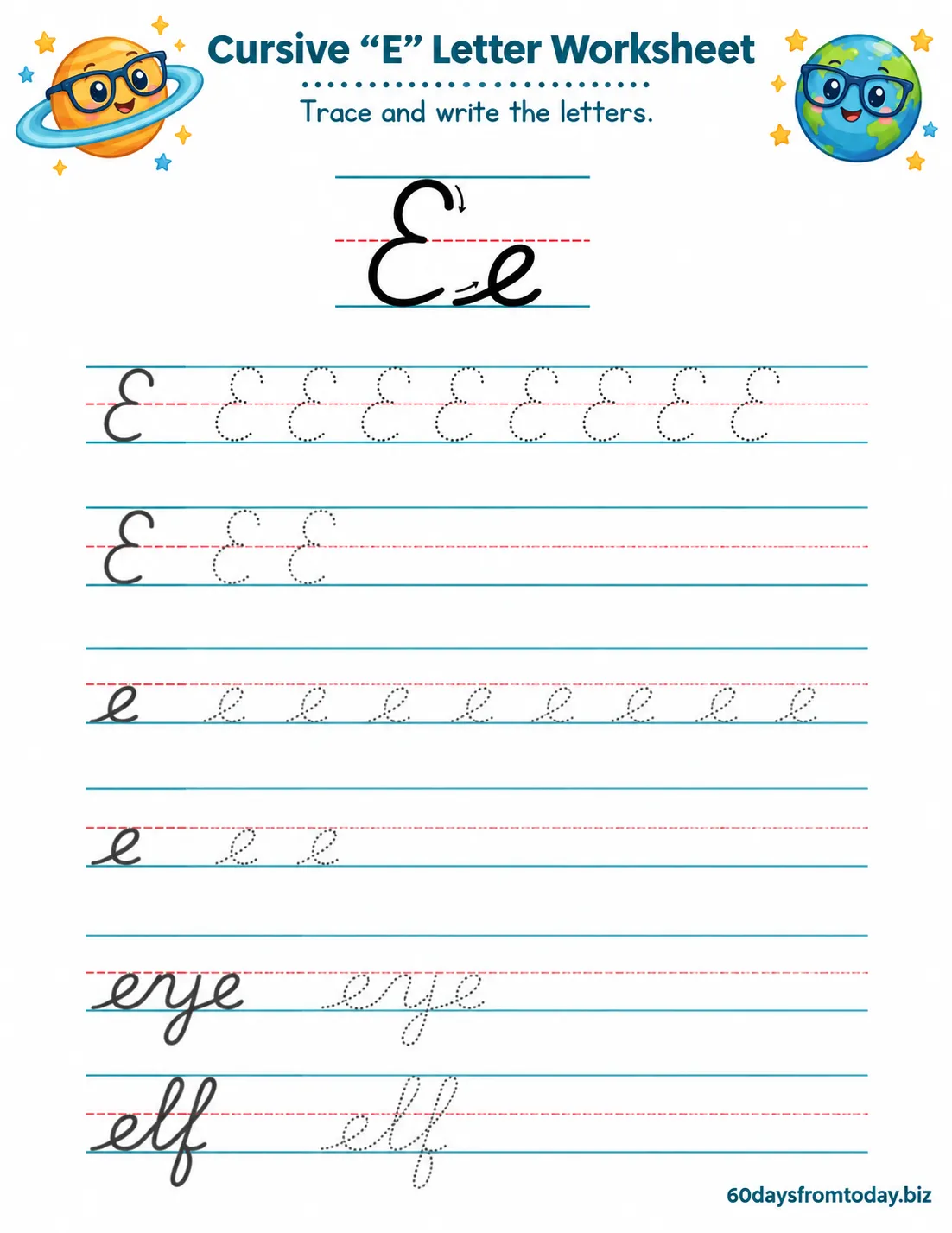
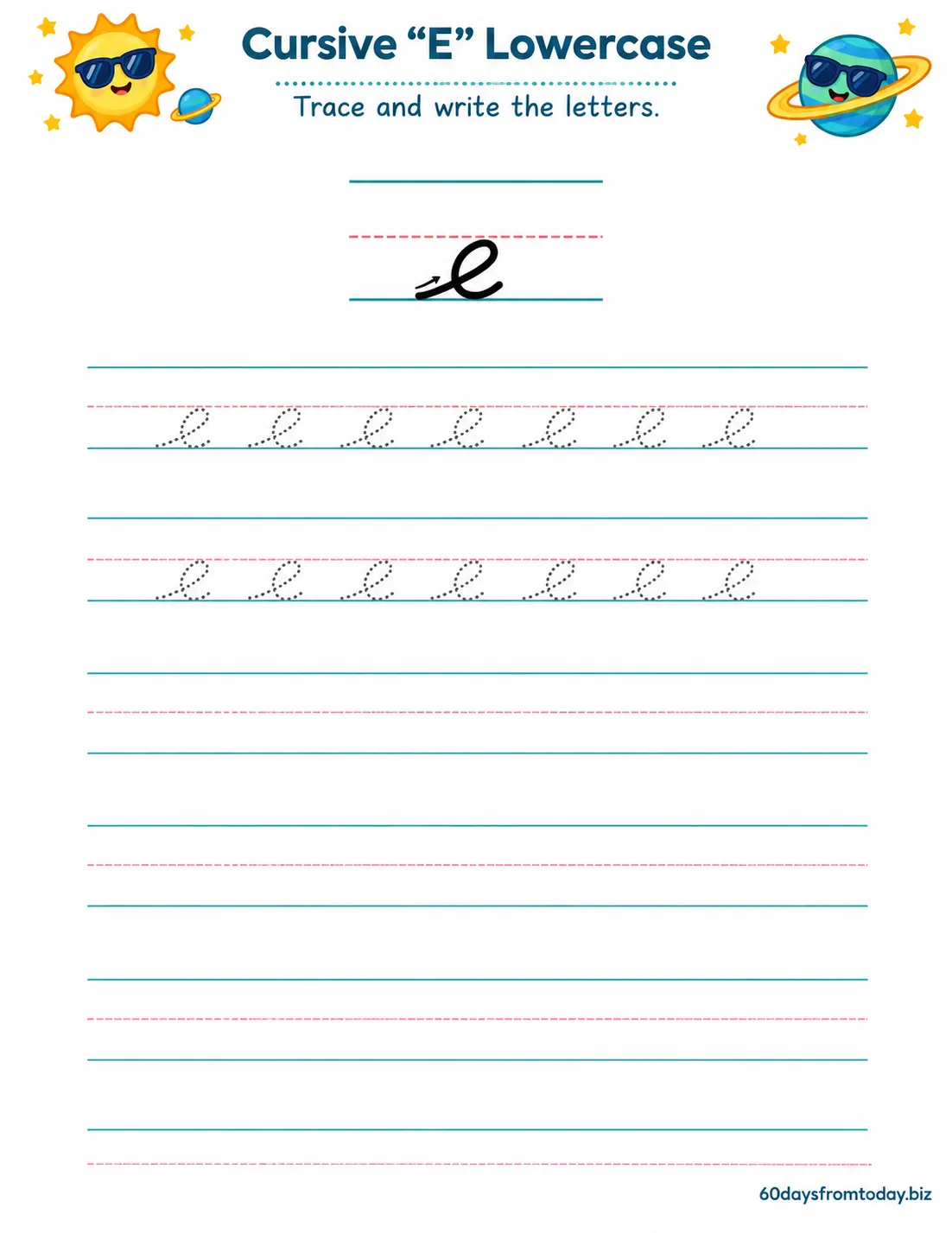
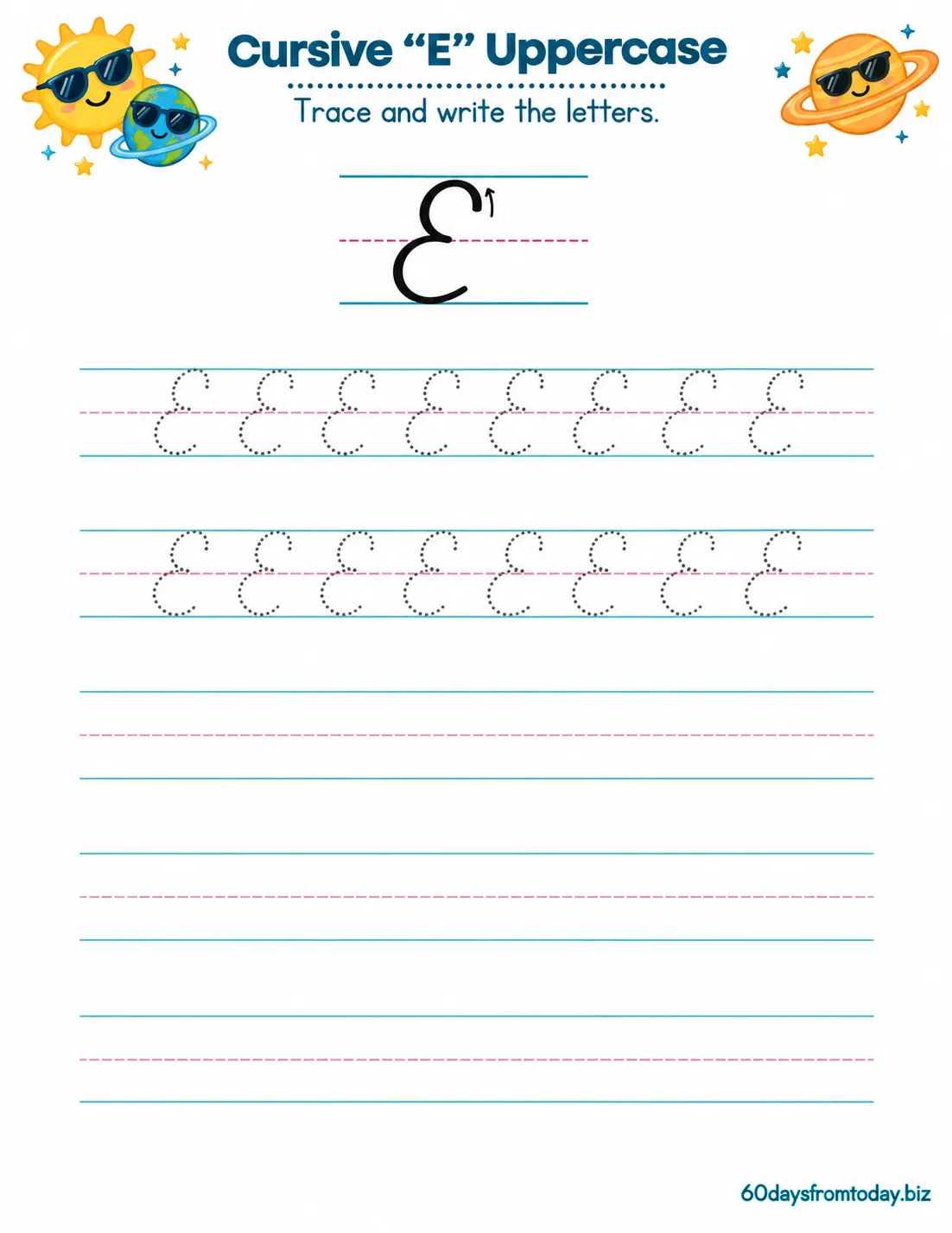
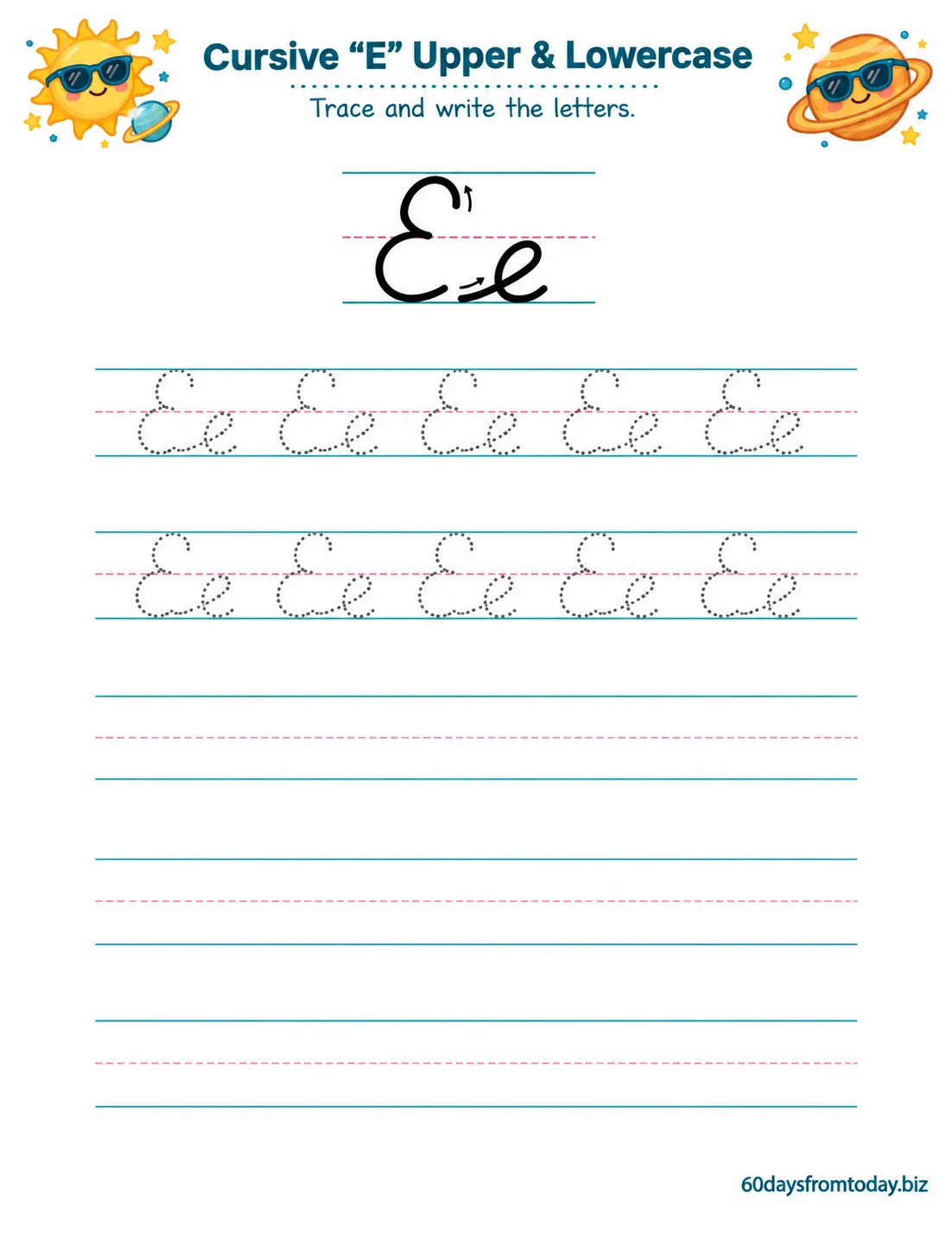
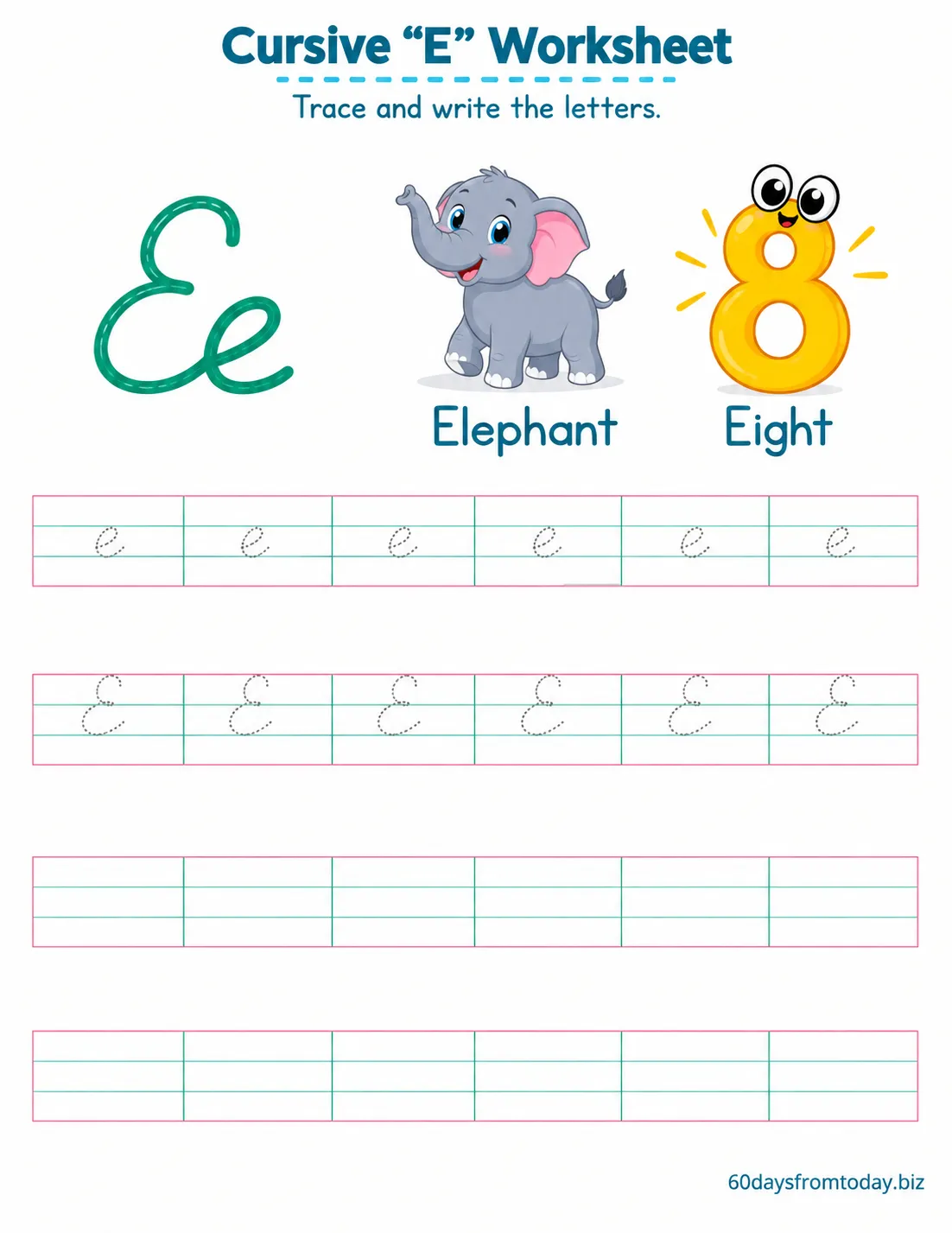
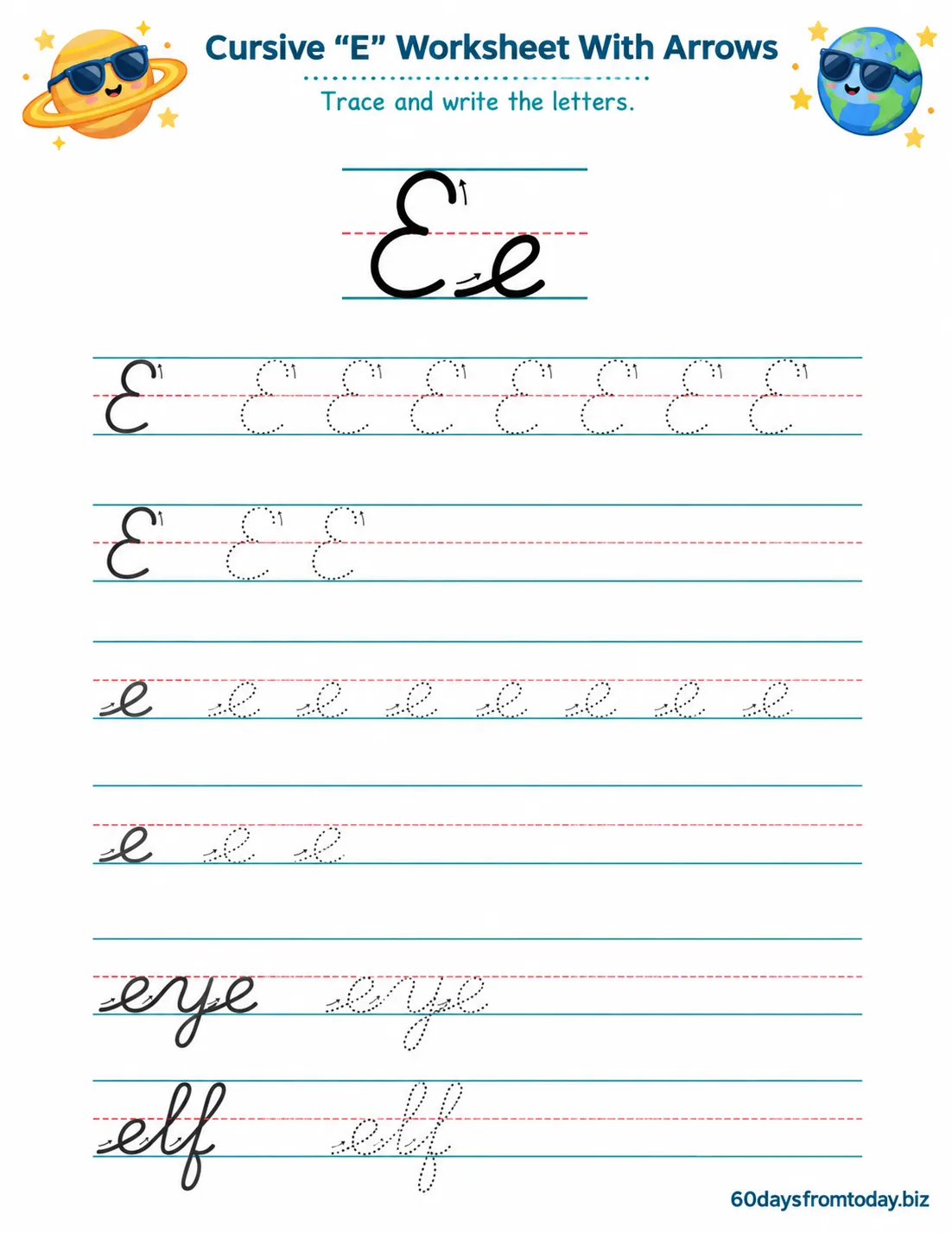
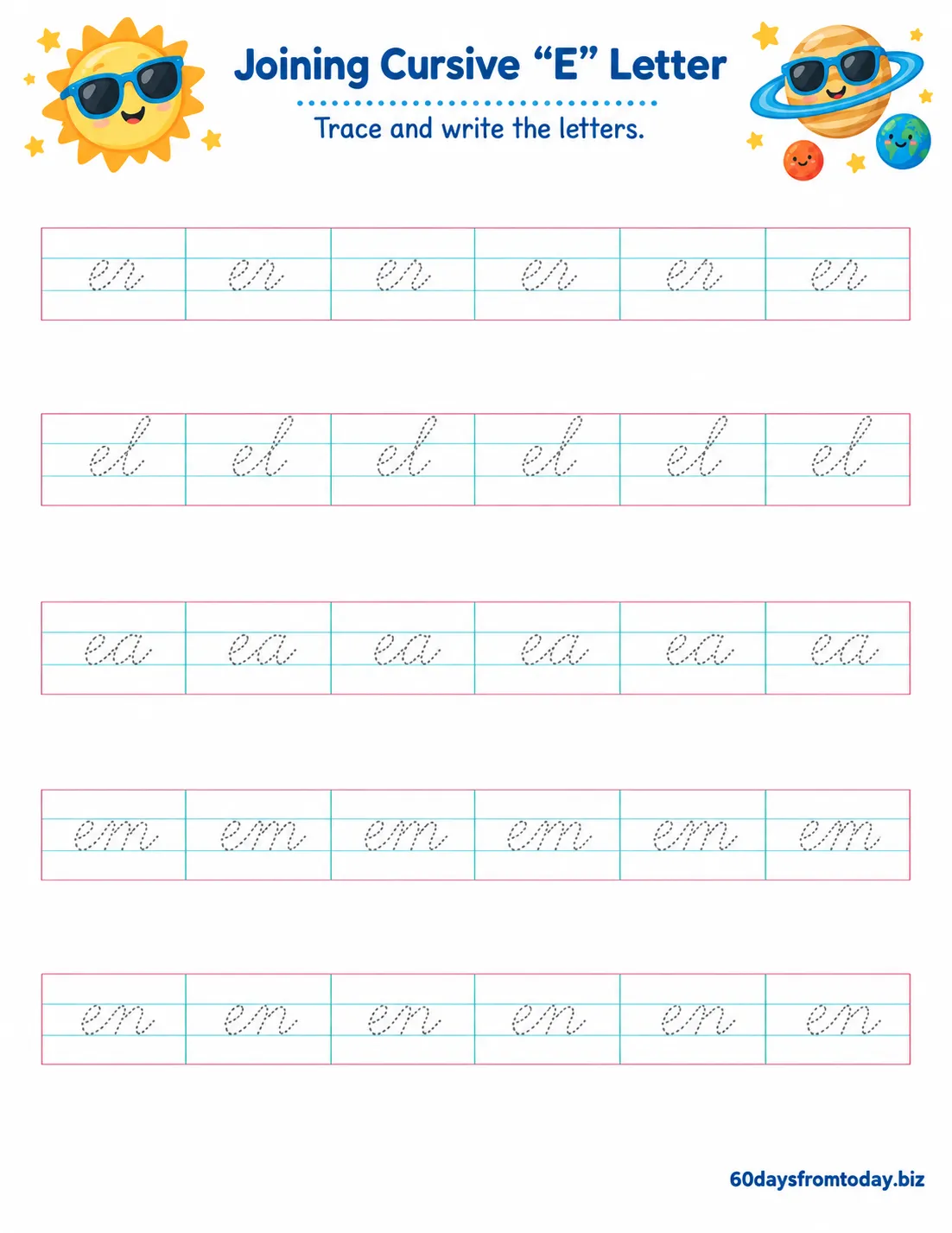
Due to many requests, I’ve combined all of the worksheets above into one convenient PDF file, making them easier to print and download!
If you have ideas or feedback about additional pages that could be added to this set, please share them in the comments section, as I know there are plenty of other versions that could be created!
I hope these printables prove useful, whether you’re using them in the classroom or at home! Enjoy!
Cursive E Worksheets (10 Free Printables)
7 Ways To Use Cursive E Worksheets
The letter E is one of the most commonly used letters in the alphabet, but learning it in cursive can be tricky. Here are seven helpful ways to use these Cursive E worksheets with your children or students!
7. Practicing E Movements
Before moving on to tracing or freehand writing, encourage your children or students to simply practice the movement of E, especially uppercase E, by following the guidelines on the worksheets.
E, especially capital E, can be challenging for students to learn at first, so giving them time and space to explore how to form the shape is a great introduction to the letter.
Ask them to remain between the guidelines as much as possible, while letting them practice a few lines of simply swooping the pencil into the shape of an E.
6. Tracing Uppercase And Lowercase E’s
After they’ve completed a few lines of freehand E shapes and become familiar with the motion, they’ll be ready to start tracing.
My worksheets offer plenty of tracing practice for both uppercase and lowercase E, and you can even print multiple copies of the same page so children have plenty of space to practice.
Have them begin with one, move on to the other, and then encourage them to try my worksheet that combines uppercase and lowercase E.
5. Writing E’s Independently
Once the children have become comfortable tracing E’s, it’s time for them to begin writing the letters independently without any guides.
Of course, the guidelines will still be available on my worksheets, and you can print as many copies as needed to support their learning.
If they find it difficult to write E’s independently, simply return to tracing for a little while.
4. Linking E’s To Each Other
If you’re using the worksheet that combines tracing and writing lowercase and uppercase E, why not have the children or students connect the two together for a few lines?
It’s useful practice, even though this combination may not appear in words very often (“Eeyore” comes to mind). Let them experience how the letters flow naturally into one another.
It could even become their first lesson in linking cursive E’s, with other letter connections introduced afterward.
3. Writing Three- and Four-Letter Words That Begin With E
My worksheets include both three- and four-letter words beginning with E for tracing practice.
Consider building on the selection of words I’ve included by adding some of your own.
Or, once the children have traced the words enough times, challenge them to write the words independently without any tracing guides.
To do this, you’ll need several copies of the word pages, along with some lined sheets of your own.
2. Linking E’s To Other Letters
My worksheets provide plenty of examples of E’s linked with other letters that children can practice by tracing.
You can expand this lesson by having them practice tracing E, both uppercase and lowercase, together with every other letter of the alphabet, even if they haven’t learned all the other letters yet.
You can also have them practice tracing every other letter of the alphabet followed by lowercase E, helping them become familiar with how other letters connect to it.
1. Writing Words That Contain E Within Them
Consider making use of the generous guideline spaces on my worksheets to help children practice tracing words that contain E within them.
Words such as “Bed” or “Sleep” (which is especially useful for practicing how E’s connect together!) or “Me” would all be great choices.
You could create dotted-line traceables of these words on my worksheets and make copies to distribute to students.