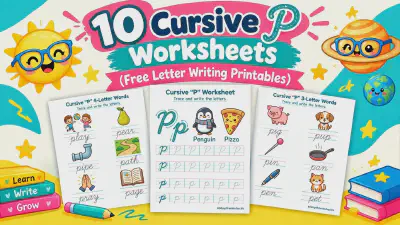
On this page, you’ll discover 10 cursive P worksheets that are completely free to download and print! These printables are wonderful resources for teachers and parents who want to help children understand the importance of cursive writing, especially when learning the letter P.
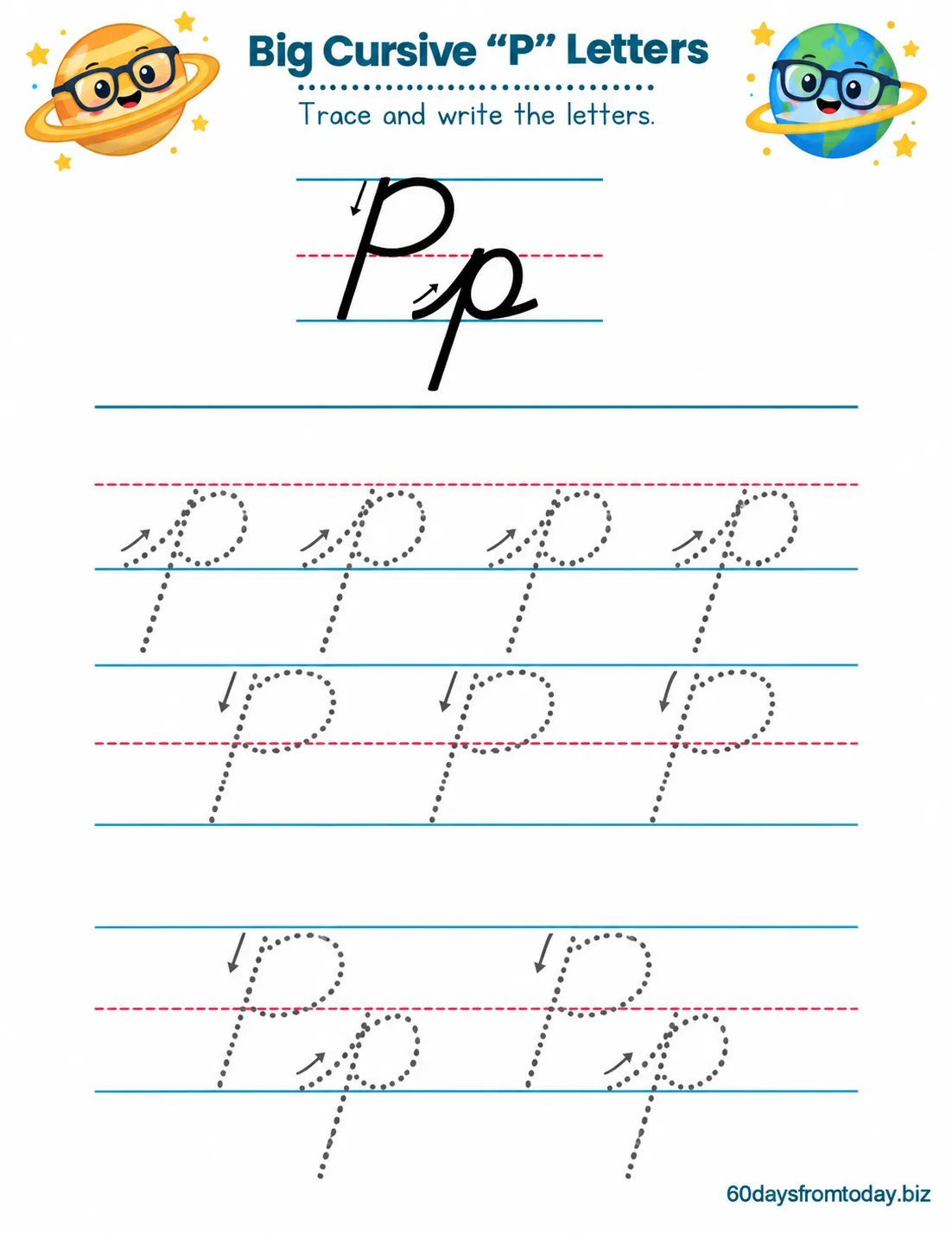
For this collection, I created a variety of worksheets featuring different activities, including uppercase and lowercase P letters, cursive P lettering with helpful guide arrows, dotted cursive P letters for tracing, simple words beginning with P, and much more!
To access these worksheets, simply click any of the images or links below to open the PDF on a new page. Once opened, you can download and print them for free as many times as needed!
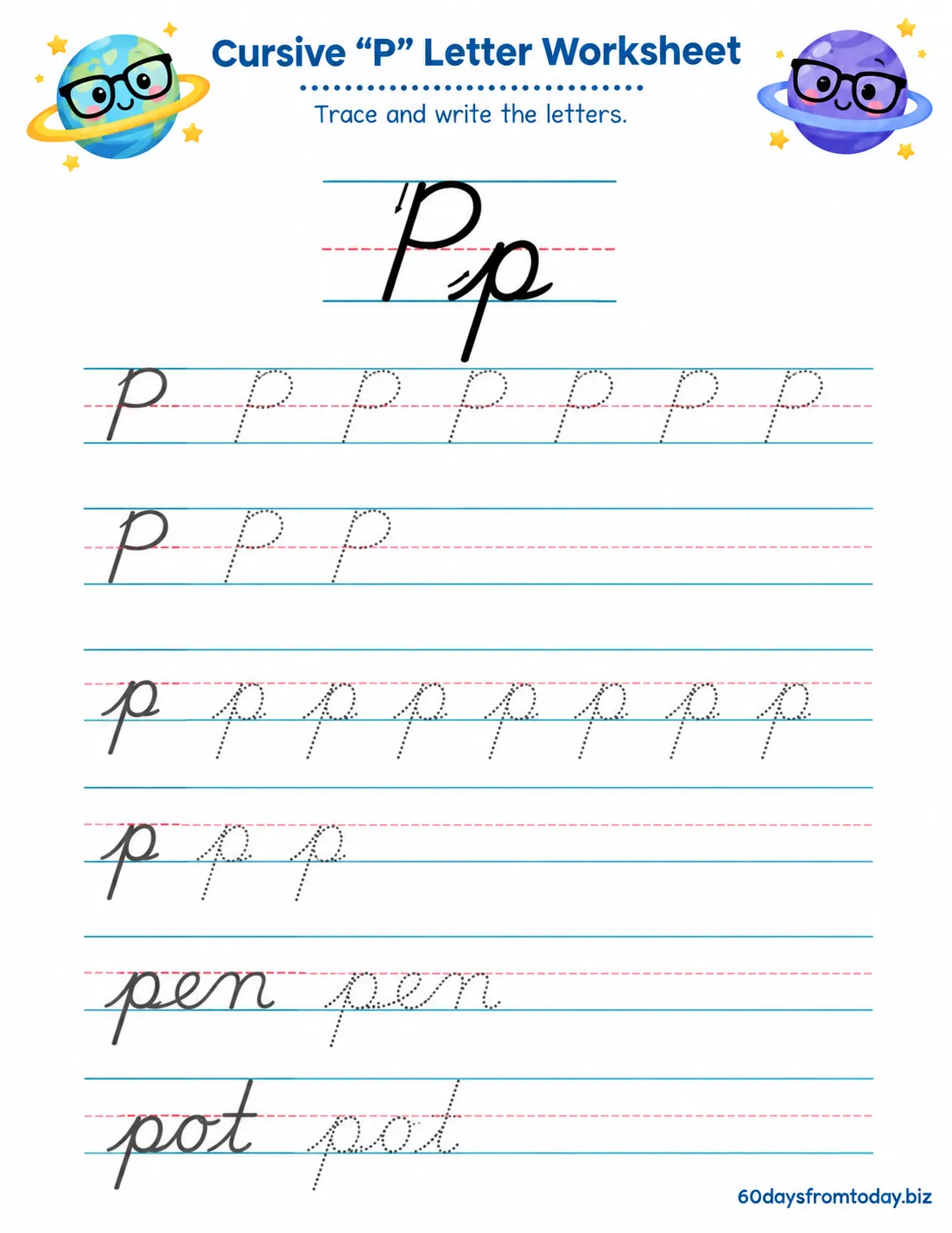
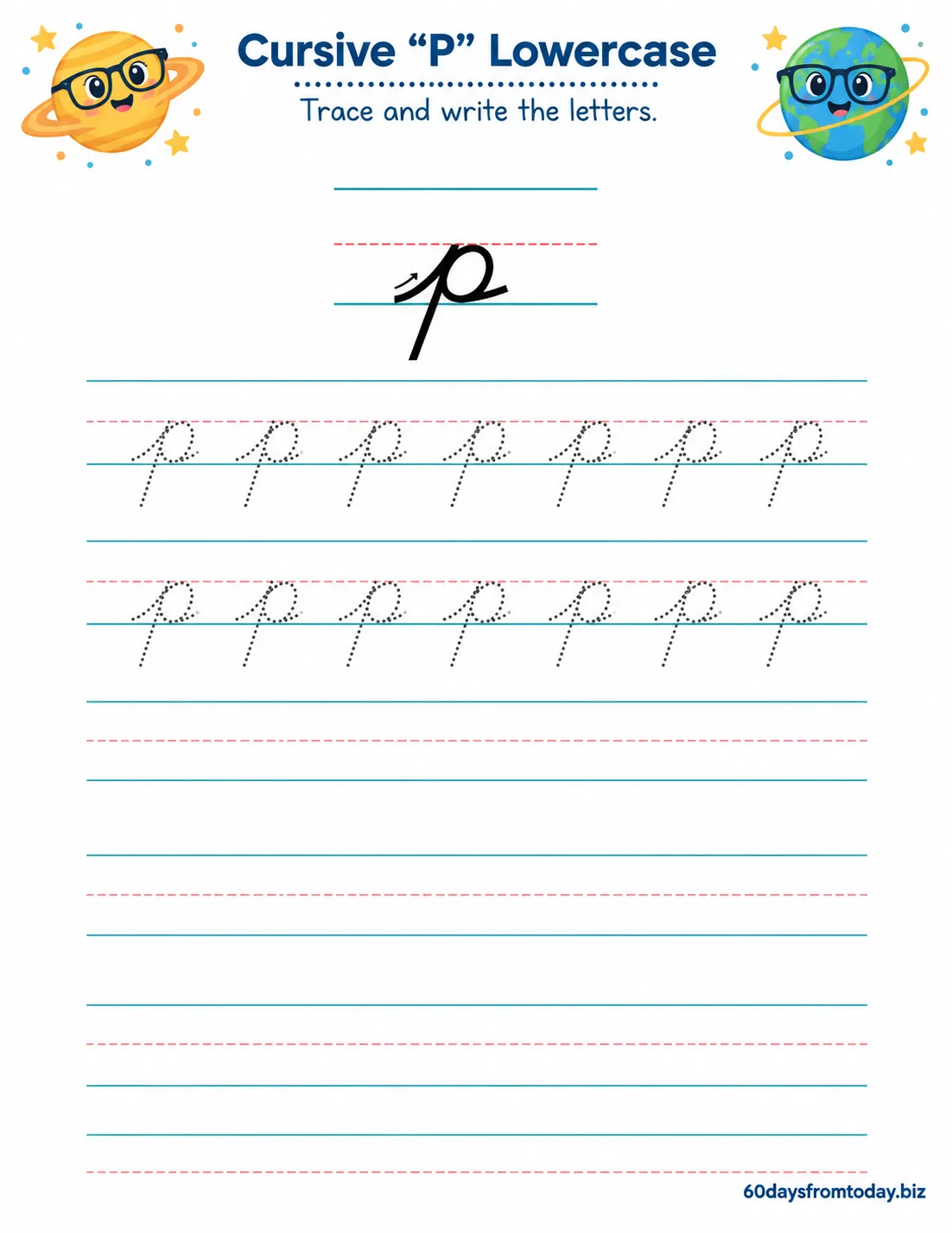
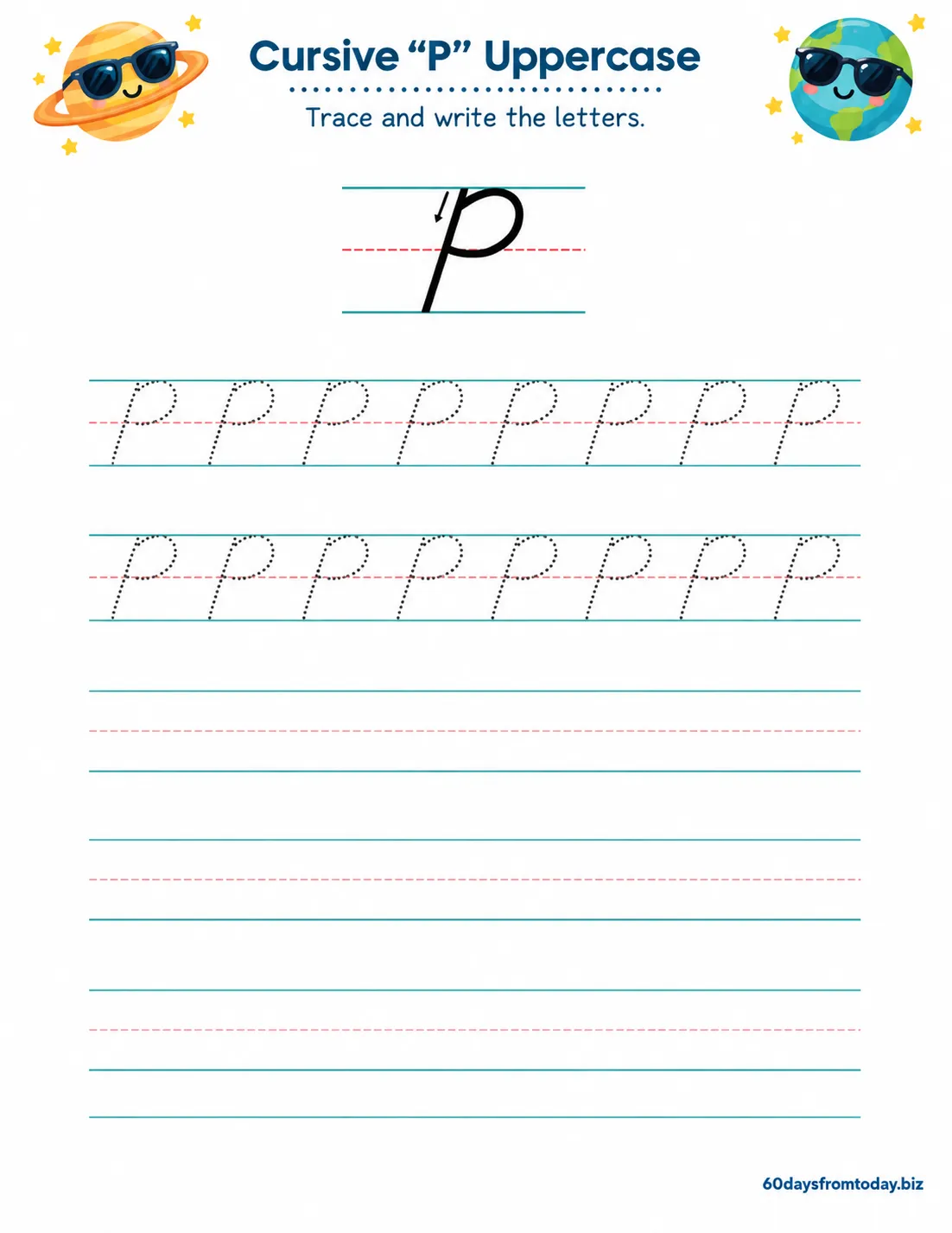
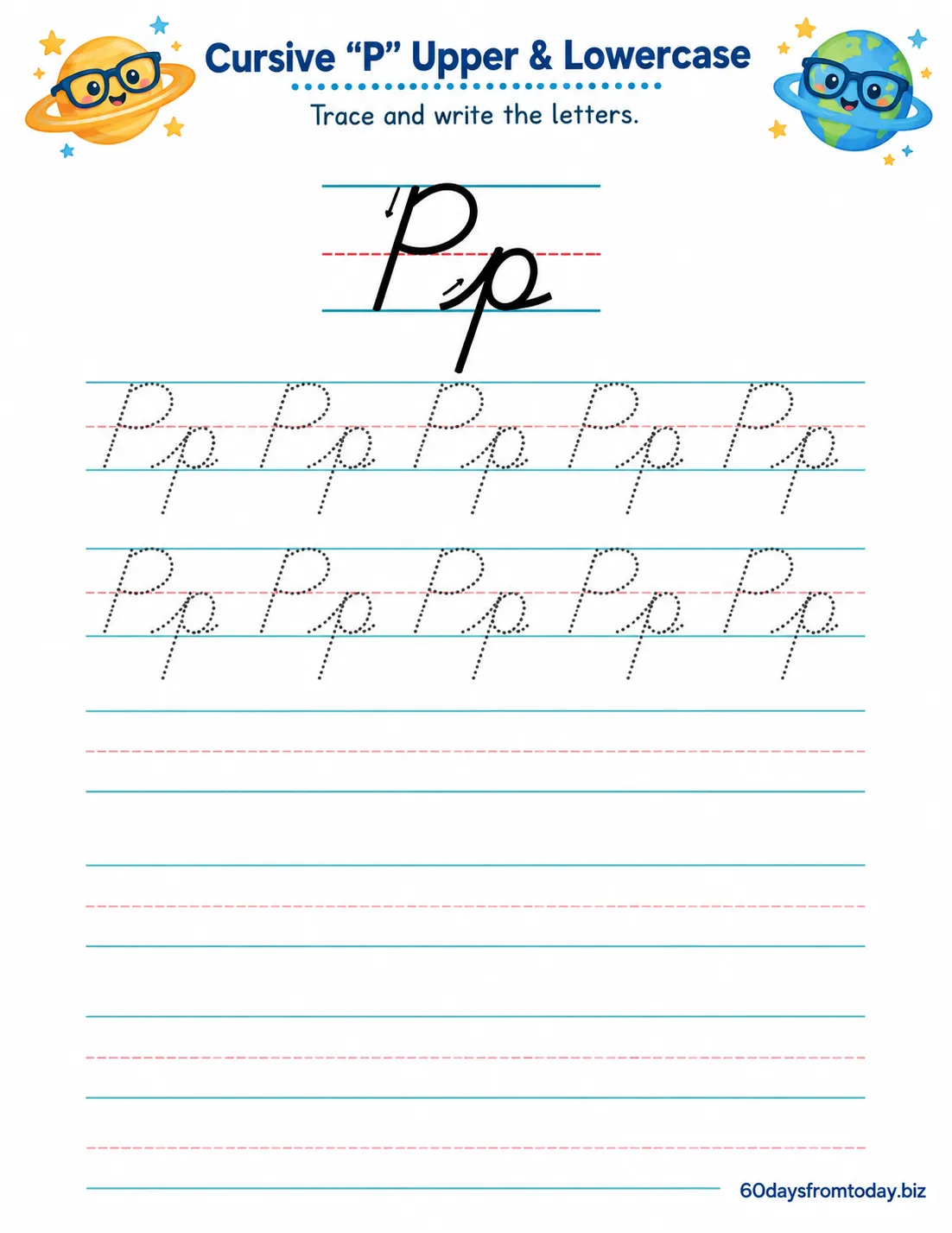
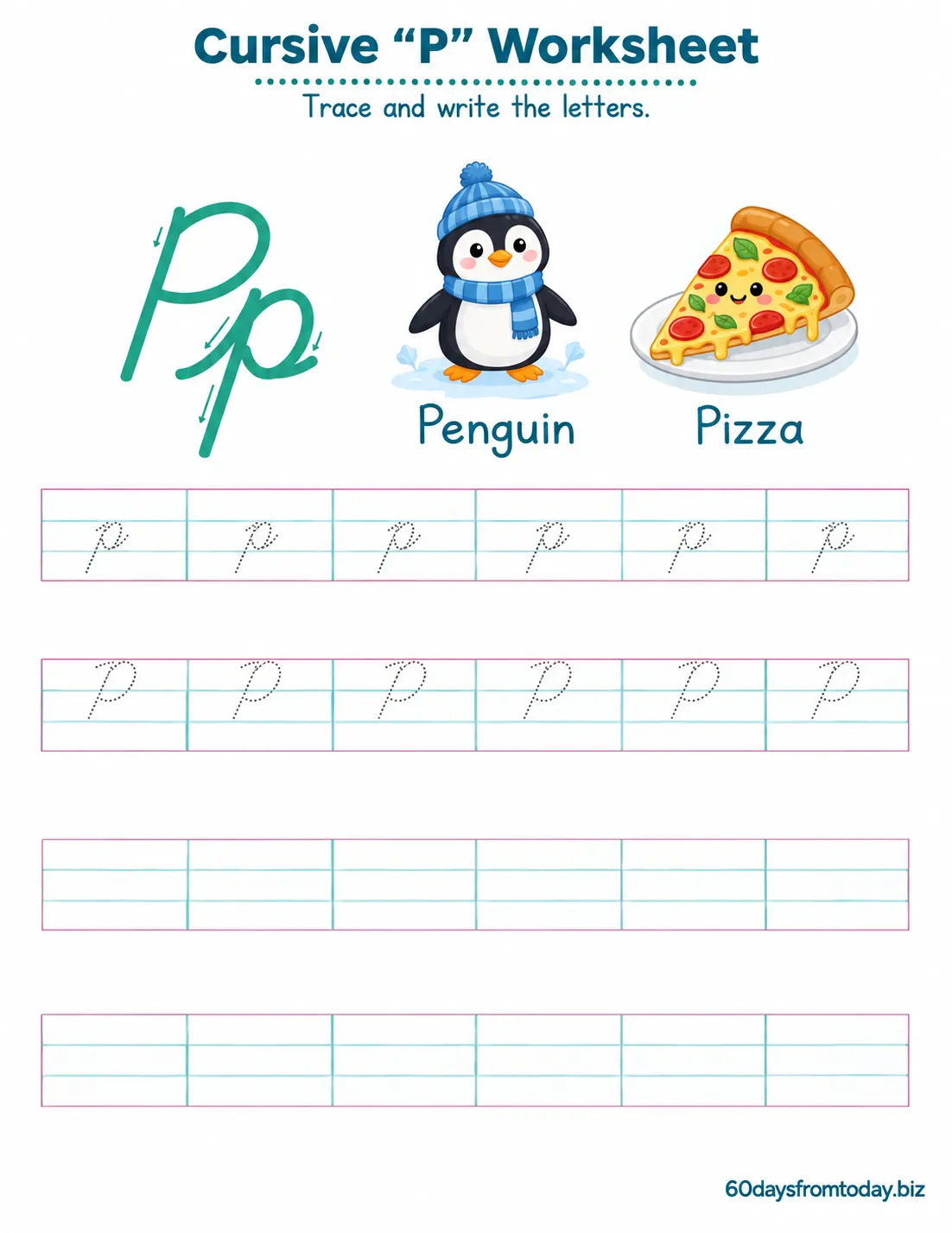
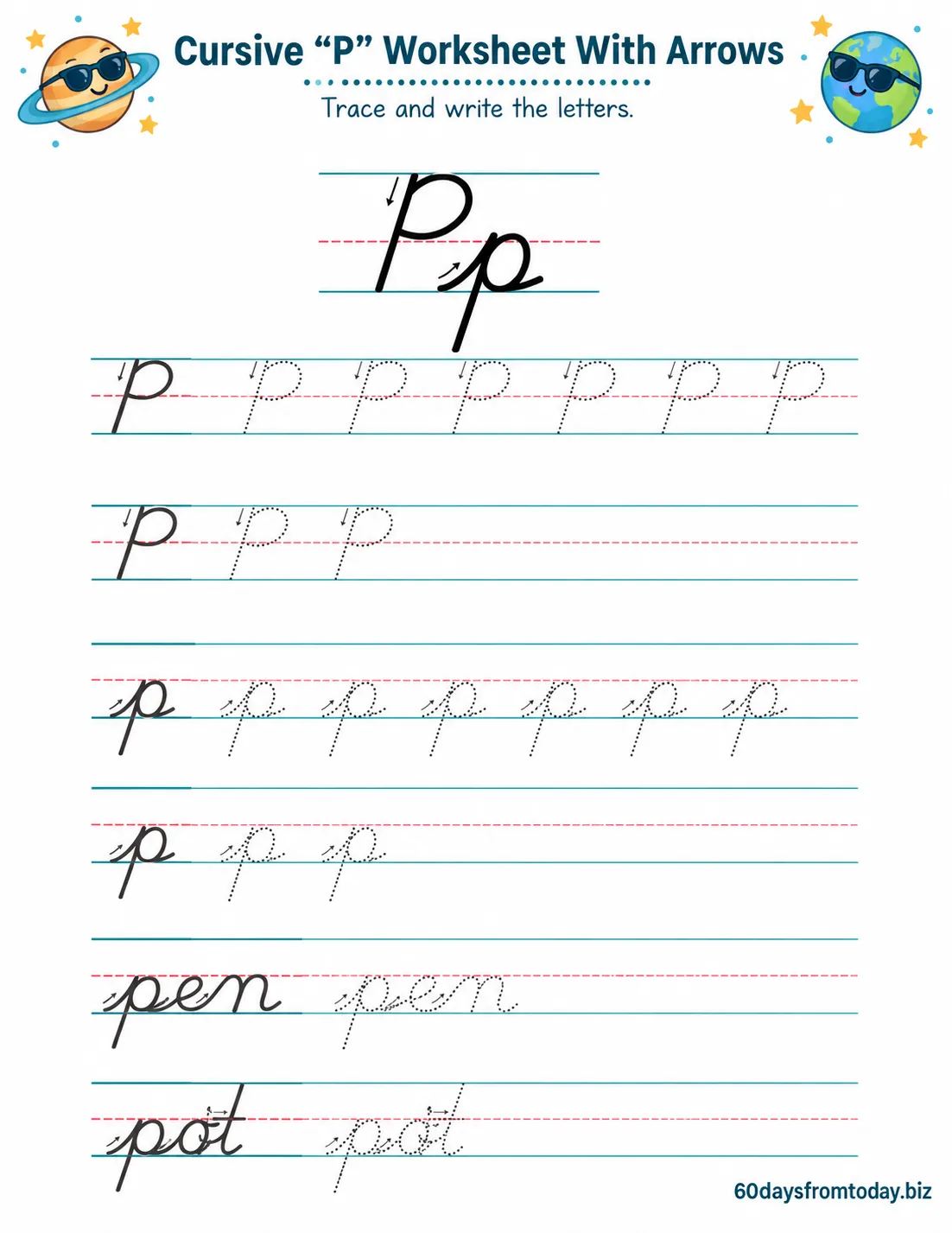
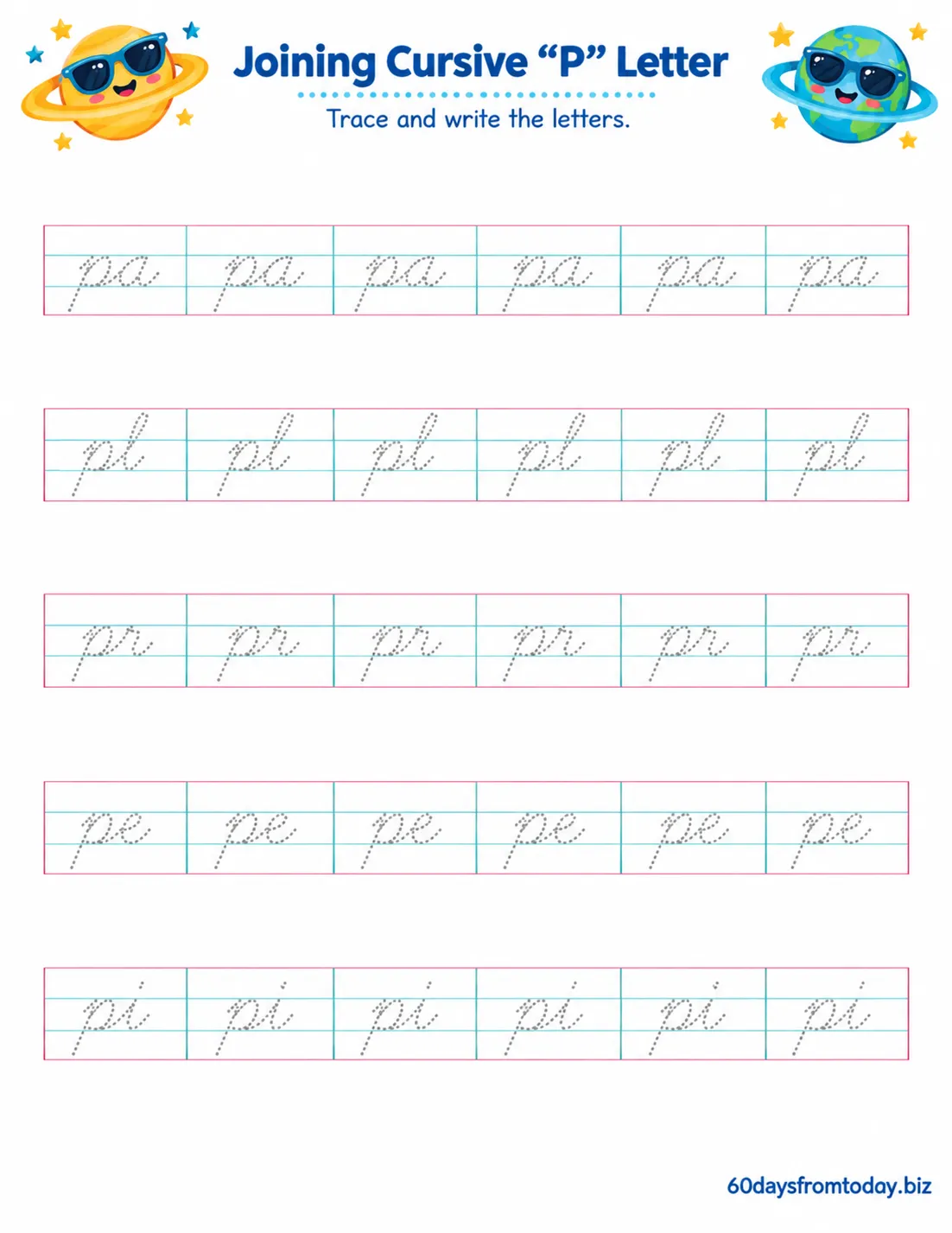
All of these PDF worksheets come in standard US letter size, and they also fit perfectly on A4 paper! Enjoy!
7 Ways To Use Cursive P Worksheets
When your students are ready to learn cursive P, try using my worksheets in any of these seven ways to support and strengthen their learning.
7. Practicing The Pencil Movements For Uppercase And Lowercase P
Although many teachers may begin learning a new cursive letter with tracing, I recommend starting with this freehand exercise.
Using the blank guideline space on one of my worksheets, encourage children to practice the pencil movements needed to form uppercase and especially lowercase P.
For uppercase P, the movement begins with the small tail, followed by the straight line going down. Simply let them practice those motions on paper.
Next, have them add the large loop that creates the front of the P.
For lowercase cursive P, the movement is a little more challenging. Begin with the small tail, then bring the pencil downward.
Next, have them create the bottom loop followed by the top loop, and finish with the forward swoop.
The goal isn’t perfect shape or form, so don’t worry about staying inside the lines; the main purpose is to build muscle memory before they work toward a more consistent and uniform shape.
6. Tracing Uppercase And Lowercase P
Tracing uppercase and lowercase P is an effective step before asking children to write the letters independently.
I created three worksheets specifically for tracing P: one for lowercase, one for uppercase, and one featuring both.
Keep those worksheets even after students finish tracing, because they also include plenty of space for practicing cursive P independently.
5. Writing Uppercase And Lowercase P Independently
Once students are ready to move forward and write uppercase and lowercase P on their own, they can use my worksheets for additional practice.
As mentioned, the same worksheets designed for tracing also include plenty of blank guideline space, and you can print multiple copies of each sheet for every student.
4. Linking Lowercase P To Itself
A helpful way to make students more comfortable with the admittedly trickier lowercase P is to create a tracing exercise using blank guideline space, with multiple lowercase P’s linked together.
Using dotted lines, make an entire line of connected lowercase P’s and then create copies of the worksheet.
Once students become confident with tracing, encourage them to practice writing the linked lowercase cursive P’s independently.
This exercise is also highly practical because there are plenty of words that contain double P’s.
3. Linking P To Other Letters
I have a worksheet that connects lowercase cursive P’s to other letters, but you can take the activity further by creating your own worksheet that links lowercase P with every other letter of the alphabet.
However, you won’t need to make one for uppercase P because the letter is one of the rare cases where students lift the pencil after completing it before beginning the next letter of the word.
2. Tracing Words That Begin With P
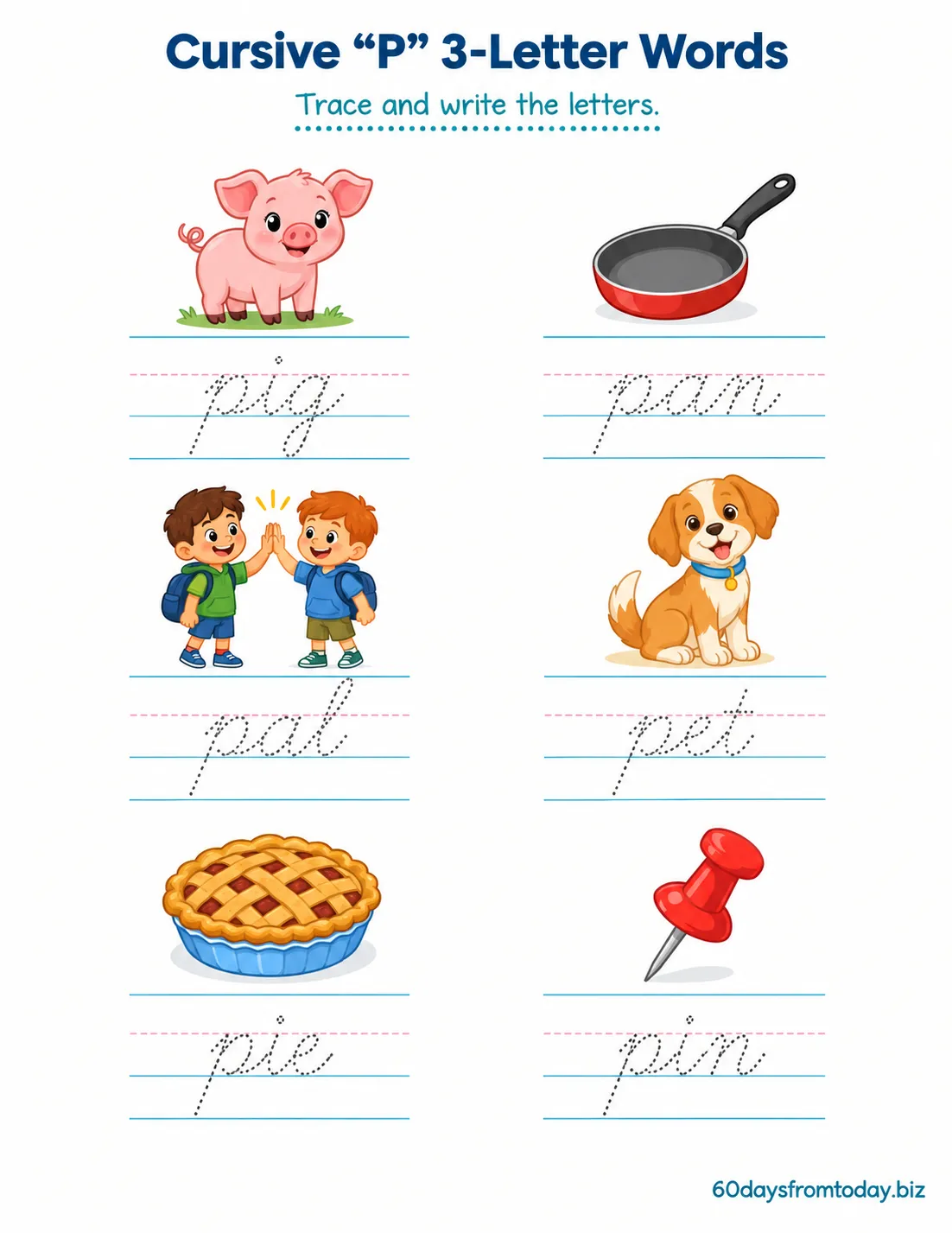
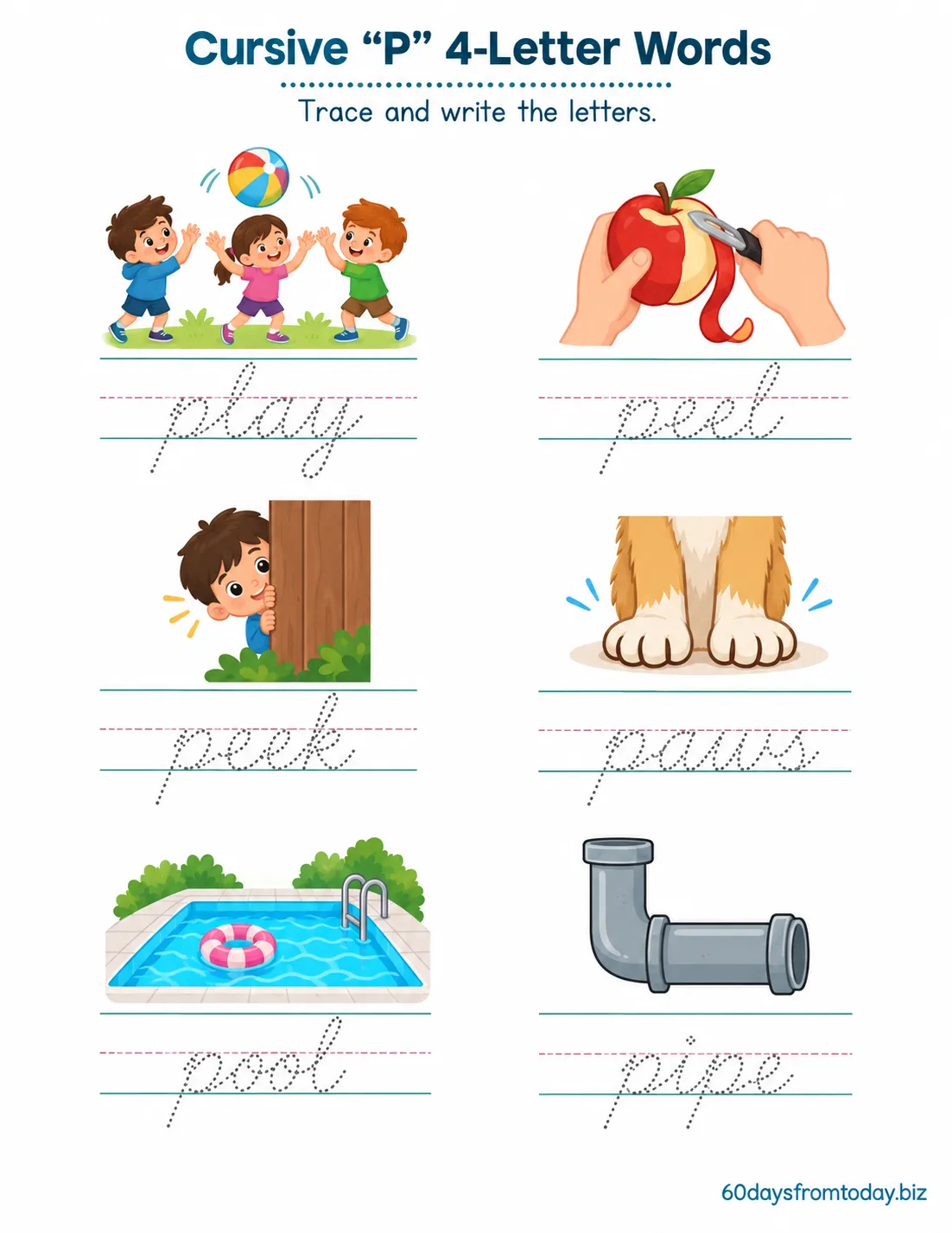
I have several worksheets featuring three- and four-letter words that begin with P, but you can easily expand the activity by using blank guideline space.
You could create five- and six-letter words, begin words with an uppercase P, or even make tracing exercises featuring words that contain the letter P.
Words such as “Happy,” “Opportune,” or “Apply” are all great choices.
1. Tracing Alliterative P Cursive Sentences
Using blank guideline space, you can create alliterative cursive P sentences for students to trace and give them plenty of practice, not only with P but with many other letters as well.
Try: “Pepper puts pants on her porcelain doll Polly” or “Peter pats the dog Piper happily.”
Even simply tracing sentences like these can help improve eye-hand coordination, memory retention, and potentially spelling skills.