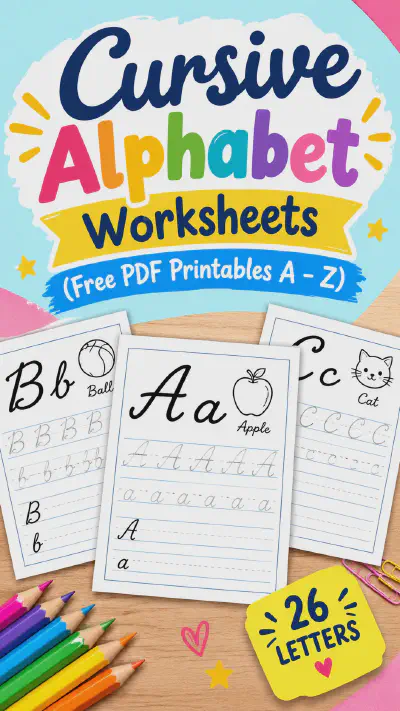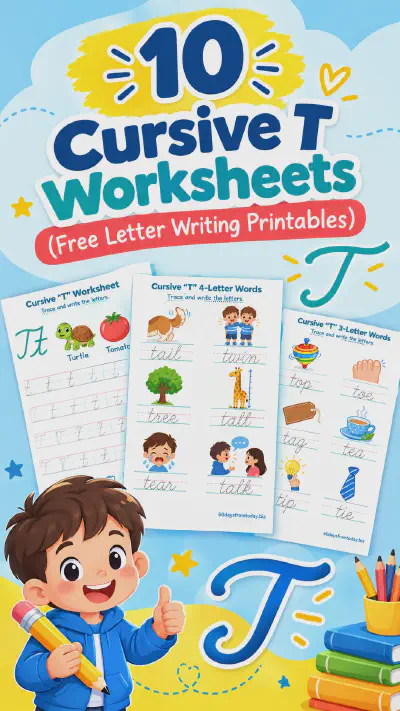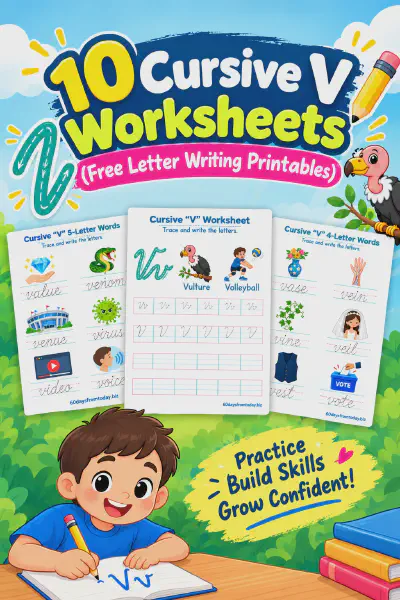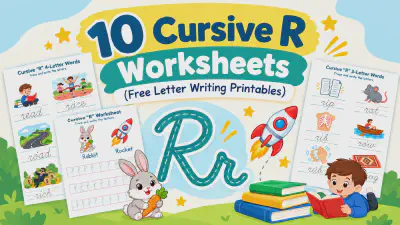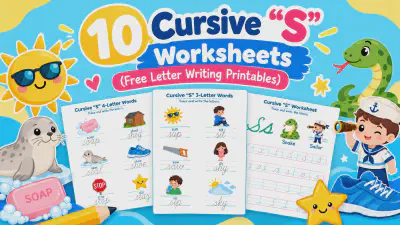
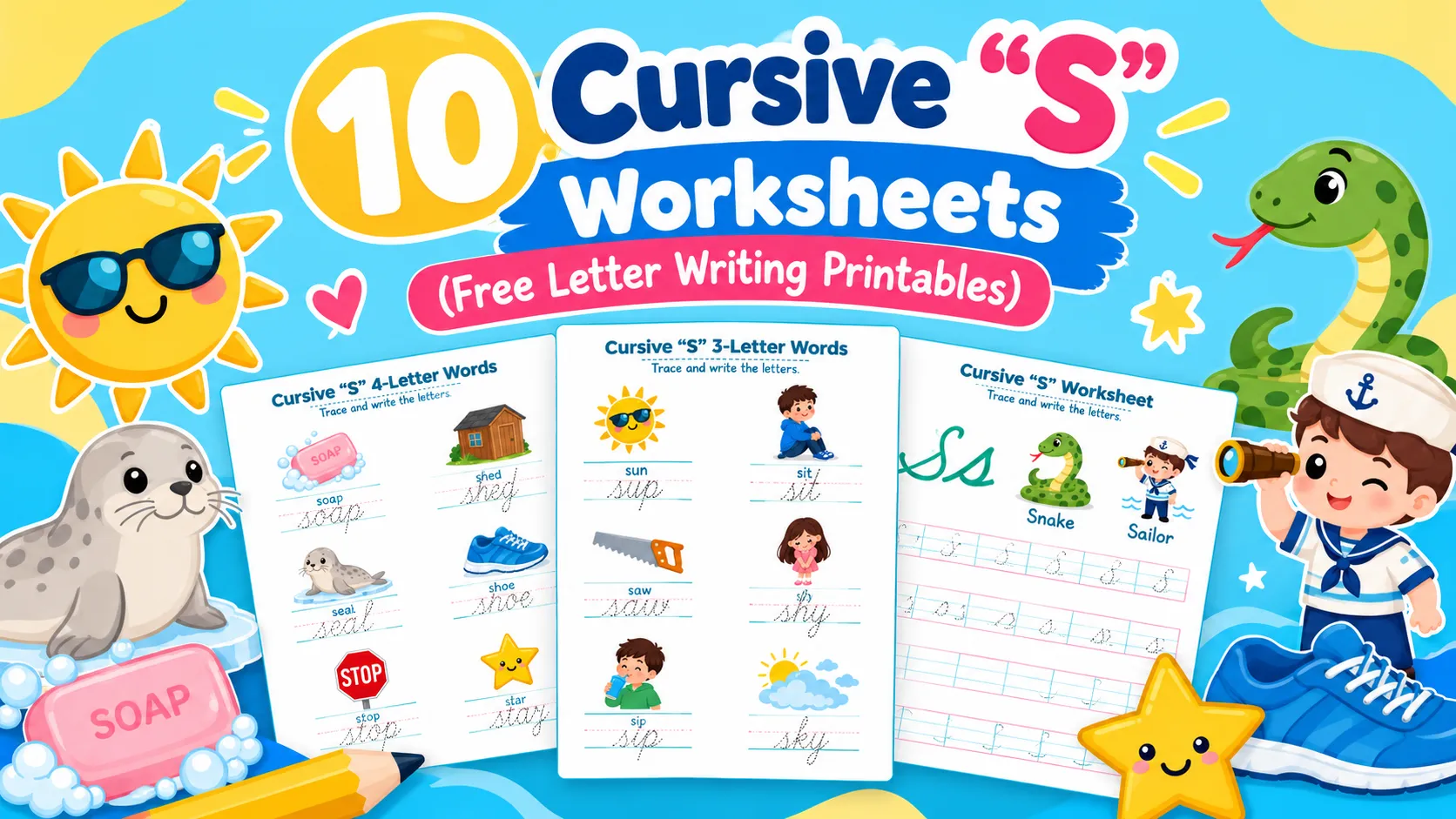
On this page, you’ll discover 10 cursive S worksheets that are completely free to download and print! These worksheets are ideal for teachers and parents who are teaching young learners cursive lettering, with a special focus on the letter S.
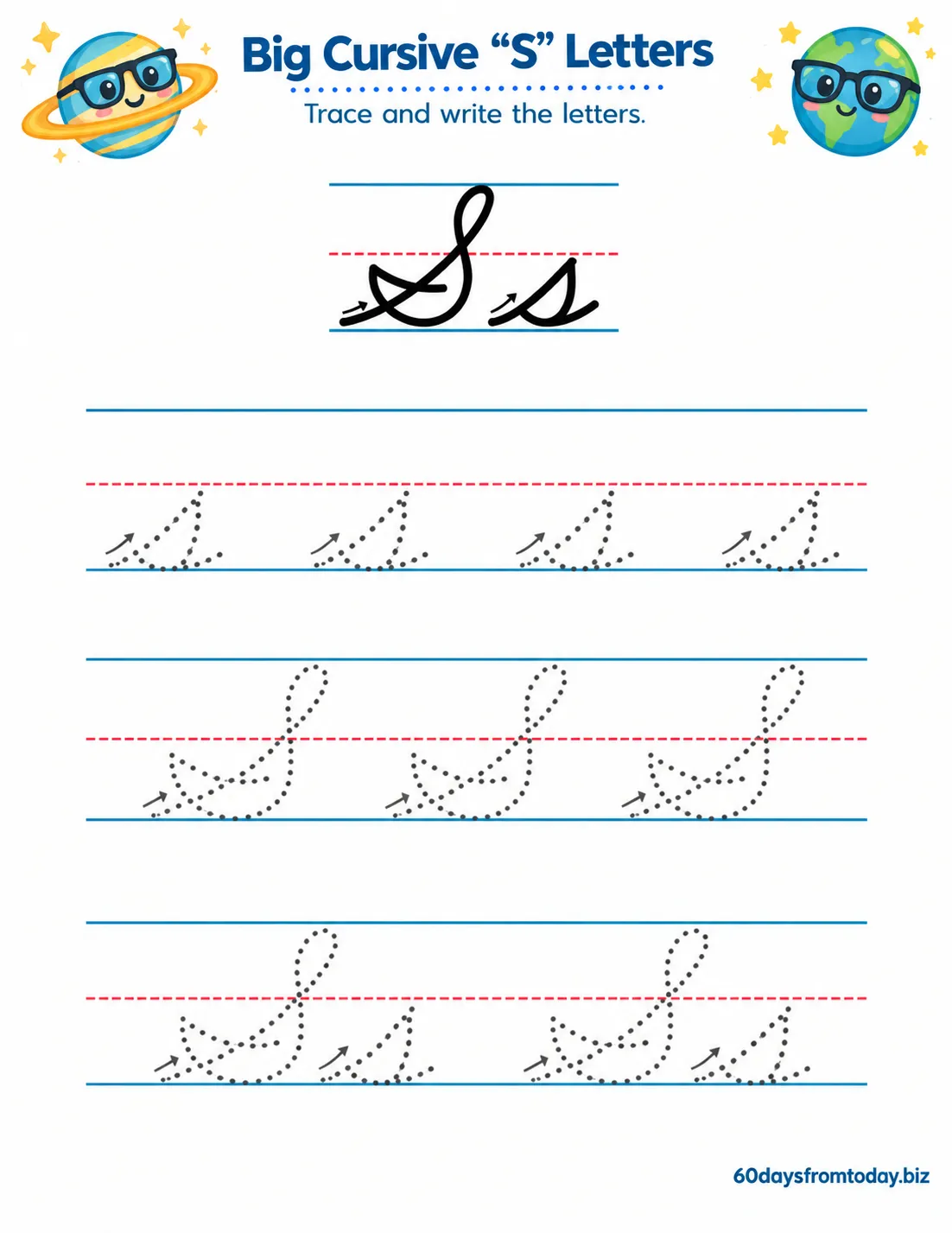
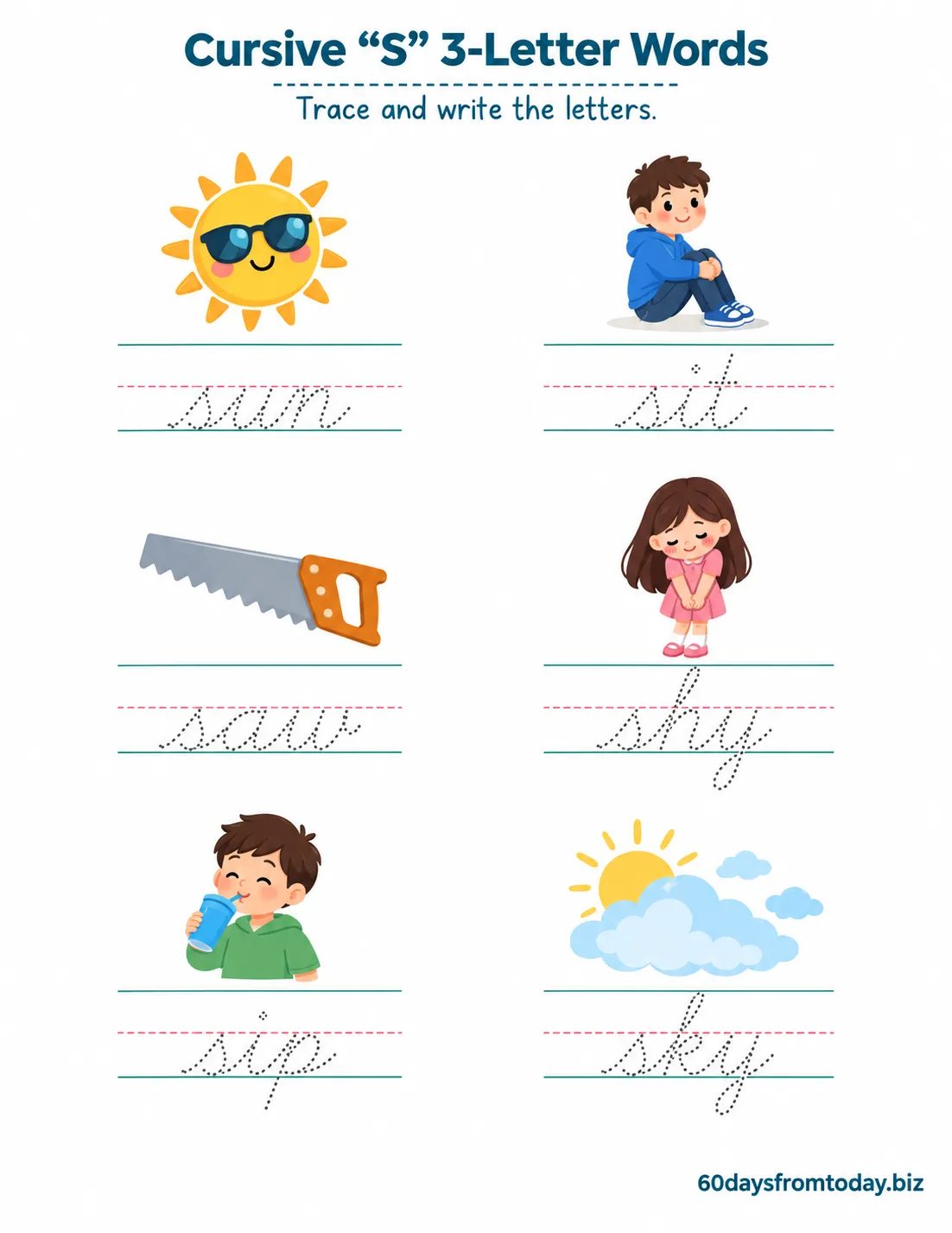
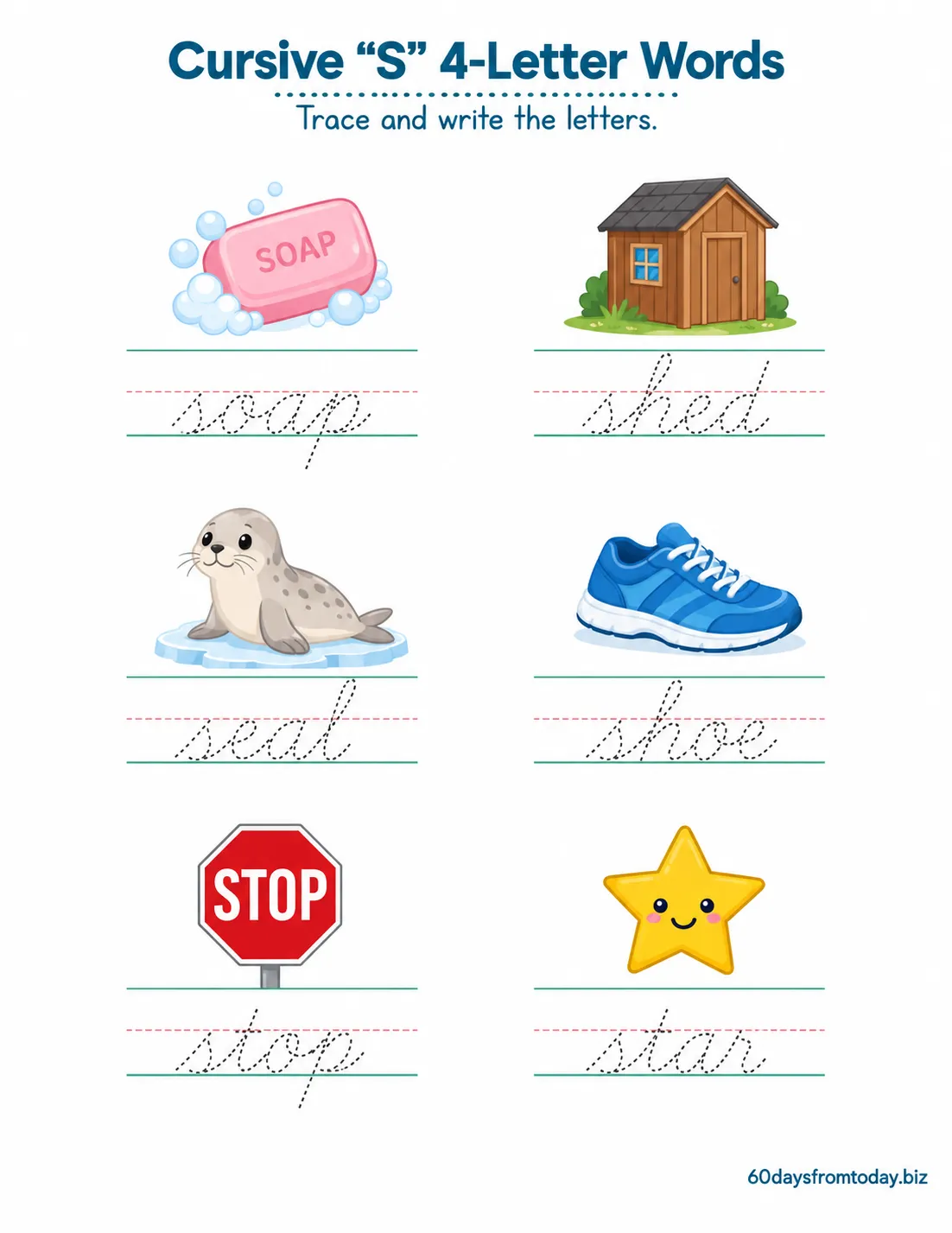
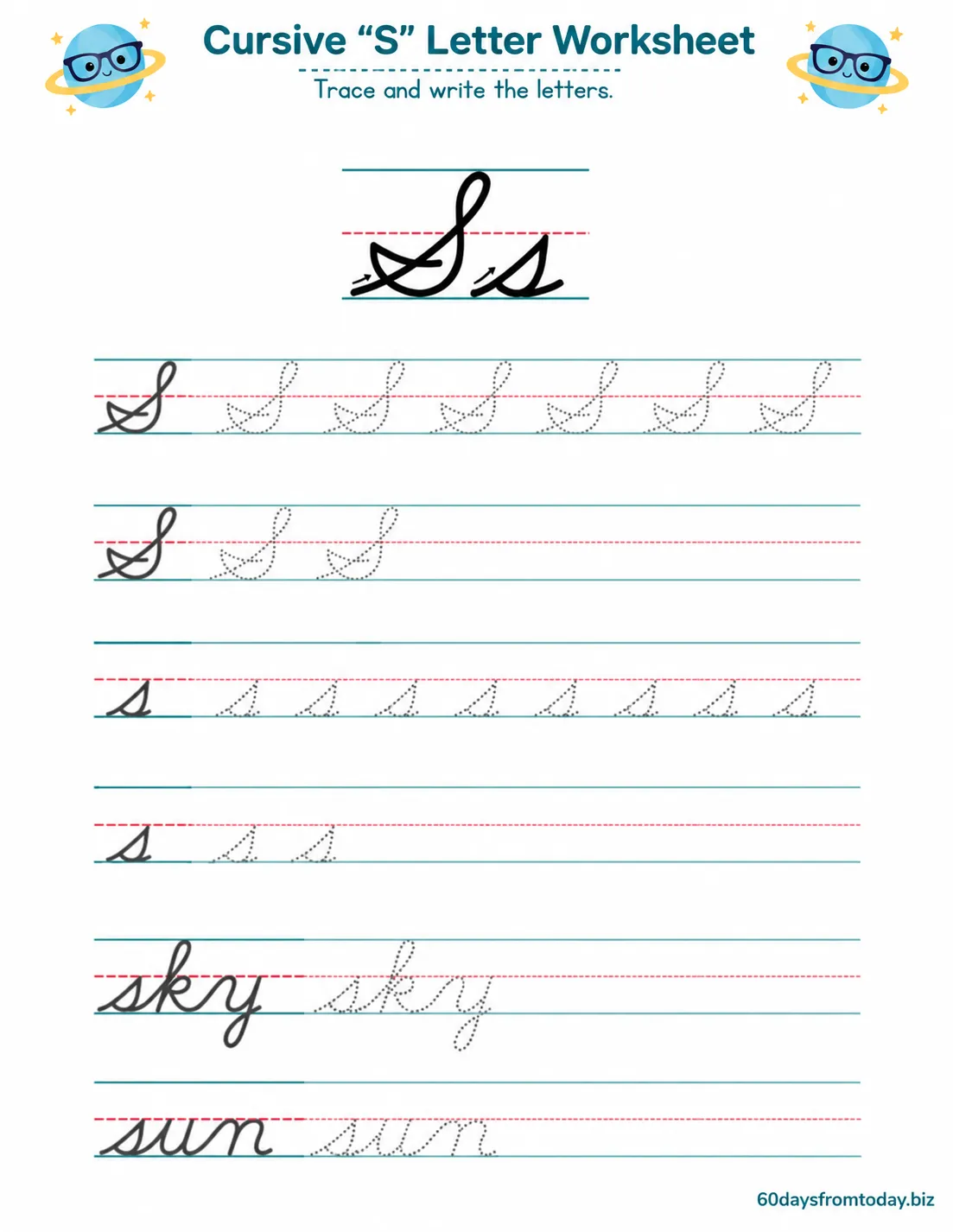
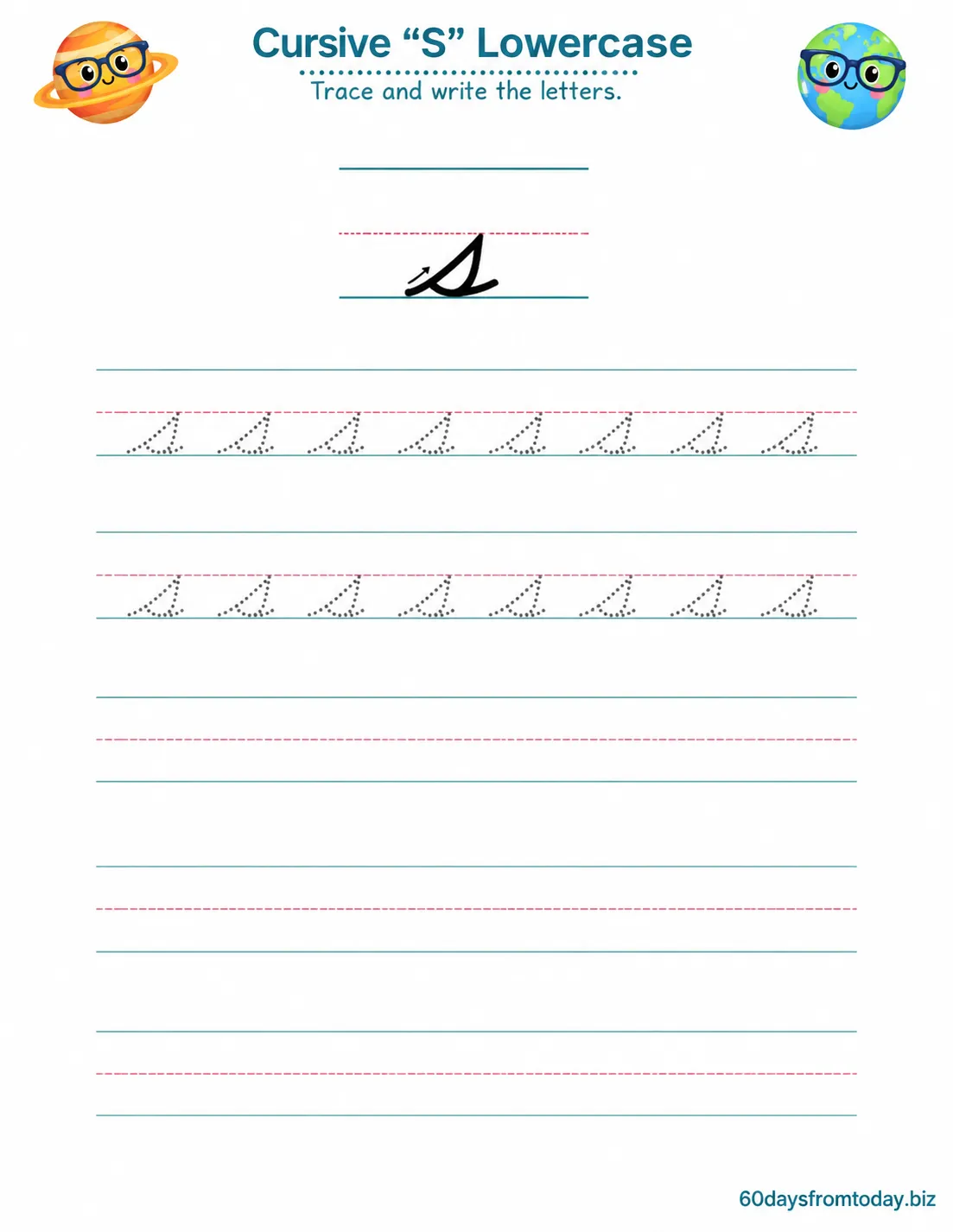
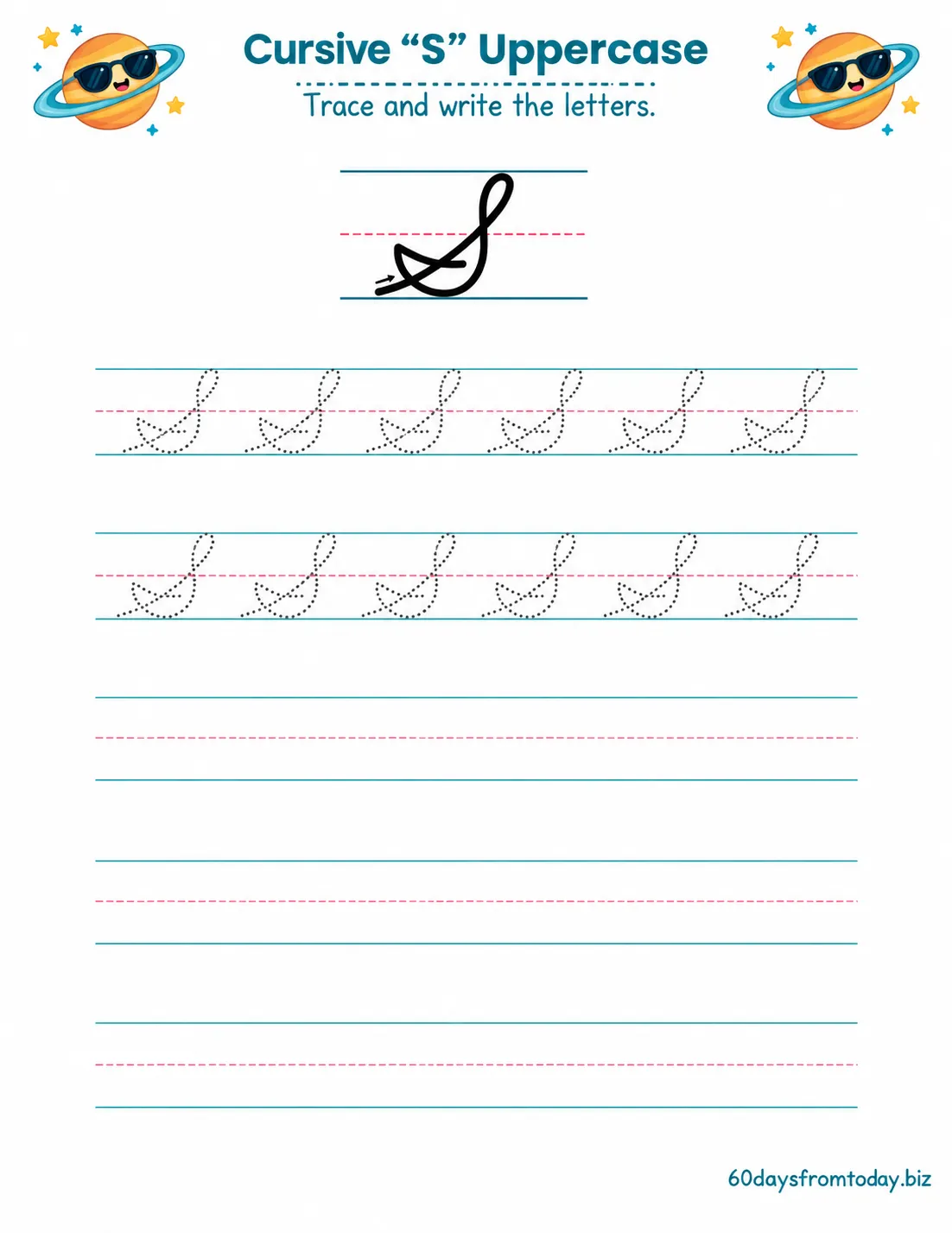
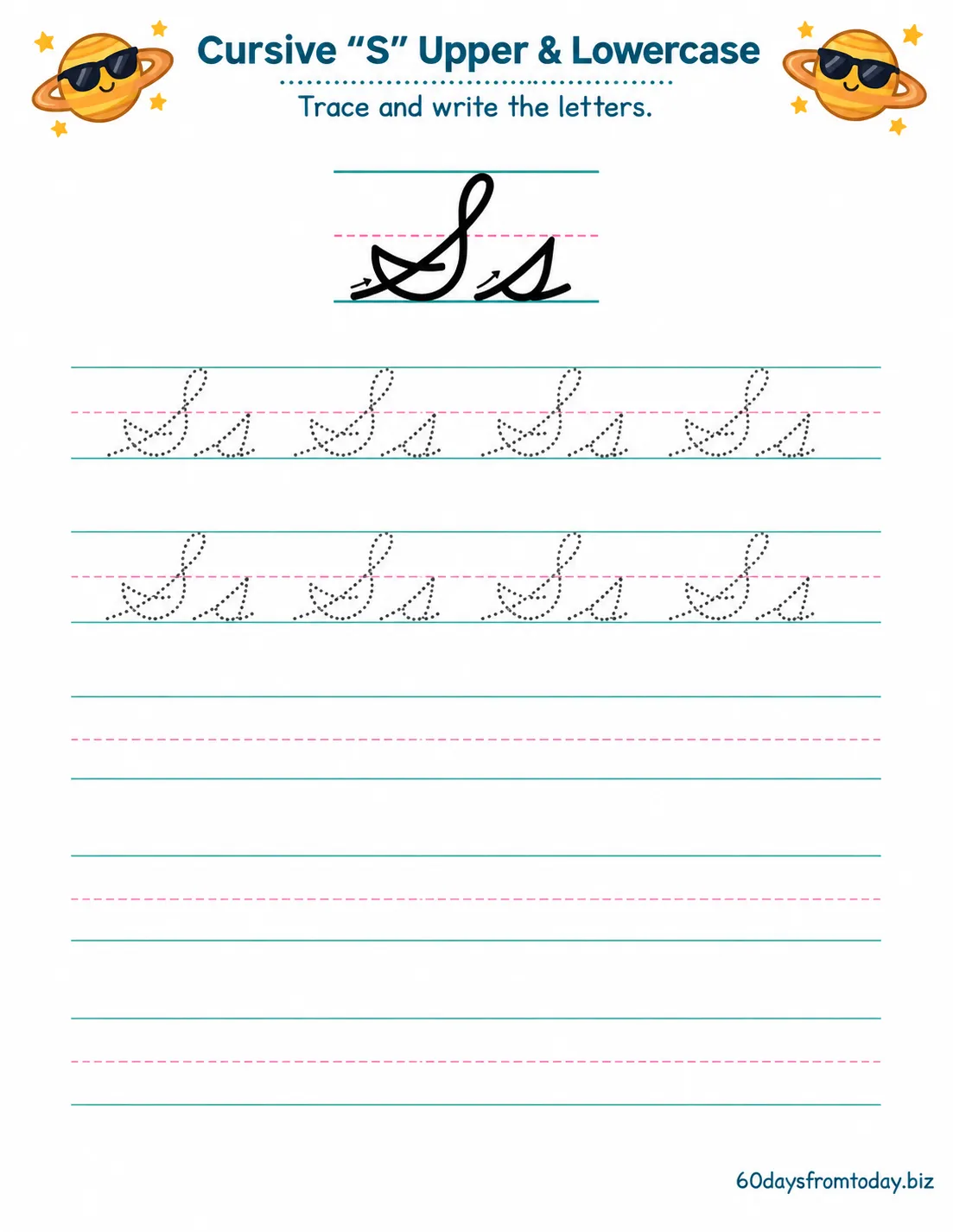
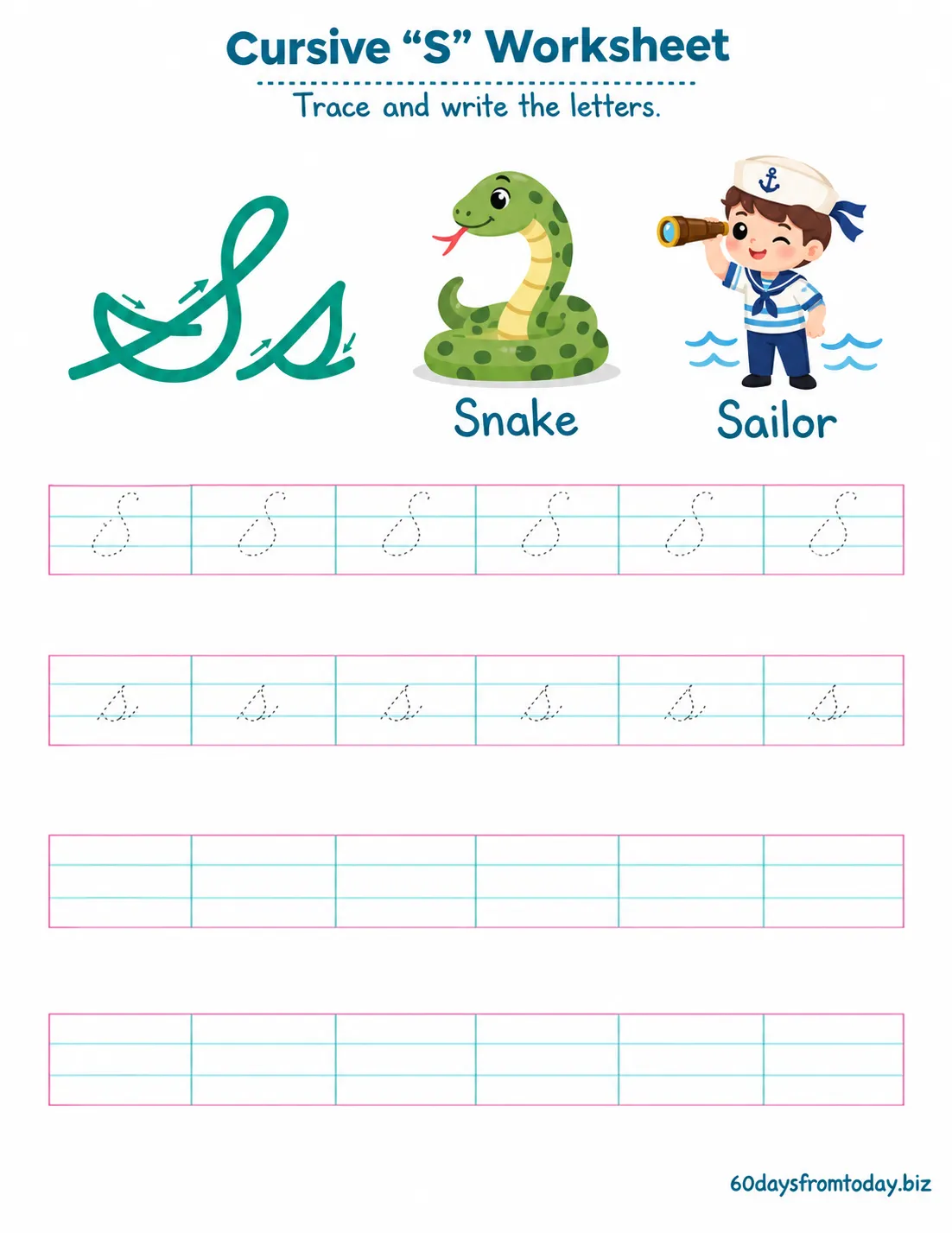
For this collection, I created a wide variety of printables, including dotted cursive S letters for tracing, large cursive S’s for younger children, lowercase and uppercase cursive S’s, three- and four-letter cursive words beginning with S, and much more!
To access the worksheets, simply click any of the images or links below to open the PDF on a new page. Once it’s open, you can download and print the worksheets for free as many times as you like!
All of these PDF worksheets are designed for standard US letter paper, and they also fit perfectly on A4 paper! Enjoy!
7 Ways To Use Cursive R Worksheets
Cursive S, especially uppercase S, can feel challenging, but these seven ways to use my worksheets can make learning to write it easier, more approachable, and fun.
7. Practicing The Pencil Movements For Uppercase And Lowercase S
Although tracing may seem like the obvious place to begin, I recommend having children start with this exercise.
Uppercase cursive S can feel particularly unfamiliar to young learners, so have them practice the pencil movements that create the letter.
For uppercase S, this means practicing the upward swoop and moving into the loop. Have the children repeat just that movement several times.
Next, have them add the downward swoop and the swoop toward the left, followed by the “tail” extending to the right.
For lowercase S, have them practice the upward swoop followed by the downward swoop until it reaches the first line. Let them repeat these movements for a line or two.
After that, have them add the “tail” to the right.
You can use any of the blank guideline spaces on my worksheets for this practice. And remember, the goal isn’t perfect shape or form.
The goal is simply to help children become comfortable with the pencil movements before moving on to tracing and creating a more uniform S.
6. Tracing Uppercase And Lowercase S
Once students have practiced the pencil movements—or if you prefer to begin with tracing—I provide plenty of worksheet space for tracing practice.
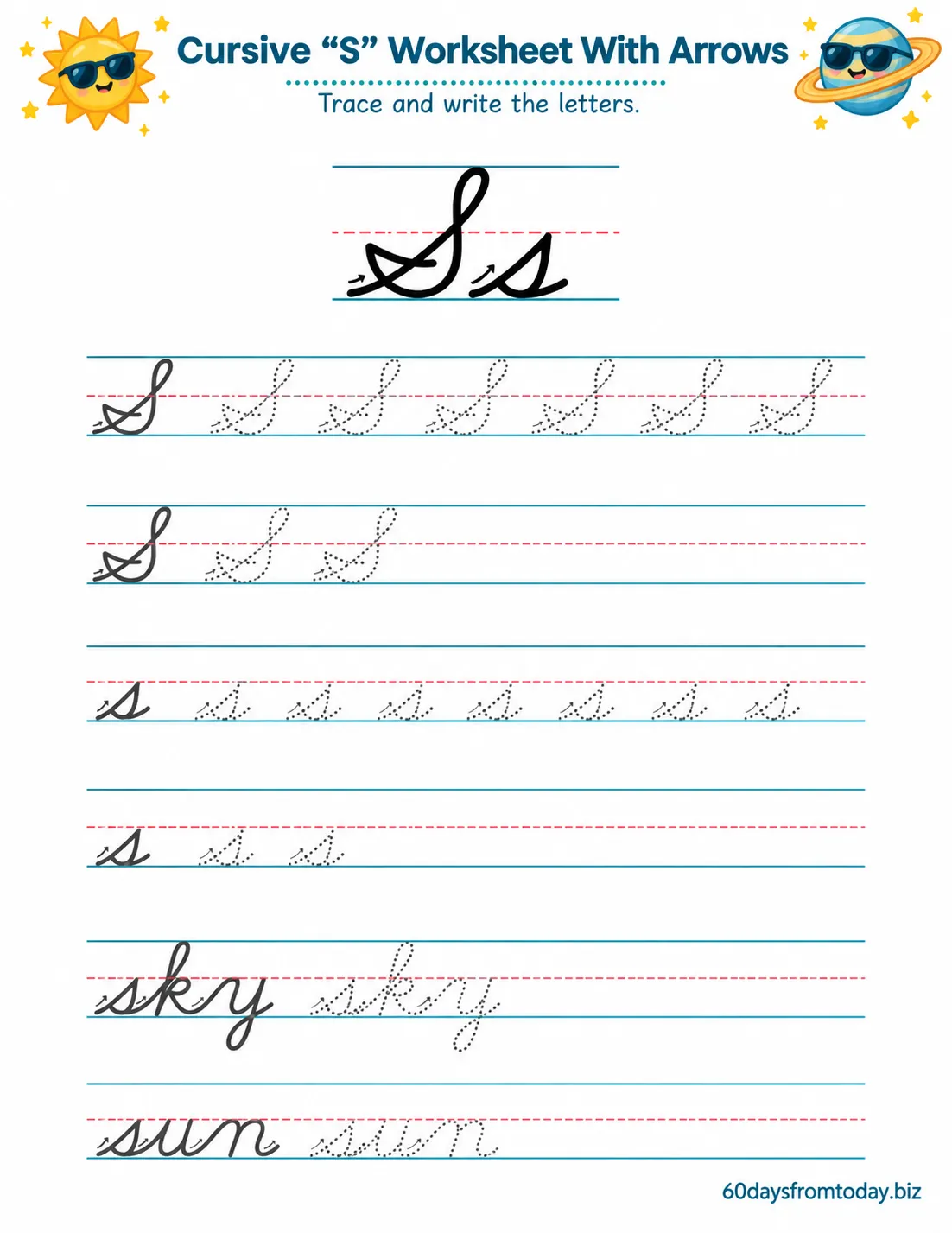
In fact, I have worksheets specifically dedicated to uppercase S, lowercase S, and another worksheet that combines both.
How you use them is completely up to you. You can have students trace uppercase and lowercase S first and then move on to writing them.
Alternatively, you can have them trace uppercase S, practice writing uppercase S, and then move on to lowercase S.
5. Writing Uppercase And Lowercase S Independently
Whatever approach you choose for the lesson, once students are ready to write uppercase and lowercase cursive S independently, there is plenty of empty guideline space for them to practice.
If they’re having trouble or you simply want to give them additional practice, you can always print extra copies of each worksheet for every student.
4. Linking Lowercase S To Itself
While uppercase S can be challenging to write, the lowercase cursive version is a little easier.
To help students become more comfortable with lowercase S, use the blank guideline space to create dotted-line letters connected together in a row.
Then make copies, and you have a worksheet where students can practice tracing lowercase S linked to itself and eventually write it independently, too.
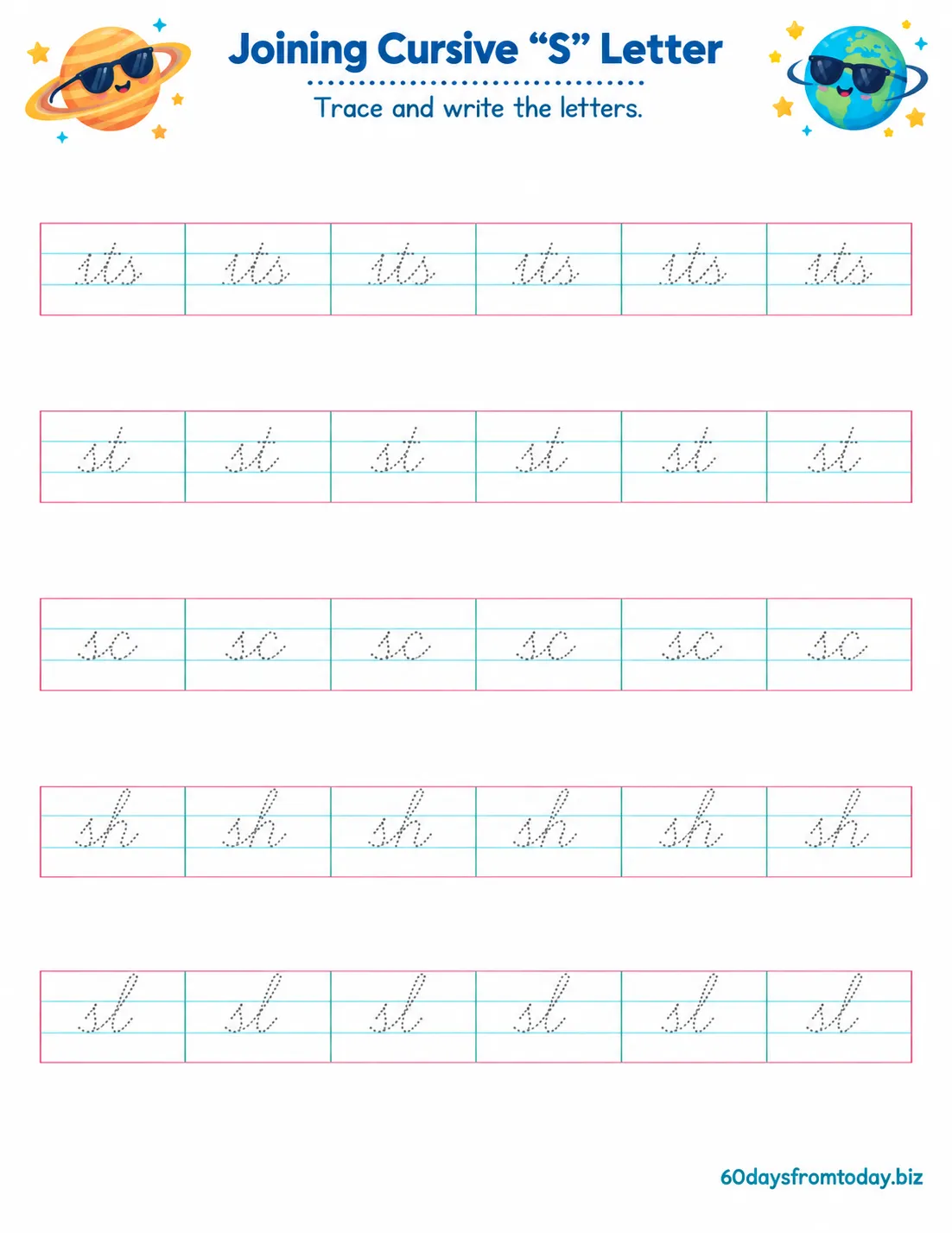
3. Linking S To Other Letters
I have a worksheet specifically designed for linking lowercase cursive S to other letters, making it a useful stepping stone for teaching students how to write words that begin with S.
You can also use the blank guideline space on another worksheet or copy the lines from one of my worksheets onto your own paper to create additional practice.
You could even create traceable examples that connect lowercase S to every letter of the alphabet, as well as uppercase S.
2. Tracing Words That Begin With S
I have two worksheets focused on tracing three- and four-letter words that begin with lowercase S, which students may find especially useful.
You can also use the blank guideline space to create your own five- and six-letter words, or words that contain S, giving students practice connecting letters to S rather than only connecting from it.
1. Tracing Alliterative Cursive S Sentences
Using the blank guideline space, you can create traceable alliterative cursive S sentences, such as “Sandy sells sweaters in the store” or “Steve sends sleds to Sarah.”
This type of practice not only helps students learn how to connect S with other letters, but also gives them practice writing other cursive letters and supports their spelling skills.