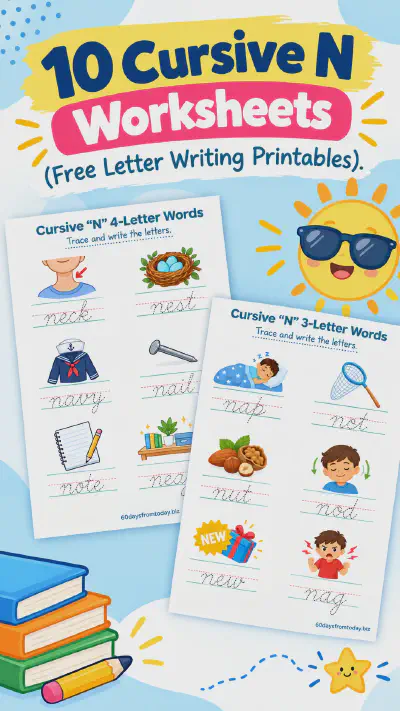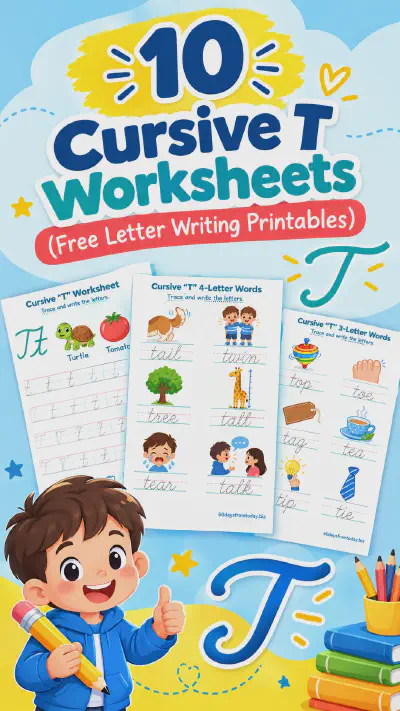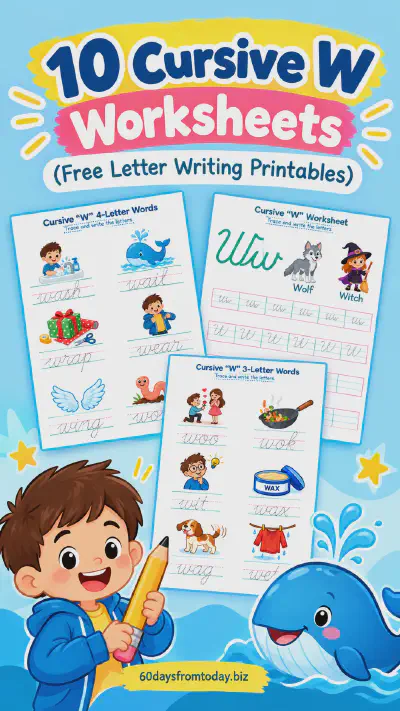
On this page, you’ll find 10 cursive W worksheets that are completely free to download and print! If you’re a teacher or parent teaching children the cursive alphabet, especially the letter W, these worksheets can be a useful resource.
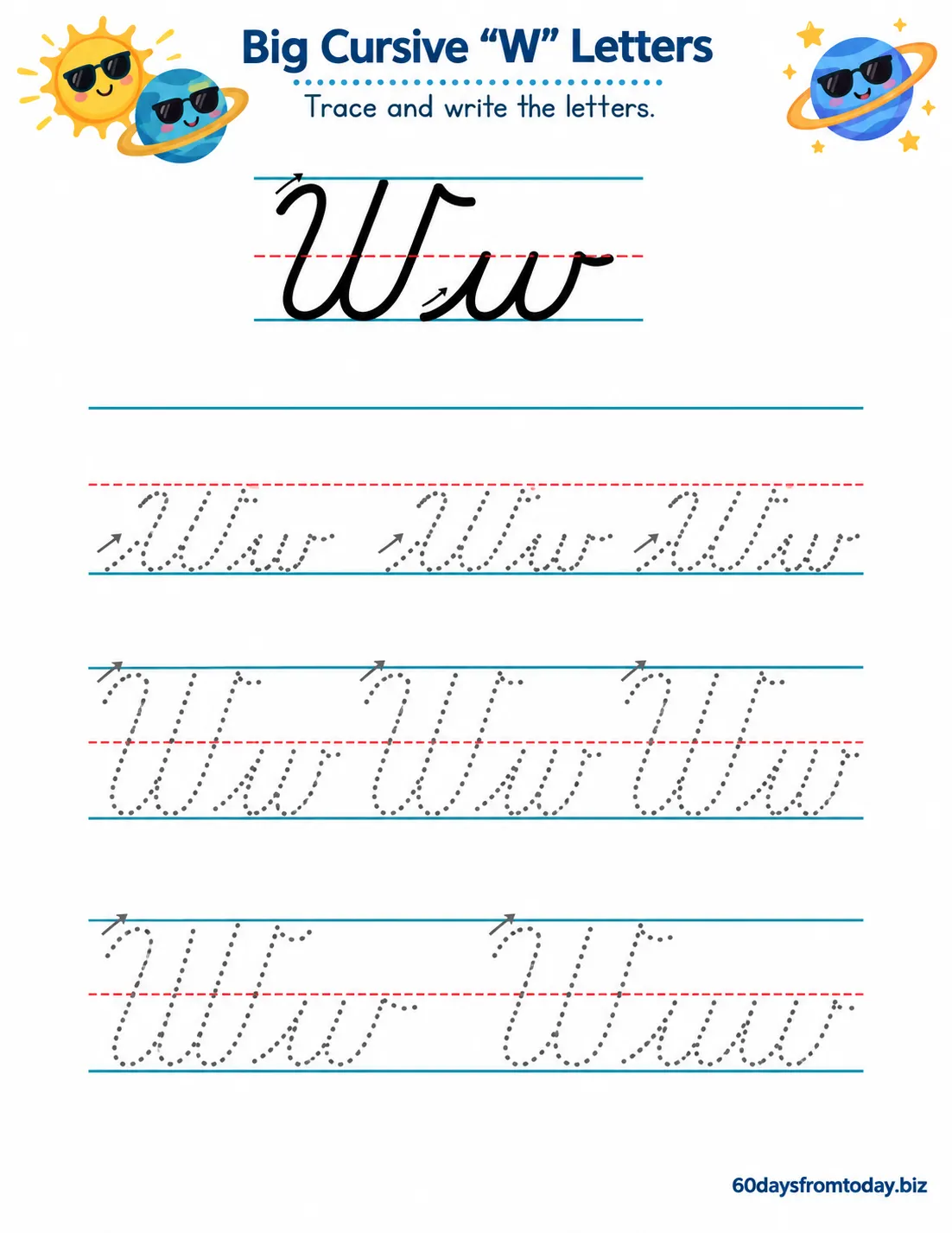
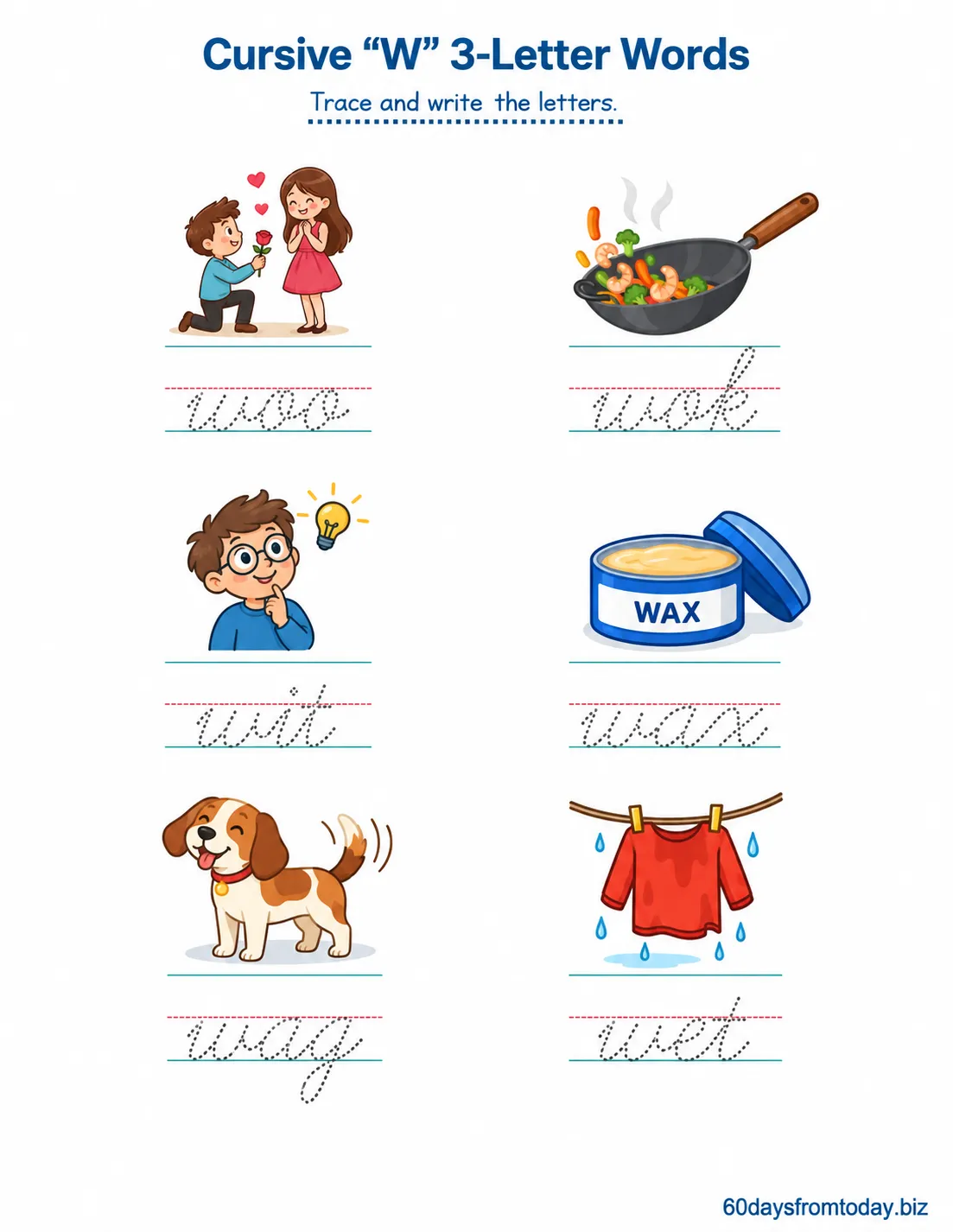
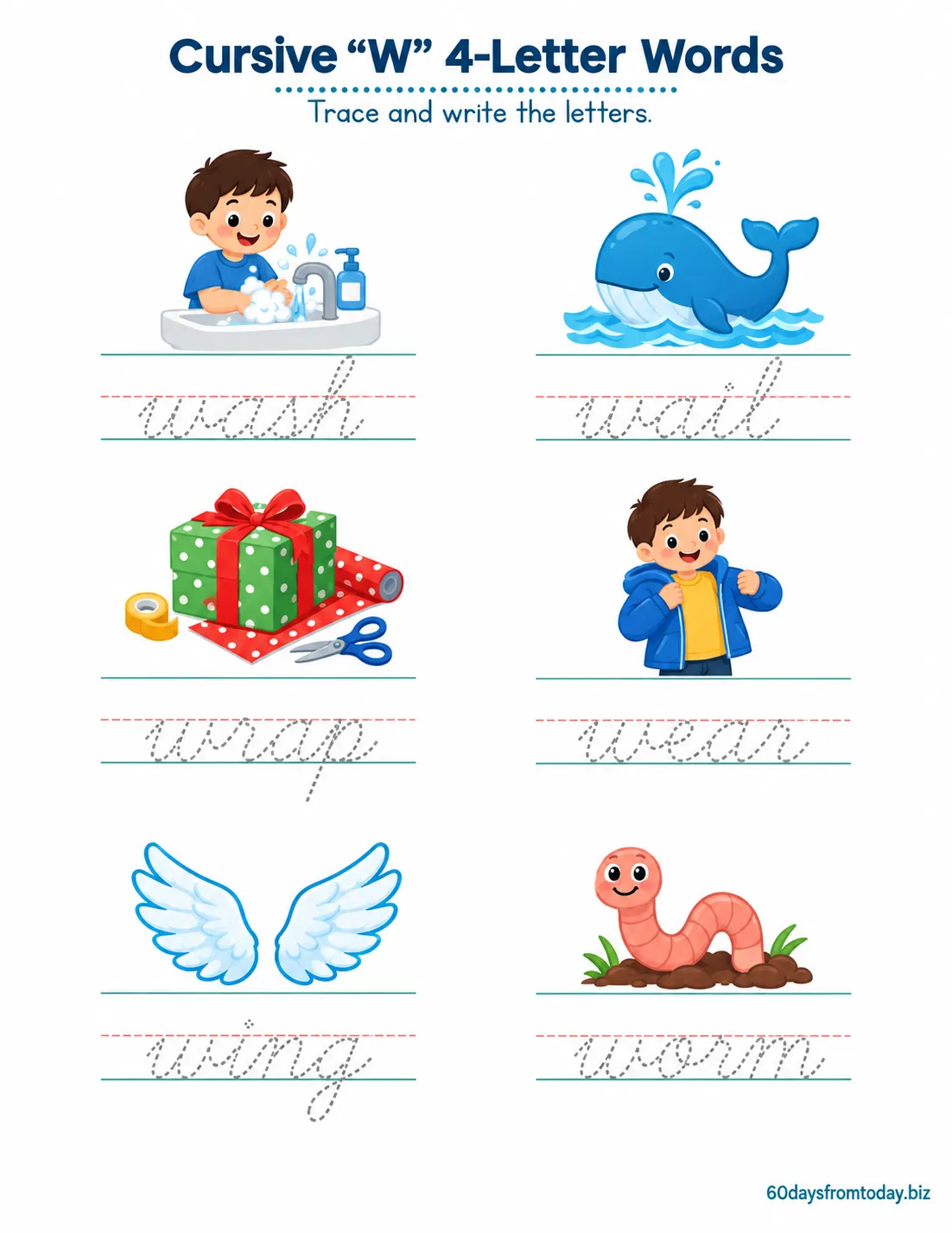
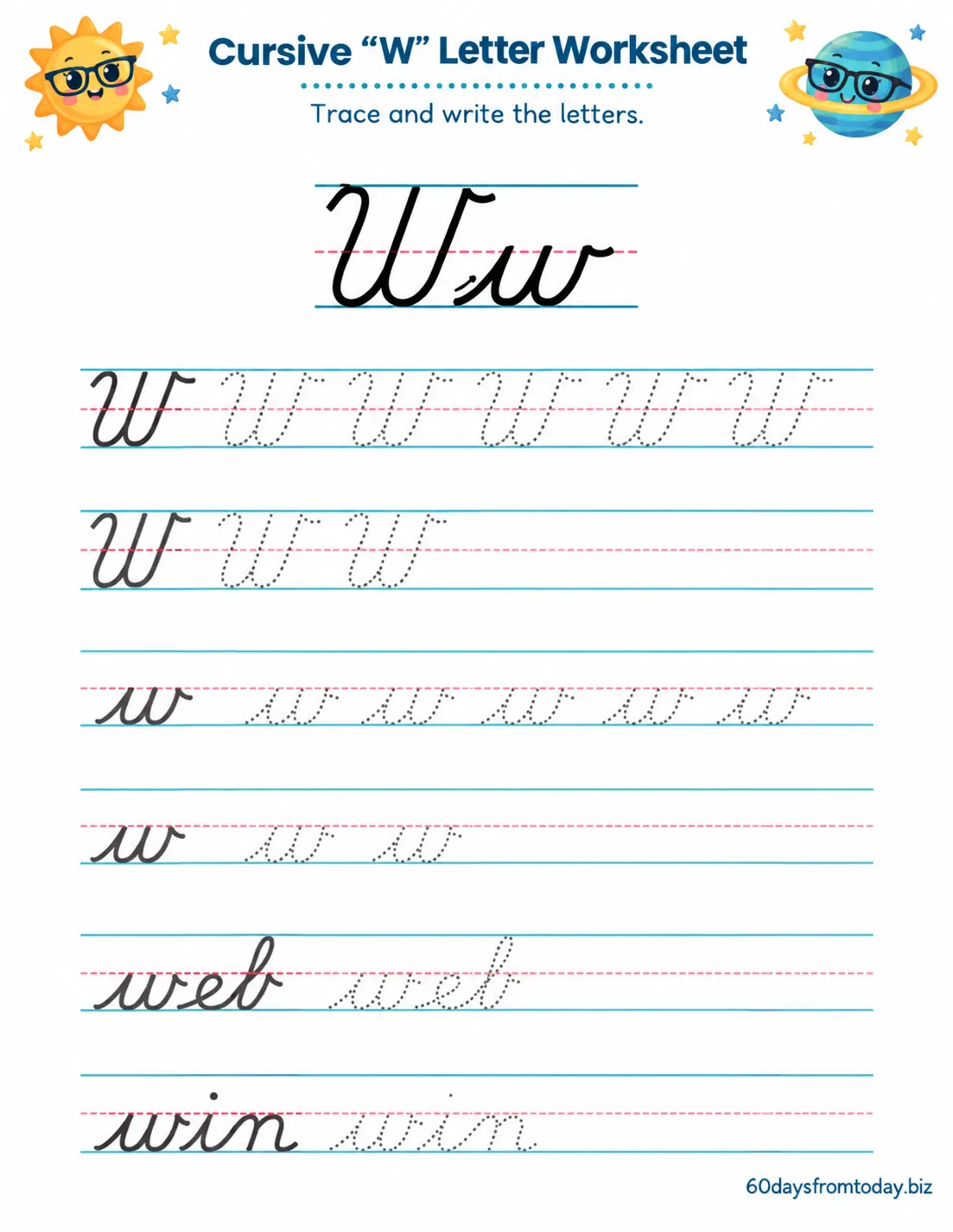
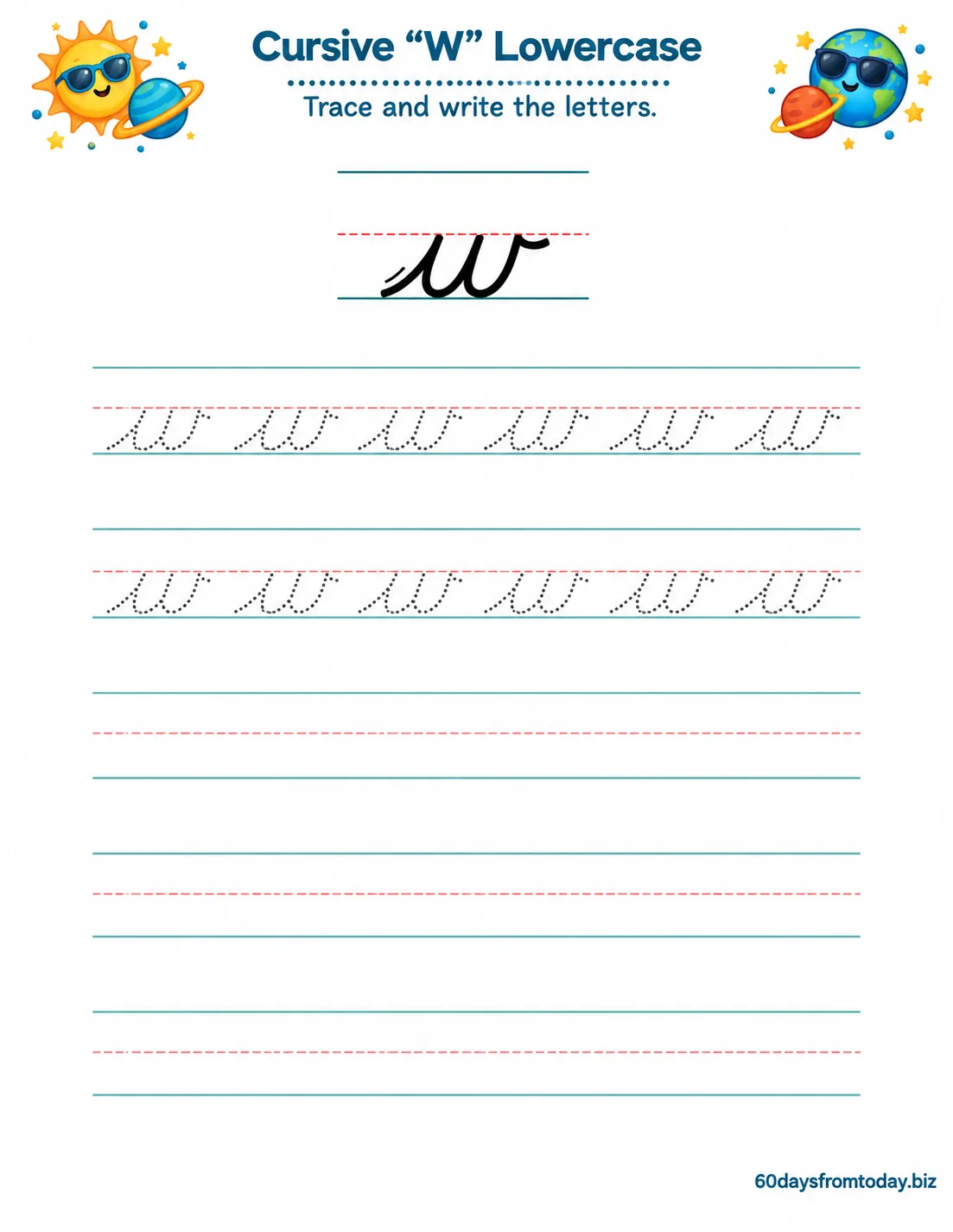
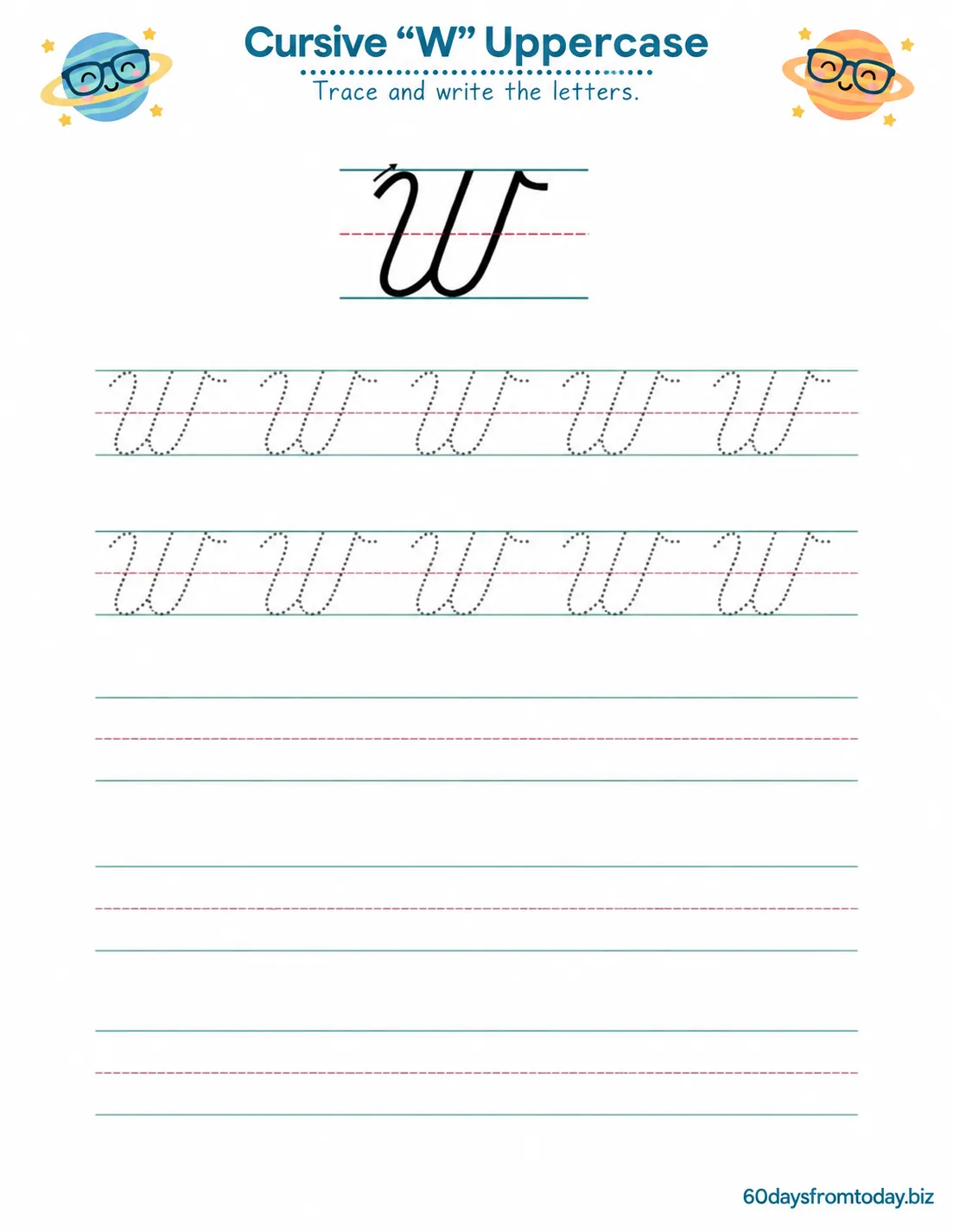
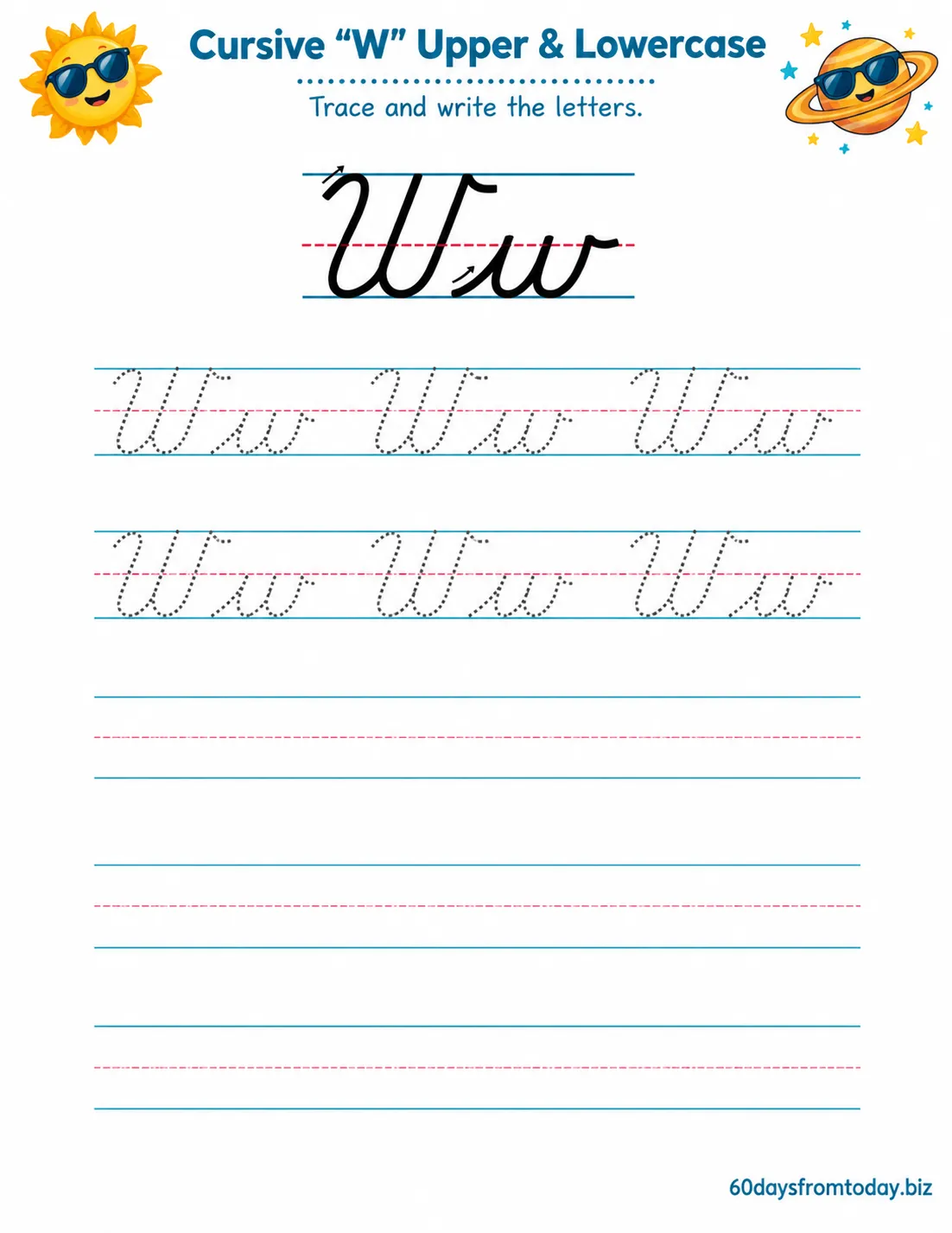
For this series, I created a broad selection of worksheets, including dotted cursive W’s for tracing, jumbo-sized cursive W’s for younger grades, cursive W’s with helpful instructional arrows, uppercase and lowercase cursive W’s, cursive words beginning with W, and much more!
To use these worksheets, click any of the images or links below to open the PDF on a new page. Once it opens, you can download and print the worksheets for free as many times as needed!
All of these PDF worksheets are formatted for standard US letter-size paper, but they also fit perfectly on A4 paper! Enjoy!
7 Ways To Use Cursive W Worksheets
Here are seven ways to use my cursive W worksheets to give your students plenty of practice while learning the letter.
7. Practicing The Pencil Movements For Uppercase And Lowercase W
Before having students trace the letter W, it may be helpful to let them first get a feel for how their pencils should move when writing it.
Encourage students to use some blank guideline space to practice forming both uppercase and lowercase W.
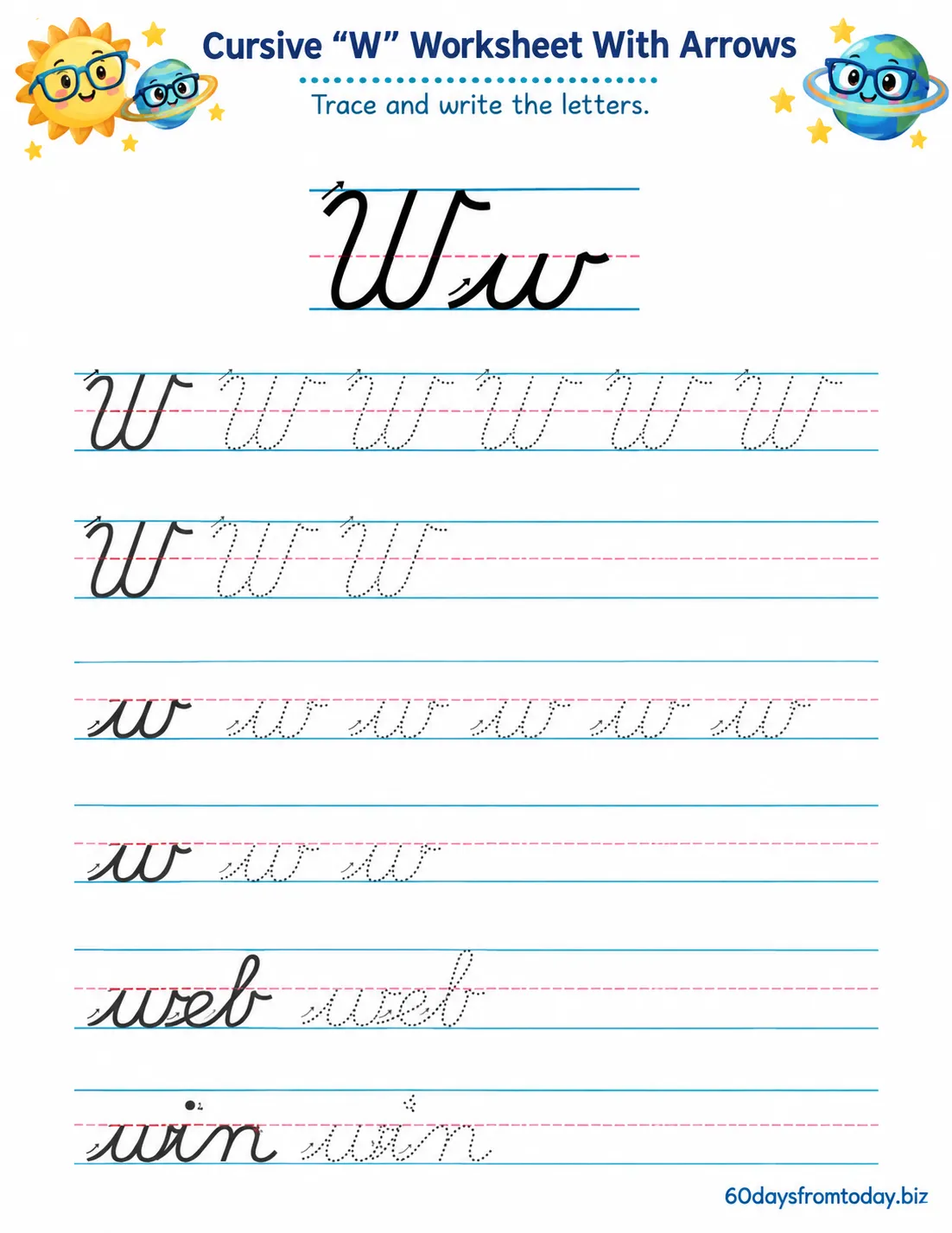
For uppercase cursive W’s, have children swoop downward and up, then downward and up again.
For lowercase cursive W’s, the movement is similar, only smaller, with a slight rightward “tail” at the end.
The goal isn’t to make the shapes perfectly. Instead, this activity helps build muscle memory in their hands and fingers before they begin tracing or writing the letter consistently.
6. Tracing Uppercase And Lowercase W
Tracing gives students practice forming uppercase and lowercase W in a consistent way while following the guidelines.
The goal is that, eventually, they’ll be able to write cursive without relying on guidelines at all.
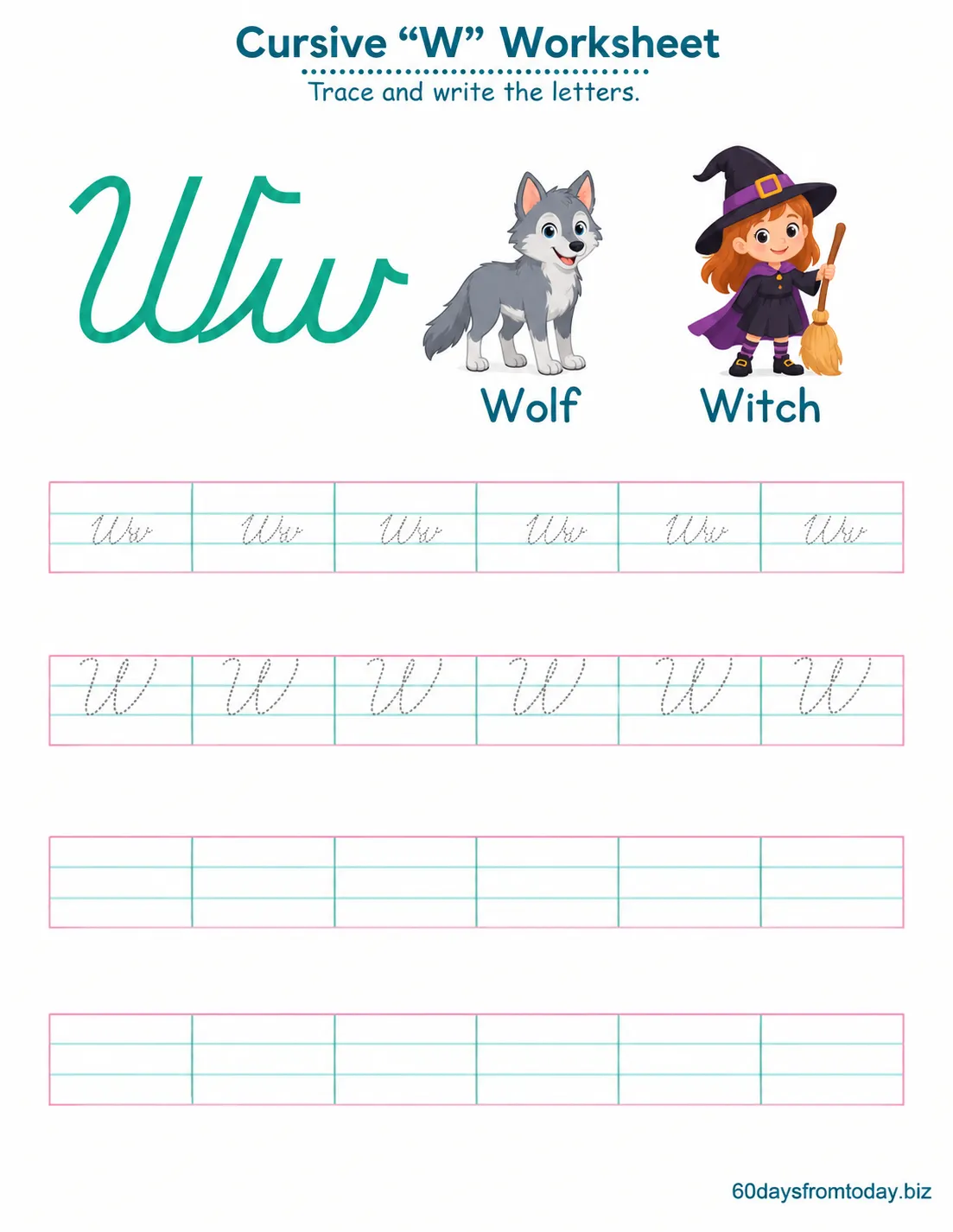
My worksheets include plenty of dotted-line tracing exercises, including one focused on uppercase W, one on lowercase W, and one that combines both.
5. Writing Uppercase And Lowercase W Independently
After students become comfortable tracing the letter W, they can begin writing it independently.
Hopefully, you saved the worksheets used for tracing, because they include plenty of blank guideline space where students can continue practicing.
Even so, you may want to print several copies for each student in case one worksheet doesn’t provide enough practice.
4. Linking W To Other Letters
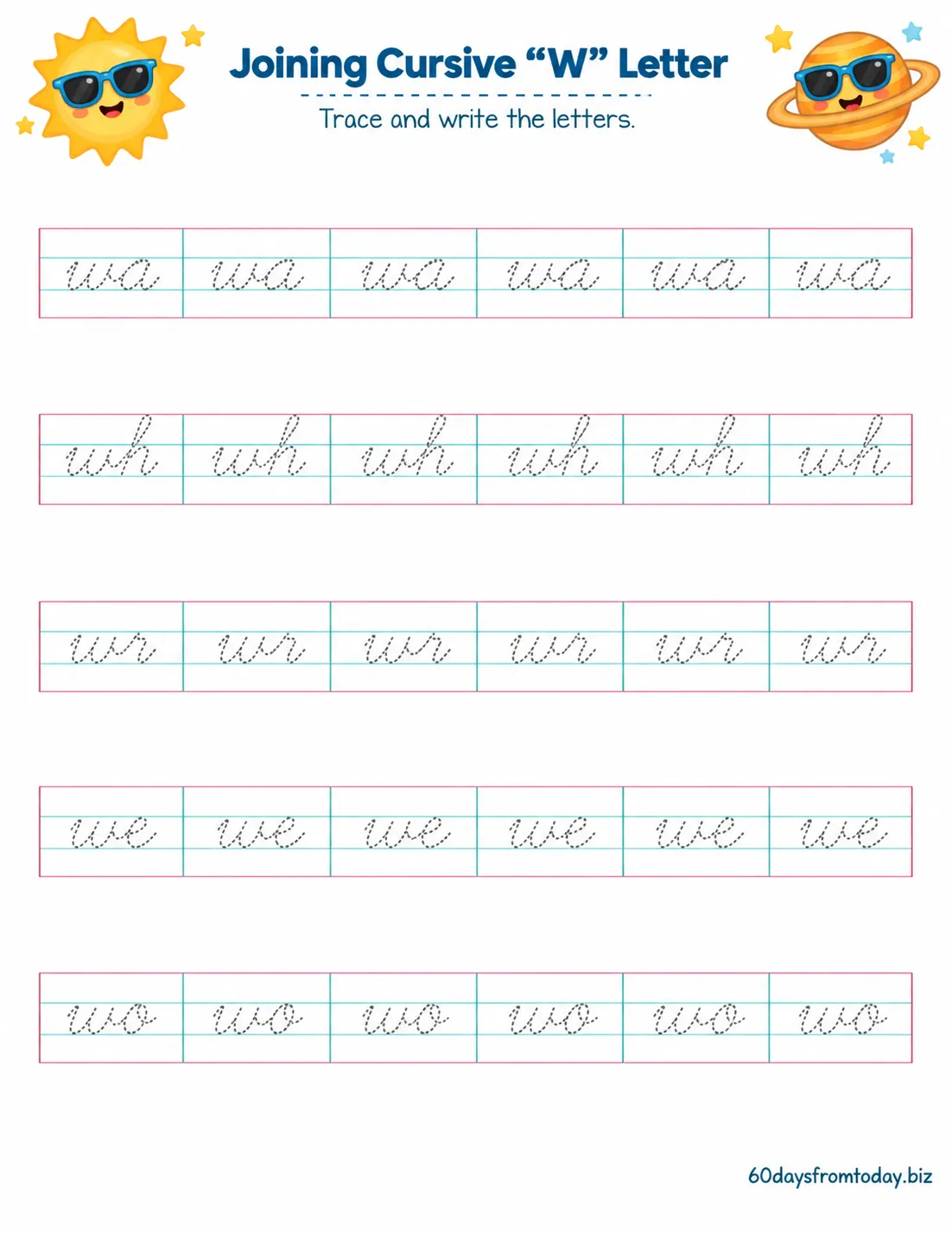
I have a traceable worksheet that connects lowercase cursive W’s with other letters, helping students learn the basics of tracing and eventually writing complete words.
You can also build on this activity by creating your own exercises in blank guideline space, such as linking uppercase W to the same letters.
Another option is to connect W, both uppercase and lowercase, with every other letter of the alphabet.
3. Tracing Words That Begin With W
I have two traceable worksheets featuring three- and four-letter cursive words that begin with W, but you can easily extend these activities.
For instance, use the blank guideline space on another worksheet to make your own tracing exercise with uppercase W starting each word.
Although uppercase W doesn’t connect to other letters, this gives students useful practice recognizing that difference and writing accordingly.
You can also have students trace five-, six-, and seven-letter words beginning with W, using both uppercase and lowercase forms.
Along with reinforcing letters they may already know, this activity helps strengthen eye-hand coordination and spelling skills.
2. Tracing Other Letters Linked To W
Of course, W isn’t found only at the beginning of words; it also appears within words, making it useful for students to practice connecting other letters to W.
Using blank guideline space, you could make a worksheet that connects every letter of the alphabet to W, such as “aw,” “bw,” “cw,” “dw,” and so on.
1. Tracing Alliterative Cursive W Sentences
Using unused blank guideline space, you can create traceable sentences that emphasize alliterative use of the letter W.
For example, “Wendy went to wash her wound,” “The Welsh widow was weary,” or “Winston wakes with the wind on his window.”
These exercises not only reinforce the letter W, but they also support students in developing their spelling skills and reading comprehension.