The doors are about to open. The caterer is in position, the lights are glowing, and the first guests are already arriving. To everyone in the room, the event looks effortless.
Behind the scenes, however, that effortless experience was built weeks—or months—earlier, one carefully timed decision at a time.
That is the secret of successful event planning: great events rarely happen by accident. They happen because someone knew what needed to happen, when it needed to happen, and what could go wrong along the way.
A well-designed event planning timeline turns an overwhelming list of tasks into a clear path from the first idea to the final goodbye. Whether you’re organizing a corporate gathering, wedding, conference, fundraiser, or private celebration, the right timeline helps you stay organized while leaving room for the unexpected.
Why an Event Planning Timeline Matters
Planning an event without a timeline is like trying to conduct an orchestra without sheet music. Everyone may be talented, but the timing quickly becomes chaotic.
A timeline gives your team structure and accountability. It helps you coordinate venues, vendors, invitations, budgets, entertainment, catering, and guest logistics without leaving critical decisions until the last minute.
More importantly, it protects the guest experience. When the behind-the-scenes details are handled on time, guests get to experience what matters: an event that feels natural, enjoyable, and memorable.
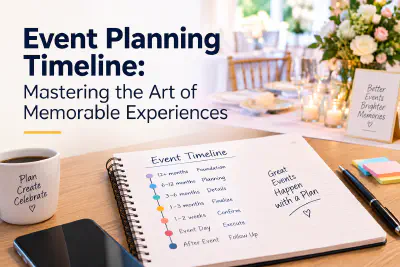
6–12 Months Before: Build the Foundation
The event begins long before anyone walks through the door.
Start by defining the purpose of the event and the experience you want guests to have. Is it designed to educate, celebrate, connect, raise funds, or launch something new? Your answer should guide every decision that follows.
Next, establish your initial budget and choose a target date. Once those pieces are clear, begin researching and booking your venue.
This is also the right time to identify major vendors such as:
- Caterers
- Photographers and videographers
- Entertainment
- Event decorators
- Audio-visual providers
- Transportation services
Think of this stage as building the skeleton of the event. You don’t need every detail finalized yet. You need the major pieces in place so everything else has something to build upon.
3–6 Months Before: Turn the Vision Into a Plan
Now the event starts becoming real.
Confirm your vendors, contracts, and major logistics. Develop the guest list and send save-the-dates or invitations when appropriate. At the same time, begin shaping the event program, décor, catering, entertainment, and activities.
This is also the ideal moment to think beyond the perfect scenario.
What happens if a vendor is late? What if the weather changes? What if attendance is higher or lower than expected?
Creating contingency plans early gives you options instead of panic later.
A good event planner doesn’t try to predict every possible problem. They simply make sure that the most likely problems already have a response.
1–3 Months Before: Lock Down the Details
With the foundation established, it’s time to turn planning into precision.
Track RSVPs and update your guest numbers. Confirm menus, including dietary requirements. Finalize décor, entertainment, seating arrangements, transportation, and accommodation details where necessary.
Most importantly, create a master event-day timeline.
This should outline everything from setup and vendor arrival to guest check-in, speeches, meals, entertainment, and cleanup. Share the relevant portions with your vendors and event team so everyone understands when they need to be ready.
Don’t forget to build in buffers.
If one activity ends at exactly 7:00 and the next begins at exactly 7:00, you’ve created a schedule with no room for reality. A few extra minutes between important activities can prevent one small delay from disrupting the entire event.
1–2 Weeks Before: The Final Countdown
At this stage, resist the temptation to reinvent the event.
Your priority is confirmation.
Reconfirm vendors, guest numbers, arrival times, equipment, menus, transportation, and venue arrangements. Prepare signage, name badges, gifts, printed materials, or other event supplies.
Then walk through the entire run-of-show from beginning to end.
Who unlocks the venue? Who greets vendors? Who handles guest questions? Who introduces the speakers? Who makes decisions if something goes wrong?
Assign responsibilities clearly.
The goal isn’t to eliminate every possible problem. It’s to make sure that when something unexpected happens, everyone knows who is responsible for solving it.
Event Day: Execute, Don’t Improvise
The big day has finally arrived.
Arrive early enough to oversee setup before guests appear. Keep your master timeline accessible, and designate someone to monitor the schedule if you cannot do it yourself.
Communicate with vendors and your team throughout the event, but avoid letting behind-the-scenes issues become visible to guests.
A great event doesn’t require everything to go perfectly. It requires the team to handle imperfections smoothly.
Guests won’t remember whether a presentation started three minutes late. They’ll remember whether they felt welcomed, engaged, comfortable, and part of something special.
They experience the event. You manage the clock.
After the Event: Close the Loop
The planning process doesn’t truly end when the last guest leaves.
Settle outstanding vendor payments, collect feedback, and review what worked well. Identify delays, unexpected challenges, and moments that generated particularly positive reactions.
Save your timeline, vendor contacts, checklists, and lessons learned.
Your next event shouldn’t start from zero. Every event should make the next one easier to plan.
Conclusion
A memorable event may look spontaneous, but exceptional experiences are usually built on deliberate preparation.
By working backward from the event date, breaking the process into manageable milestones, confirming critical details early, and leaving room for unexpected delays, you can transform event planning from a stressful scramble into a controlled, creative process.
The best timeline isn’t the one with the most tasks. It’s the one that gives you enough structure to stay prepared—and enough flexibility to enjoy the event when the doors finally open.